What Are the Warning Signs of Heat Stroke During UP Summers?
Medically reviewed by Dr.Nikhil Singh, Anaesthesia, MBBS, MD
Last reviewed: 18 Jul 2026
Introduction
Summers in Uttar Pradesh can be extremely hot, with temperatures often crossing 40°C. During severe heatwave conditions, the risk of heat-related illnesses increases significantly.
Among these conditions, heat stroke is the most dangerous. It can develop rapidly and become life-threatening if not treated immediately.
Recognizing the warning signs early can help prevent serious complications.
What Is Heat Stroke?
Heat stroke occurs when the body can no longer regulate its temperature effectively.
Normally, sweating helps cool the body. However, during extreme heat exposure, this cooling system may fail, causing body temperature to rise dangerously.
Heat stroke is a medical emergency that requires immediate treatment.
Early Warning Signs of Heat Stroke
Before heat stroke develops, a person may experience:
Excessive Thirst
The body loses large amounts of fluid through sweating.
Severe Headache
A persistent headache may be an early warning sign.
Dizziness
Feeling lightheaded or unsteady can indicate heat-related stress.
Extreme Fatigue
Unusual weakness and exhaustion should not be ignored.
Muscle Cramps
Painful cramps may occur due to dehydration and electrolyte loss.
Nausea
Some people may feel sick or experience vomiting.
Serious Warning Signs of Heat Stroke
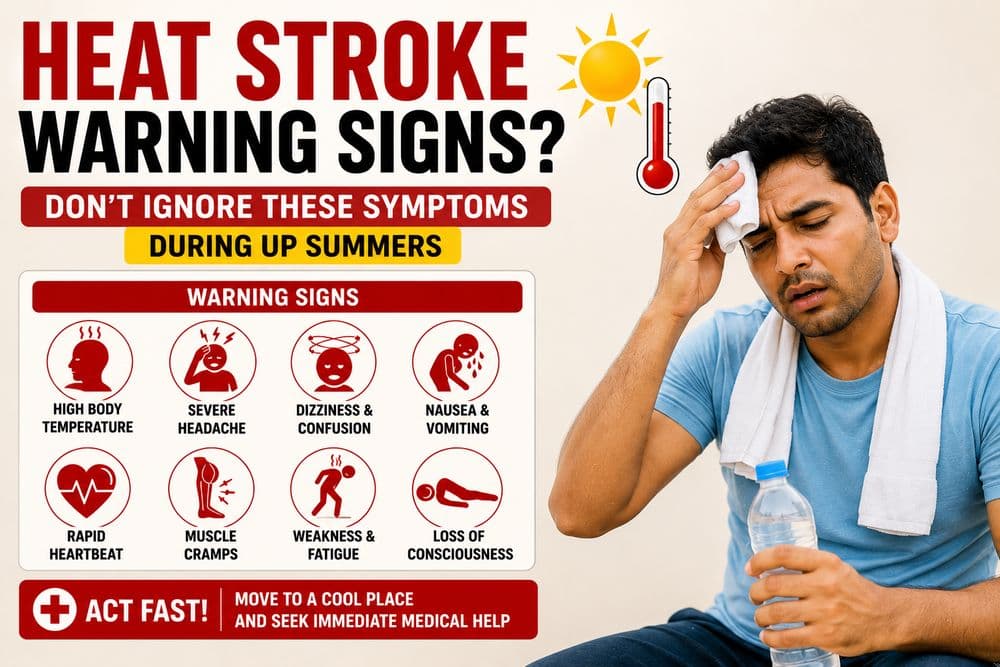
High Body Temperature
A body temperature above 40°C (104°F) is a major warning sign.
Confusion
The person may become:
- Disoriented
- Confused
- Unable to respond properly
Hot Skin
The skin may feel unusually hot.
Rapid Heartbeat
The heart works harder to cope with extreme heat.
Difficulty Walking
Weakness and balance problems may develop.
Loss of Consciousness
Fainting or unconsciousness requires immediate emergency care.
Who Is Most at Risk During UP Summers?
Heat stroke risk is higher among:
- Outdoor workers
- Farmers
- Traffic police personnel
- Construction workers
- Children
- Elderly individuals
- Athletes
- People with heart disease
What Should You Do If Someone Shows Signs of Heat Stroke?
Move Them to a Cool Area
Immediately move the person away from direct sunlight.
Provide Cooling
Use:
- Wet cloths
- Cool water
- Fans
- Air-conditioned rooms
Give Water Only If Conscious
If the person is fully alert, small sips of water may help.
Seek Emergency Medical Care
Heat stroke is a medical emergency and requires immediate treatment.
How Can You Prevent Heat Stroke?
- Stay hydrated throughout the day
- Avoid outdoor activities during peak heat hours
- Wear loose, light-colored clothing
- Use hats, umbrellas, or caps
- Take frequent breaks if working outdoors
- Never ignore symptoms of heat exhaustion
Conclusion
Heat stroke is one of the most serious health risks during Uttar Pradesh summers. Symptoms such as severe headache, dizziness, confusion, high body temperature, and loss of consciousness should never be ignored.
Early recognition and prompt medical attention can save lives during extreme heat conditions.
Related reading
Written by
Top Anesthesiologist doctors in Lucknow on Zospital
Verified specialists you can book in minutes.
- Book appointment

Dr. Sanni Deyol Gautam
Anesthesiologist
Lucknow
4.8 - Book appointment

Dr Karanvir Singh Sidhu
Anesthesiologist
Lucknow
4.8 - Book appointment

Dr Harpreet Kaur
Anesthesiologist
Lucknow
4.8 - Book appointment

Dr. Akshat Trivedi
Anesthesiologist
Lucknow
4.5 - Book appointment

Dr. Praful Srivastava
Anesthesiologist
4.8 - Book appointment

Dr. Mohd. Ruheel Khan
Anesthesiologist
Faizabad
Have More Questions?
Find quick answers to common questions about our services, appointments, and patient care.
Headache, dizziness, excessive thirst, and weakness are common early signs.
Yes. It is a medical emergency that can become life-threatening.
Yes. Dehydration is one of the major risk factors.
Children, elderly individuals, outdoor workers, and people with chronic illnesses.

“Your Health, Our Priority. Your Voice, Our Guide”
Dr.Nikhil Singh
Anaesthesia, MBBS, MD
Related Articles
What Is the 20-20-20 Rule for Eye Care? A Simple Habit to Reduce Digital Eye Strain
The 20-20-20 rule is a simple technique that may help reduce eye strain caused by prolonged screen use. Learn how it works and why eye experts recommend it.

WHO Digital Health Guidelines Explained
WHO Digital Health Guidelines focus on safe, accessible, and effective use of technology in healthcare. Learn how digital health is transforming modern medical systems.

WHO Guidelines on Screen Time for Children Explained
WHO has released screen time guidelines for children to support healthy growth, sleep, and mental well-being. Learn the recommended limits by age.

Written by Dr.Nikhil Singh
Anaesthesia, MBBS, MD
Last reviewed: 18 July 2026
Medical Disclaimer
The content provided on Zospital is for general informational and educational purposes only. It is not intended as a substitute for professional medical advice, diagnosis, or treatment. Always seek the advice of your physician or other qualified healthcare provider with any questions you may have regarding a medical condition. Never disregard professional medical advice or delay in seeking it because of something you have read on this website. If you think you may have a medical emergency, call your doctor or emergency services immediately.
Are you a doctor or run a clinic or hospital?
Patients across India are searching Zospital right now. Get a free profile with reviews, timings and direct WhatsApp bookings.