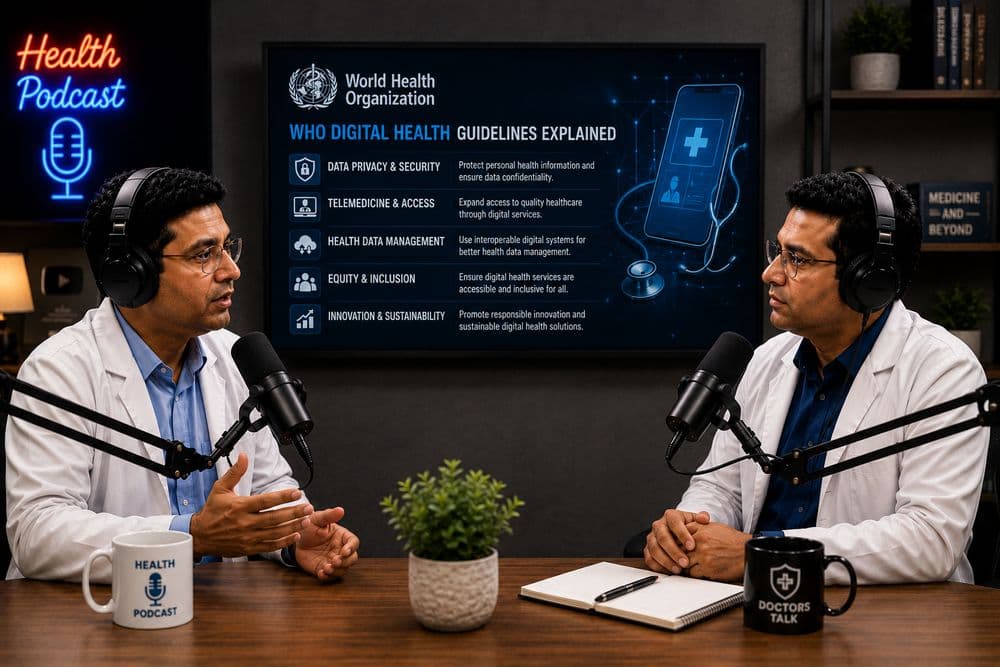
WHO Digital Health Guidelines Explained
Medically reviewed by Dr.Nikhil Singh, Anaesthesia, MBBS, MD
Last reviewed: 20 May 2026
Introduction
Technology is rapidly transforming the healthcare industry. From telemedicine and mobile health apps to digital medical records and online consultations, healthcare systems worldwide are becoming more digitally connected.
To support safe and effective use of healthcare technology, the World Health Organization (WHO) introduced Digital Health Guidelines aimed at improving healthcare delivery, accessibility, patient care, and health system efficiency.
These guidelines help governments, hospitals, healthcare providers, and digital health platforms understand how technology can be responsibly integrated into healthcare systems.
What Is Digital Health?
Digital health refers to the use of technology to support healthcare services and medical management.
It includes:
- Telemedicine
- Online doctor consultations
- Electronic health records
- Health monitoring apps
- Digital prescriptions
- Mobile healthcare platforms
- Artificial intelligence in healthcare
Digital health aims to improve healthcare access, especially in areas where medical services may be limited.
Why Did WHO Introduce Digital Health Guidelines?
WHO introduced these guidelines to help healthcare systems use digital technologies safely, effectively, and responsibly.
The goals include:
- Improving healthcare access
- Supporting patient care
- Strengthening healthcare systems
- Enhancing healthcare communication
- Reducing healthcare gaps
WHO also emphasizes that technology should support healthcare workers rather than replace them completely.
Why Digital Health Is Becoming Important
1. Growing Use of Smartphones and Internet
Digital healthcare services are increasing due to widespread internet and smartphone access.
Many people now use:
- Online consultations
- Health tracking apps
- Online appointment systems
- Digital health platforms
2. Better Healthcare Access
Digital systems may help patients in remote areas connect with healthcare providers more easily.
3. Faster Medical Communication
Hospitals and clinics can manage patient information more efficiently through digital systems.
4. Pandemic Impact on Healthcare
The COVID-19 pandemic accelerated the adoption of:
- Telemedicine
- Online healthcare services
- Virtual medical consultations
Digital healthcare became an important part of healthcare delivery worldwide.
Key Areas Covered in WHO Digital Health Guidelines
Telemedicine and Virtual Care
WHO supports carefully planned digital consultation systems that improve patient access to healthcare.
Digital Health Records
Electronic medical records can help improve:
- Healthcare coordination
- Data management
- Treatment continuity
Data Privacy and Security
WHO highlights the importance of protecting patient health information and maintaining confidentiality.
Healthcare Accessibility
Digital systems should remain accessible and inclusive for different populations.
Training and Healthcare Workforce Support
Healthcare workers should receive proper digital training for safe technology use.
Benefits of Digital Health Systems
Improved Access to Healthcare
Patients may connect with doctors more easily through online healthcare services.
Faster Appointment and Record Management
Digital systems can simplify healthcare administration.
Better Patient Monitoring
Some digital tools allow remote health monitoring and follow-up care.
Increased Healthcare Awareness
Mobile health apps and digital campaigns can improve public health awareness.
Challenges in Digital Healthcare
1. Data Privacy Risks
Patient information protection remains a major concern.
2. Technology Access Gaps
Not all populations have equal internet or smartphone access.
3. Digital Literacy
Some patients and healthcare workers may need support in using digital systems.
4. Overdependence on Technology
WHO emphasizes balancing technology with proper human medical care.
Why WHO Emphasizes Responsible Digital Health
WHO states that digital healthcare should:
- Be evidence-based
- Protect patient safety
- Improve healthcare quality
- Support healthcare workers
- Reduce inequality in healthcare access
Technology should strengthen healthcare systems rather than create new barriers.
Digital Health and the Future of Healthcare
Healthcare experts believe digital systems will continue expanding globally through:
- AI-based healthcare tools
- Remote patient monitoring
- Wearable health devices
- Virtual consultations
- Digital diagnostics
However, proper regulation and ethical use remain extremely important.
How Digital Health May Benefit Patients
Digital healthcare systems may help patients by:
- Saving travel time
- Improving appointment access
- Supporting follow-up care
- Increasing healthcare awareness
- Simplifying medical record management
When Should Digital Healthcare Be Used Carefully?
Online healthcare may not replace emergency medical treatment or physical examination in serious conditions.
In-person consultation remains important for:
- Emergency care
- Severe illness
- Physical examination needs
- Surgical evaluation
Conclusion
WHO Digital Health Guidelines aim to support safe, accessible, and patient-centered healthcare technology systems worldwide. Digital healthcare has the potential to improve medical access, communication, and healthcare efficiency when used responsibly.
As healthcare technology continues to grow, balancing innovation with patient safety and ethical healthcare practices remains essential.Source of Data
This article is based on WHO recommendations and global healthcare information related to digital health systems and healthcare technology.
Official Sources:WHO Digital Health Guidelines
Top news doctors on Zospital
Verified specialists you can book in minutes.



Have More Questions?
Find quick answers to common questions about our services, appointments, and patient care.
WHO Digital Health Guidelines are recommendations designed to help healthcare systems use digital technology safely and effectively.
Digital health refers to the use of technology such as telemedicine, mobile apps, digital records, and online healthcare systems in medical care.
Digital healthcare may improve healthcare access, communication, appointment management, and patient monitoring.
Telemedicine allows patients to consult doctors remotely through digital communication systems.
Patient medical information must remain secure and confidential within digital healthcare systems.
No. Digital healthcare supports medical systems but cannot fully replace physical examination or emergency medical care.

“Your Health, Our Priority. Your Voice, Our Guide”
Dr.Nikhil Singh
Anaesthesia, MBBS, MD
Related Articles

WHO Guidelines on Screen Time for Children Explained
WHO has released screen time guidelines for children to support healthy growth, sleep, and mental well-being. Learn the recommended limits by age.

Why Hospitals See More Kidney Stone Cases During Summer
Kidney stone cases often increase during summer due to dehydration and excessive fluid loss through sweating. Learn why hot weather raises the risk and how to protect your kidney health.

Why We Lie to Doctors: Breaking the Silence for Better Health
A deep dive into the common reasons for patient dishonesty, from fear of judgment to embarrassment, and how to foster a more open relationship for better health outcomes.

Written by Dr.Nikhil Singh
Anaesthesia, MBBS, MD
Last reviewed: 20 May 2026
Medical Disclaimer
The content provided on Zospital is for general informational and educational purposes only. It is not intended as a substitute for professional medical advice, diagnosis, or treatment. Always seek the advice of your physician or other qualified healthcare provider with any questions you may have regarding a medical condition. Never disregard professional medical advice or delay in seeking it because of something you have read on this website. If you think you may have a medical emergency, call your doctor or emergency services immediately.
Are you a doctor or run a clinic or hospital?
Patients across India are searching Zospital right now. Get a free profile with reviews, timings and direct WhatsApp bookings.