How to Protect Yourself From Heatwave Conditions in Uttar Pradesh?
Medically reviewed by Dr.Nikhil Singh, Anaesthesia, MBBS, MD
Last reviewed: 18 Jul 2026
Introduction
Uttar Pradesh experiences intense summer temperatures every year, with many cities regularly recording temperatures above 40°C. During severe heatwave conditions, prolonged exposure to extreme heat can affect the body's ability to regulate temperature and increase the risk of serious health problems.
Understanding how to stay safe during a heatwave can help protect you and your family from heat-related illnesses.
What Is a Heatwave?
A heatwave is a period of unusually high temperatures that lasts for several days.
During heatwaves, the risk of:
- Dehydration
- Heat exhaustion
- Heat stroke
- Dizziness
- Fatigue
increases significantly.
Why Are Heatwaves Dangerous?
Extreme heat can cause excessive sweating and fluid loss.
When the body loses more water than it receives:
- Dehydration may occur
- Blood pressure may fluctuate
- Body temperature may rise
- Heat-related illnesses may develop
Signs of Heat-Related Illness
Watch for symptoms such as:
Early Warning Signs
- Excessive sweating
- Thirst
- Fatigue
- Weakness
- Headache
- Muscle cramps
Serious Warning Signs
- Confusion
- Dizziness
- High body temperature
- Rapid heartbeat
- Fainting
- Loss of consciousness
These symptoms may require immediate medical attention.
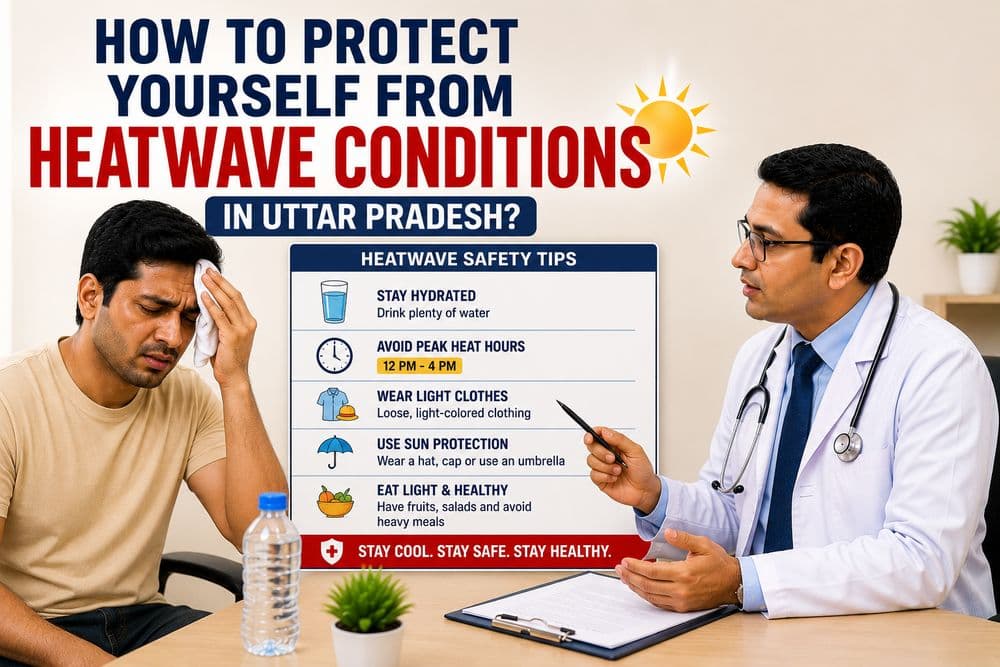
How to Protect Yourself During a Heatwave
1. Stay Hydrated
Drink water regularly throughout the day.
Do not wait until you feel thirsty.
2. Avoid Peak Heat Hours
Try to remain indoors between:
12 PM to 4 PM
when temperatures are usually highest.
3. Wear Lightweight Clothing
Choose:
- Light-colored clothes
- Loose-fitting clothing
- Breathable fabrics
to help the body stay cool.
4. Use Head Protection
When outdoors, wear:
- Caps
- Hats
- Umbrellas
to reduce direct sun exposure.
5. Avoid Excessive Outdoor Activity
Limit strenuous exercise and outdoor work during extreme heat.
6. Eat Light Meals
Choose:
- Fruits
- Salads
- Seasonal vegetables
- Water-rich foods
during hot weather.
7. Keep Indoor Spaces Cool
Use:
- Fans
- Coolers
- Air conditioning
- Proper ventilation
whenever possible.
8. Never Leave Children or Elderly People in Parked Vehicles
Vehicle temperatures can rise rapidly and become dangerous within minutes.
Summer Foods That May Help
Hydrating foods include:
- Watermelon
- Cucumber
- Muskmelon
- Coconut water
- Oranges
- Lemon water
These may help support hydration during hot weather.
Who Is Most at Risk?
Heatwaves can affect anyone, but higher-risk groups include:
- Older adults
- Young children
- Pregnant women
- Outdoor workers
- Athletes
- People with heart disease
- Individuals with high blood pressure
When Should You Seek Medical Help?
Seek immediate medical attention if someone develops:
- High fever
- Confusion
- Severe dizziness
- Fainting
- Difficulty responding
- Loss of consciousness
These may be signs of heat stroke.
Conclusion
Heatwaves in Uttar Pradesh can pose serious health risks, especially during peak summer months. Staying hydrated, avoiding excessive heat exposure, wearing appropriate clothing, and recognizing early warning signs can significantly reduce the risk of heat-related illnesses.
Simple preventive measures can help keep you and your family safe throughout the summer season.
Related reading
Written by
Top Anesthesiologist doctors in Lucknow on Zospital
Verified specialists you can book in minutes.
- Book appointment

Dr. Sanni Deyol Gautam
Anesthesiologist
Lucknow
4.8 - Book appointment

Dr Karanvir Singh Sidhu
Anesthesiologist
Lucknow
4.8 - Book appointment

Dr Harpreet Kaur
Anesthesiologist
Lucknow
4.8 - Book appointment

Dr. Akshat Trivedi
Anesthesiologist
Lucknow
4.5 - Book appointment

Dr. Praful Srivastava
Anesthesiologist
4.8 - Book appointment

Dr. Mohd. Ruheel Khan
Anesthesiologist
Faizabad
Have More Questions?
Find quick answers to common questions about our services, appointments, and patient care.
Regular hydration and avoiding peak afternoon heat are among the most effective measures.
Yes. Excessive sweating can lead to significant fluid loss.
Fatigue, dizziness, headache, excessive sweating, and muscle cramps are common signs.
Water, coconut water, and fresh lemon water are commonly recommended.
Extreme temperatures increase the risk of heat-related illnesses.
Yes. Dehydration and heat exposure may influence blood pressure levels.

“Your Health, Our Priority. Your Voice, Our Guide”
Dr.Nikhil Singh
Anaesthesia, MBBS, MD
Related Articles

ICU Charges in India: A Guide to Daily Costs & Breakdown
A comprehensive guide for families in North India to understand the various costs associated with ICU treatment, what factors influence the final bill, and how to manage the financial burden.
Google Before Doctor? How the Internet Shapes Health in India
The internet has changed how we access health information, creating both empowered patients and anxious 'cyberchondriacs'. This guide explores its effect on the modern doctor-patient relationship.

Long COVID – The New Health Condition Doctors Are Monitoring
Long COVID is a condition in which symptoms continue for weeks or months after COVID-19 infection. Learn symptoms, causes, and why doctors are monitoring it closely.

Written by Dr.Nikhil Singh
Anaesthesia, MBBS, MD
Last reviewed: 18 July 2026
Medical Disclaimer
The content provided on Zospital is for general informational and educational purposes only. It is not intended as a substitute for professional medical advice, diagnosis, or treatment. Always seek the advice of your physician or other qualified healthcare provider with any questions you may have regarding a medical condition. Never disregard professional medical advice or delay in seeking it because of something you have read on this website. If you think you may have a medical emergency, call your doctor or emergency services immediately.
Are you a doctor or run a clinic or hospital?
Patients across India are searching Zospital right now. Get a free profile with reviews, timings and direct WhatsApp bookings.