Why Doctors Are Seeing More Heat Stroke Cases Every Year
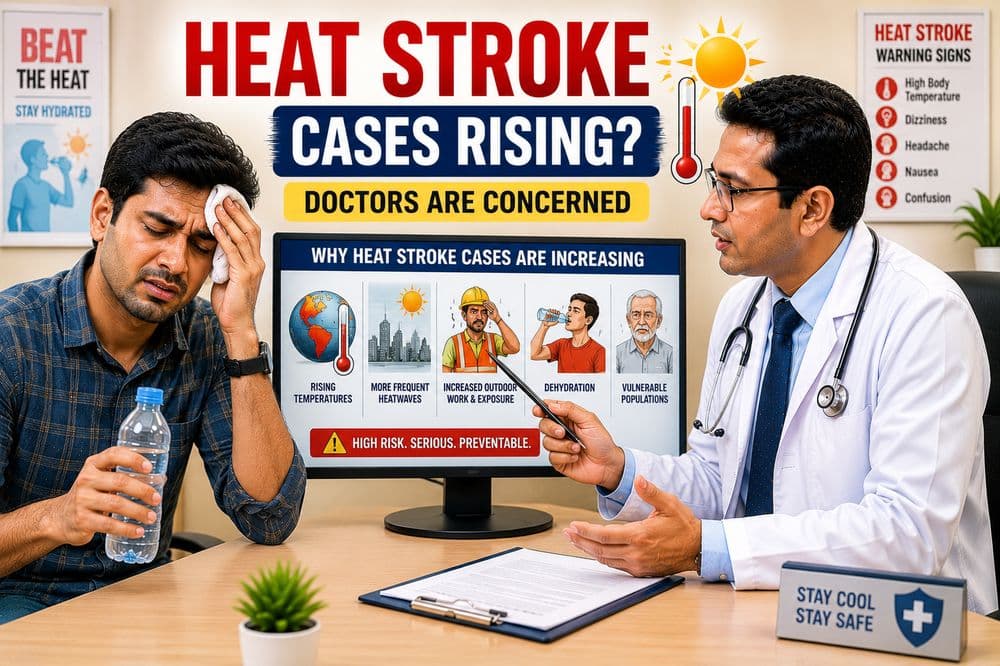
Medically reviewed by Dr. Nikhil Singh, Anaesthesia, MBBS, MD
Last reviewed: 24 Aug 2026 · How we review health content
5. Dehydration
Inadequate fluid intake remains one of the most common factors associated with heat-related illness.
Dehydration can impair the body's ability to regulate temperature effectively.
6. Aging Population
Older adults often have reduced ability to adapt to extreme temperatures.
They may also have underlying health conditions that increase vulnerability to heat stroke.
Common Symptoms of Heat Stroke
Warning signs may include:
- High body temperature
- Severe headache
- Dizziness
- Confusion
- Rapid heartbeat
- Nausea
- Hot skin
- Weakness
- Loss of consciousness
Prompt medical attention is essential.
Who Is Most at Risk?
Heat stroke can affect anyone, but higher-risk groups include:
- Older adults
- Young children
- Outdoor workers
- Athletes
- People with heart disease
- Individuals with dehydration
- People taking certain medications
Heat Exhaustion vs Heat Stroke
Heat Exhaustion
Symptoms may include:
- Heavy sweating
- Weakness
- Fatigue
- Dizziness
Heat Stroke
Symptoms may include:
- Extremely high body temperature
- Mental confusion
- Loss of consciousness
- Medical emergency
Heat stroke is significantly more dangerous and requires urgent care.
How Can You Reduce the Risk?
Stay Hydrated
Drink water regularly, especially during hot weather.
Avoid Peak Heat Hours
Limit outdoor activities during the hottest parts of the day.
Wear Light Clothing
Loose-fitting and breathable clothing may help reduce heat stress.
Take Frequent Breaks
Outdoor workers and athletes should rest in shaded or cool environments.
Never Ignore Early Symptoms
Headaches, dizziness, and excessive fatigue should not be dismissed during extreme heat.
When Should You Seek Emergency Medical Care?
Seek immediate medical attention if someone experiences:
- Confusion
- Fainting
- Loss of consciousness
- Extremely high body temperature
- Severe weakness
- Difficulty responding
These symptoms may indicate heat stroke and require urgent treatment.
Conclusion
Doctors are seeing more heat stroke cases each year due to rising temperatures, longer heatwaves, urban heat exposure, dehydration, and increased outdoor activity. While heat stroke is preventable, it remains a serious medical emergency that can quickly become life-threatening.
Recognizing early warning signs and taking preventive measures can significantly reduce the risk of heat-related complications during the summer months.
Related reading
Top Anesthesiologist doctors in Gorakhpur on Zospital
Verified specialists you can book in minutes.
- Book appointment

Dr Karanvir Singh Sidhu
Anesthesiologist
Lucknow
Verified•4.8 - Book appointment
Aveline Pascual Jerome, MD
Anesthesiologist
Ajmer
5 - Book appointment
Dr. Vivek Kumar Sharma - Laser & Advanced Laparoscopy Surgeon In Ajmer
Anesthesiologist
Ajmer
4.7 - Book appointment
Dr.Jay M. Panchal
Anesthesiologist
Ahmedabad
5 - Book appointment

Amit T. Darnule, MD
Anesthesiologist
Agra
4.9 - Book appointment
Dr Rajat Arora
Anesthesiologist
Agra
Have More Questions?
Find quick answers to common questions about our services, appointments, and patient care.
Rising temperatures, longer heatwaves, and increased heat exposure are major factors.
Yes. Heat stroke is a medical emergency that requires immediate treatment.
Dehydration increases the risk because it affects the body's cooling system.
Older adults, children, outdoor workers, and athletes are often at higher risk.
Symptoms may include headache, dizziness, confusion, and high body temperature.

“Your Health, Our Priority. Your Voice, Our Guide”
Dr. Nikhil Singh
Anaesthesia, MBBS, MD
Private hospitals in Gorakhpur on Zospital
Prefer a private option? These hospitals in Gorakhpur list their doctors and take bookings.
- Shankar Eye and Maternity Clinic- Best eye hospital | Best eye surgeon | Eye and Maternity clinic in Gorakhpur
- Trimurti Hospital - Dr. Sanjeev kumar Singh
- Shakuntala Hospital
Related Articles

Why Does Acidity Increase During Summer? Common Causes and Prevention Tips
Many people experience increased acidity and heartburn during summer due to dehydration, dietary habits, and heat-related lifestyle changes. Learn the common causes and prevention tips.

Why Does Back Pain Increase While Sitting?
Back pain that worsens while sitting may be linked to poor posture, muscle strain, or spine-related issues. Learn common causes and ways to reduce discomfort.

Why Does My Body Feel Weak All the Time?
Constant body weakness can be due to deficiency, stress, poor diet, or underlying health conditions. Early diagnosis helps prevent serious issues.

Written by Dr. Nikhil Singh
Anaesthesia, MBBS, MD
Last reviewed: 24 August 2026
Medical Disclaimer
The content provided on Zospital is for general informational and educational purposes only. It is not intended as a substitute for professional medical advice, diagnosis, or treatment. Always seek the advice of your physician or other qualified healthcare provider with any questions you may have regarding a medical condition. Never disregard professional medical advice or delay in seeking it because of something you have read on this website. If you think you may have a medical emergency, call your doctor or emergency services immediately.
Are you a doctor or run a clinic or hospital?
Patients across India are searching Zospital right now. Get a free profile with reviews, timings and direct WhatsApp bookings.