OPD Appointment at Rajiv Gandhi Super Speciality Hospital (RGSSH), Delhi: A Patient Guide
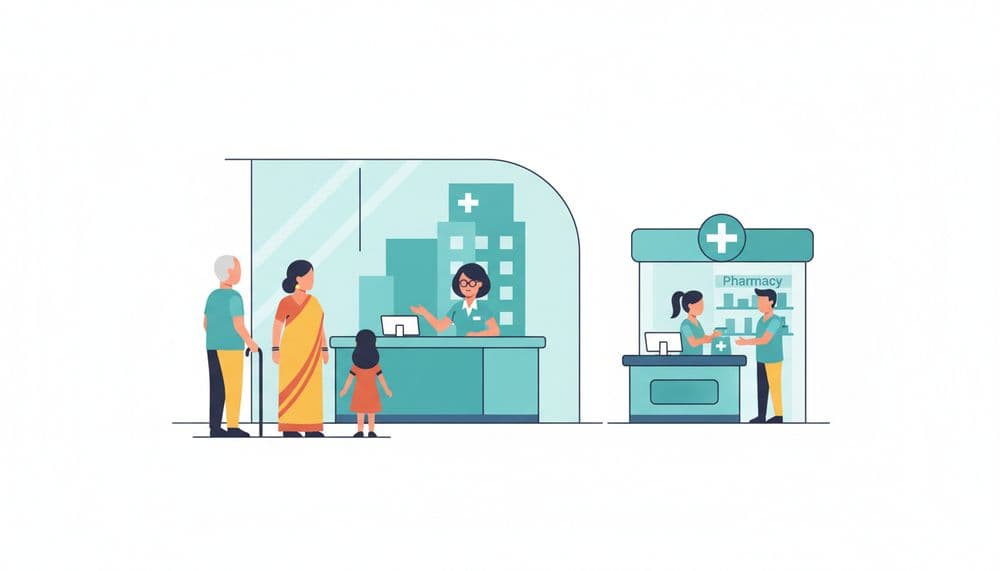
Medically reviewed by Dr. Nikhil Singh
Last reviewed: 14 Aug 2026
Rajiv Gandhi Super Speciality Hospital (RGSSH) is a 650-bed autonomous tertiary care referral centre operated by the Government of NCT of Delhi, located at Tahirpur, Dilshad Garden, New Delhi – 110093. The hospital offers specialist OPD services across cardiology, nephrology, gastroenterology, urology, pulmonology, endocrinology, cardiothoracic and vascular surgery, GI surgery, and critical care, along with supporting departments including radiology, pathology, microbiology, biochemistry, and a blood bank.
Because RGSSH is a government super-speciality hospital, outpatient registration and most diagnostic services are provided at heavily subsidised or nominal rates. Patients who qualify under the Delhi Arogya Kosh (DAK), Ayushman Bharat PM-JAY, or Central Government Health Scheme (CGHS) may receive inpatient treatment with little or no out-of-pocket expenditure. The guide below explains how to secure an OPD slot, what to expect on the day, and which financial-assistance schemes apply.
Registration and OPD fees at Rajiv Gandhi Super Speciality Hospital
All figures above are qualitative descriptions. Exact fee amounts should be confirmed at the hospital counter or by calling 011-22890612, as the official portal did not publish a specific tariff list at the time of research.
- OPD registration fee — A nominal fee is charged at the registration counter — confirm the current amount at the OPD registration desk or via the hospital helpline (011-22890612) before visiting, as rates are set by the Government of NCT of Delhi and subject to revision.
- BPL / Below Poverty Line patients — Delhi government hospitals typically exempt BPL cardholders from registration charges. Bring a valid BPL ration card or income certificate to the counter.
- Diagnostic tests (pathology, radiology, imaging) — Rates are government-fixed and significantly lower than private facilities. Confirm current charges at the respective department counter.
- Inpatient / surgical procedures — Procedure charges follow Delhi Government / CGHS / scheme rate schedules. Eligible beneficiaries under DAK or PM-JAY may have hospitalisation costs covered — see scheme details below.
Government schemes that help cover treatment
- Ayushman Bharat PM-JAY — Provides cashless hospitalisation cover of up to Rs 5 lakh per family per year for secondary and tertiary care. Delhi formally joined PM-JAY in 2025 and the Delhi government provides an additional Rs 5 lakh major-up, making total potential cover up to Rs 10 lakh per family. Verify RGSSH's current empanelment status on the official NHA portal at hospitals.pmjay.gov.in before visiting.
- Delhi Arogya Kosh (DAK) — A Delhi government scheme providing financial assistance of up to Rs 5 lakh to patients who are bonafide Delhi residents (minimum 3 years), have a family income up to Rs 3 lakh per year, and require treatment for a serious illness in a recognised government hospital in the NCT of Delhi. RGSSH, as a GNCTD autonomous institute, falls within the scheme's eligible hospital category. The treating hospital's administration initiates the application — ask at the Medical Superintendent's office or social welfare counter.
- Central Government Health Scheme (CGHS) — Central government employees, pensioners, and their dependents covered under CGHS can access treatment at CGHS-empanelled government hospitals. Confirm current CGHS referral and reimbursement procedure for RGSSH with the hospital's billing/accounts section.
- ESIC (Employees' State Insurance) — ESI-covered workers should check whether RGSSH is on the ESIC panel for their region, or whether a referral letter from an ESI dispensary is required before attending.
Rates shown are as per the Rajiv Gandhi Super Speciality Hospital — Official Website (rgssh.delhi.gov.in) (2026) and are subject to periodic revision. Always verify the latest approved rates on the official source.
How to get an appointment at Rajiv Gandhi Super Speciality Hospital
RGSSH is a super-speciality referral centre. Many of its specialist OPDs — for example, Pulmonology — formally cater to patients referred from other Delhi Government hospitals. If you are visiting from a primary or district government health facility, carry your referral letter; this may expedite registration and access to the relevant specialist. Patients with no referral can attempt walk-in registration, but availability at certain specialist OPDs may depend on the department's referral policy on that day.
The primary route for a walk-in or advance slot is the Delhi State Health Mission (DSHM) online OPD registration portal at dshm.delhi.gov.in, which covers Delhi government hospitals. To use this: create an account on the portal, select the hospital and department, choose a date, and print your OPD registration slip. Bring the printed slip to the hospital on the appointment date and proceed directly to the selected specialty OPD. For every return visit, log in again and generate a fresh OPD ticket.
Patients who cannot use the online portal may register at the hospital's OPD registration counter on the day of visit. Arrive early — registration typically opens in the morning and tokens are issued on a first-come, first-served basis. Bring a valid photo identity document (Aadhaar is widely accepted), any prior medical records relevant to your condition, and, where applicable, a government scheme card (Ayushman Bharat card, CGHS card, or BPL ration card).
Contact the hospital in advance to confirm which departments hold OPD on which days, as individual specialist OPDs may run on specific weekdays rather than every day. The hospital helpline numbers are 011-22890612 and 011-22890611.
How long it takes to get seen
OPD registration at the counter is reported to open from approximately 7:30 AM on weekdays, with consultation sessions running through the morning. One third-party source indicates OPD consultation hours of roughly 8 AM to 3 PM on weekdays (Monday to Friday) and reduced hours on Saturdays; confirm the current schedule for your specific department at the time of booking, as timings can vary by specialty and staffing.
As a tertiary referral hospital serving a large catchment area in North and East Delhi, patient volumes at RGSSH can be high, particularly during morning hours. Walk-in patients without a pre-booked online slot should expect to spend a significant portion of the morning at the hospital, especially for high-demand specialties such as Cardiology or Nephrology. Using the DSHM online portal to pre-register reduces queue time at the registration counter. Emergency services operate 24 hours a day, seven days a week.
What treatment costs and financial help
As an autonomous institute under the Government of NCT of Delhi, RGSSH charges government-regulated fees that are considerably lower than those at private hospitals. OPD registration involves a nominal fee; most diagnostic services — blood tests, imaging, ECG — are available at subsidised rates within the hospital's own laboratories and imaging centre.
For patients requiring hospitalisation or surgery, the applicable cost depends on whether a government scheme covers the procedure. Beneficiaries of Ayushman Bharat PM-JAY can receive cashless inpatient treatment up to the scheme's coverage limit; in Delhi, the central Rs 5 lakh cover may be supplemented by the state's additional major-up, subject to scheme rules in force at the time of treatment. Patients who are bonafide Delhi residents with a household income below Rs 3 lakh per year may apply through the treating doctor for Delhi Arogya Kosh assistance, which can fund treatment costs up to Rs 5 lakh for serious conditions including cardiac surgery, kidney transplant, cancer, and critical neurological care. CGHS beneficiaries should present their card at the billing counter and follow the applicable referral or reimbursement pathway.
Patients not covered by any scheme but from genuinely low-income households should speak to the hospital's Medical Social Worker or the Medical Superintendent's office about BPL exemptions and any other discretionary financial support the institution offers.
Key departments at RGSSH
RGSSH's clinical departments include: Cardiology (with Cath Lab and Non-Invasive Cardiology Centre), Cardiothoracic and Vascular Surgery (CTVS), Pulmonology, Gastroenterology (with GI Endoscopy Centre), GI Surgery, Nephrology (including Dialysis Centre), Urology (including Kidney Transplant), Endocrinology and Diabetes, Anaesthesia and Critical Care (including Pain Clinic), and a 24-hour Emergency department. Supporting services include Radiology and Imaging, Pathology, Microbiology, Biochemistry, and Blood Bank. The hospital also conducts postgraduate training for DM, MCh, and DNB programmes, so patients may be seen by senior residents or fellows under consultant supervision.
More government hospitals in Delhi
OPD appointment guides for other government hospitals in Delhi:
- OPD Appointment Guide: Deen Dayal Upadhyay Hospital, New Delhi
- Hindu Rao Hospital OPD Guide: Appointment, Fees, Departments & Schemes
- OPD Appointment Guide: Sanjay Gandhi Memorial Hospital, Delhi
- OPD Appointment Guide: Babu Jagjivan Ram Memorial Hospital, Jahangirpuri, Delhi
- How to get an OPD appointment at IHBAS, New Delhi — a patient guide
- Chacha Nehru Bal Chikitsalaya (CNBC) — OPD Guide for Patients and Families
- All government hospital OPD guides in New Delhi
- All government hospital OPD guides in Delhi
Frequently Asked Questions
Do I need a referral letter to visit RGSSH's OPD?
RGSSH functions primarily as a tertiary referral centre, and some specialist OPDs — including Pulmonology — officially serve referred patients from other Delhi government hospitals. Carrying a referral letter from a government health facility is advisable and may be required for certain departments. Contact the hospital (011-22890612) or check the department page on rgssh.delhi.gov.in before your visit to confirm the policy for the specialty you need.
Can I book an OPD appointment online, or must I walk in?
Delhi's government hospitals, including facilities within the GNCTD network, are covered by the Delhi State Health Mission (DSHM) online OPD registration portal at dshm.delhi.gov.in. You can create an account, select a hospital and department, and print an OPD registration slip to carry on the day. Walk-in registration at the hospital counter is also available on a first-come, first-served basis. Pre-booking online reduces time at the registration counter.
Is treatment free at RGSSH for Delhi residents?
OPD registration and most diagnostics involve nominal government-regulated fees, not zero charge. However, costs are heavily subsidised compared to private care. Patients who qualify under the Delhi Arogya Kosh (DAK) — bonafide Delhi residents with a family income up to Rs 3 lakh per year — can receive financial assistance of up to Rs 5 lakh for serious illnesses treated at recognised government hospitals, including GNCTD autonomous institutes. BPL cardholders may be eligible for fee exemptions; confirm at the counter.
How do I use my Ayushman Bharat card at RGSSH?
Delhi joined the Ayushman Bharat PM-JAY scheme in 2025. To use your Ayushman Bharat card for inpatient treatment, present it at the hospital's insurance or billing desk. The scheme provides cashless cover for eligible procedures; in Delhi, the central Rs 5 lakh annual cover may be combined with a state major-up. Verify the hospital's current PM-JAY empanelment status and the list of covered procedures on the official NHA portal at hospitals.pmjay.gov.in before admission.
What documents should I bring for my first OPD visit?
Bring a valid photo identity document (Aadhaar is widely accepted), your DSHM OPD registration printout if you booked online, any previous medical records or reports relevant to your condition, a referral letter from a government hospital if you have one, and your scheme card (Ayushman Bharat card, CGHS card, or BPL ration card) if applicable. Arriving early — before 8 AM on weekdays — is advisable to secure a token for high-demand departments.
Does RGSSH have a 24-hour emergency service?
Yes. The Emergency department at RGSSH operates round-the-clock, seven days a week. For non-emergency specialist consultations, the scheduled OPD hours apply and registration is required at the OPD counter or through the DSHM online portal.
Related
- Check your Ayushman Bharat (PM-JAY) eligibility
- CGHS rate list and how package rates work
- Safdarjung Hospital appointment and OPD guide
- Dr Ram Manohar Lohia Hospital appointment and OPD guide
Medical Disclaimer
The information provided in this article is for general informational and educational purposes only. It is not intended as a substitute for professional medical advice, diagnosis, or treatment. Always seek the advice of your physician or other qualified healthcare provider with any questions you may have regarding a medical condition. Never disregard professional medical advice or delay in seeking it because of something you have read in this article.
Top doctors in Delhi on Zospital
Verified specialists you can book in minutes.
- Book appointment

Dr. Naina Gupta
Oncologist
Varanasi
Verified•4 - Book appointment
Dr. Vishwanath Pratap Singh
General Surgeon
Varanasi
Verified•4.9 - Book appointment
Dr N. S . Paliwal
Rehabilitation Specialist
Lucknow
Verified - Book appointment
Dr. Roli Purwar
Gynecologist
Gorakhpur
Verified - Book appointment
Dr. Abhinav Srivastava
Spine Surgeon
Lucknow
Verified•4.9 - Book appointment

Dr. Shoeb Arif Khan
Orthopedic Surgeon
Lucknow
Verified•4.9
Have More Questions?
Find quick answers to common questions about our services, appointments, and patient care.
RGSSH functions primarily as a tertiary referral centre, and some specialist OPDs — including Pulmonology — officially serve referred patients from other Delhi government hospitals. Carrying a referral letter from a government health facility is advisable and may be required for certain departments. Contact the hospital (011-22890612) or check the department page on rgssh.delhi.gov.in before your visit to confirm the policy for the specialty you need.
Delhi's government hospitals, including facilities within the GNCTD network, are covered by the Delhi State Health Mission (DSHM) online OPD registration portal at dshm.delhi.gov.in. You can create an account, select a hospital and department, and print an OPD registration slip to carry on the day. Walk-in registration at the hospital counter is also available on a first-come, first-served basis. Pre-booking online reduces time at the registration counter.
OPD registration and most diagnostics involve nominal government-regulated fees, not zero charge. However, costs are heavily subsidised compared to private care. Patients who qualify under the Delhi Arogya Kosh (DAK) — bonafide Delhi residents with a family income up to Rs 3 lakh per year — can receive financial assistance of up to Rs 5 lakh for serious illnesses treated at recognised government hospitals, including GNCTD autonomous institutes. BPL cardholders may be eligible for fee exemptions; confirm at the counter.
Delhi joined the Ayushman Bharat PM-JAY scheme in 2025. To use your Ayushman Bharat card for inpatient treatment, present it at the hospital's insurance or billing desk. The scheme provides cashless cover for eligible procedures; in Delhi, the central Rs 5 lakh annual cover may be combined with a state major-up. Verify the hospital's current PM-JAY empanelment status and the list of covered procedures on the official NHA portal at hospitals.pmjay.gov.in before admission.
Bring a valid photo identity document (Aadhaar is widely accepted), your DSHM OPD registration printout if you booked online, any previous medical records or reports relevant to your condition, a referral letter from a government hospital if you have one, and your scheme card (Ayushman Bharat card, CGHS card, or BPL ration card) if applicable. Arriving early — before 8 AM on weekdays — is advisable to secure a token for high-demand departments.
Yes. The Emergency department at RGSSH operates round-the-clock, seven days a week. For non-emergency specialist consultations, the scheduled OPD hours apply and registration is required at the OPD counter or through the DSHM online portal.
Related Articles

OPD Appointment Guide: Rao Tula Ram Memorial Hospital, Jaffarpur, Delhi
A practical guide for patients seeking outpatient care at Rao Tula Ram (RTR) Memorial Hospital, Jaffarpur Kalan, New Delhi — covering OPD registration, timings, costs, and government scheme coverage.
Reasons for Leg Cramps at Night: Causes and Relief
Night leg cramps can disturb sleep and cause sudden pain. Learn possible reasons for leg cramps at night, relief tips, and when you may need medical advice.

Recurrent Miscarriage: Why It Happens & When to See a Doctor
Losing a pregnancy is difficult, and losing more than one can feel isolating. We'll break down the actual medical reasons for recurrent miscarriage and explain when to consult a specialist.
Written by Dr. Nikhil Singh
Last reviewed: 14 August 2026
Medical Disclaimer
The content provided on Zospital is for general informational and educational purposes only. It is not intended as a substitute for professional medical advice, diagnosis, or treatment. Always seek the advice of your physician or other qualified healthcare provider with any questions you may have regarding a medical condition. Never disregard professional medical advice or delay in seeking it because of something you have read on this website. If you think you may have a medical emergency, call your doctor or emergency services immediately.
Are you a doctor or run a clinic or hospital?
Patients across India are searching Zospital right now. Get a free profile with reviews, timings and direct WhatsApp bookings.