Why Hospitals See More Kidney Stone Cases During Summer
Medically reviewed by Dr.Nikhil Singh, Anaesthesia, MBBS, MD
Last reviewed: 18 Jul 2026
Introduction
Many hospitals and emergency departments report a noticeable increase in kidney stone cases during the summer months.
Hot weather, excessive sweating, and inadequate water intake can create conditions that make kidney stone formation more likely. While kidney stones can develop at any time of the year, summer often presents additional risk factors that contribute to a higher number of cases.
Understanding why kidney stones become more common during hot weather can help you take preventive steps and maintain better kidney health.
What Are Kidney Stones?
Kidney stones are hard deposits made of minerals and salts that form inside the kidneys.
They can vary in size and may affect:
- Kidneys
- Ureters
- Bladder
- Urinary tract
Small stones may pass naturally, while larger stones can cause significant pain and urinary symptoms.
Why Do Kidney Stone Cases Increase During Summer?
1. Dehydration
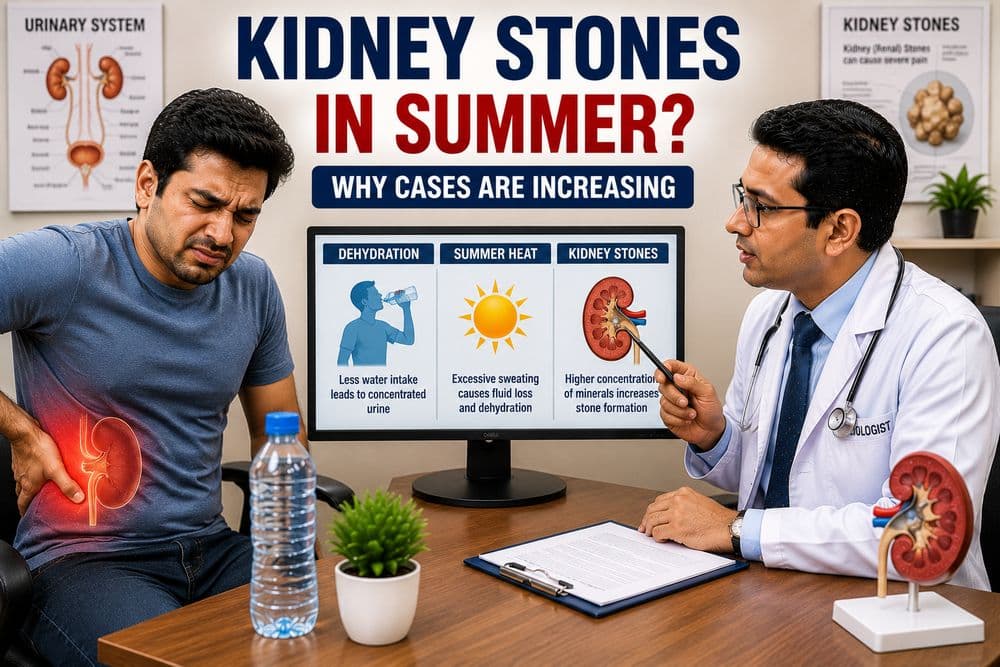
Dehydration is one of the most important reasons kidney stone cases rise during summer.
When the body loses water through sweating and fluid intake is inadequate:
- Urine becomes more concentrated
- Mineral levels increase
- Stone-forming substances may accumulate
This creates an environment where kidney stones are more likely to develop.
2. Excessive Sweating
Hot weather increases sweat production.
As more fluid leaves the body through sweat:
- Less water is available for urine production
- Urine volume decreases
- Mineral concentration increases
This may increase stone formation risk.
3. Inadequate Water Intake
Many people underestimate how much water they need during summer.
Insufficient hydration may contribute to:
- Dark urine
- Concentrated urine
- Increased kidney stone risk
4. Outdoor Activities
Summer often involves:
- Sports
- Outdoor work
- Travel
- Physical exercise
Without proper hydration, these activities may increase fluid loss and kidney stone risk.
5. Dietary Factors
Certain dietary habits may also contribute to stone formation, especially when combined with dehydration.
Examples include:
- Excess salt intake
- Sugary beverages
- Processed foods
- Low fluid consumption
Common Symptoms of Kidney Stones
Symptoms may include:
- Severe side or back pain
- Lower abdominal pain
- Pain during urination
- Blood in urine
- Frequent urination
- Nausea
- Vomiting
Symptoms vary depending on the size and location of the stone.
Who Is More Likely to Develop Kidney Stones?
Risk may be higher among:
- Individuals with poor hydration habits
- Outdoor workers
- Athletes
- People living in hot climates
- Individuals with previous kidney stones
- Those with a family history of kidney stones
Warning Signs That Should Not Be Ignored
Seek medical attention if you experience:
- Severe pain
- Blood in urine
- Fever with urinary symptoms
- Persistent nausea
- Difficulty passing urine
Prompt evaluation is important.
How Can You Reduce Kidney Stone Risk During Summer?
Stay Hydrated
Drink water consistently throughout the day.
Monitor Urine Color
Light-colored urine often indicates better hydration.
Increase Fluid Intake During Outdoor Activities
Additional hydration may be needed during exercise and hot weather.
Limit Excess Salt
High sodium intake may contribute to stone formation.
Maintain a Balanced Diet
A healthy diet supports kidney health and overall well-being.
When Should You See a Doctor?
Consult a healthcare professional if:
- You experience severe urinary pain
- Symptoms recur frequently
- Blood appears in urine
- Urinary symptoms worsen
Early diagnosis can help prevent complications.
Conclusion
Hospitals often see more kidney stone cases during summer because dehydration, excessive sweating, and inadequate fluid intake increase the concentration of minerals in urine. Staying properly hydrated and maintaining healthy lifestyle habits can significantly reduce the risk of kidney stone formation during hot weather.
Protecting kidney health becomes especially important during the summer months when fluid loss is at its highest.
Related reading
Written by
Top Anesthesiologist doctors in Lucknow on Zospital
Verified specialists you can book in minutes.
- Book appointment

Dr. Sanni Deyol Gautam
Anesthesiologist
Lucknow
4.8 - Book appointment

Dr Karanvir Singh Sidhu
Anesthesiologist
Lucknow
4.8 - Book appointment

Dr Harpreet Kaur
Anesthesiologist
Lucknow
4.8 - Book appointment

Dr. Akshat Trivedi
Anesthesiologist
Lucknow
4.5 - Book appointment

Dr. Praful Srivastava
Anesthesiologist
4.8 - Book appointment

Dr. Mohd. Ruheel Khan
Anesthesiologist
Faizabad
Have More Questions?
Find quick answers to common questions about our services, appointments, and patient care.
Dehydration and excessive sweating increase the concentration of stone-forming minerals in urine.
Yes. Dehydration is one of the most common risk factors for kidney stone formation.
Hydration needs vary, but regular fluid intake is important, especially during hot weather.
Pain in the side or back, urinary discomfort, and blood in urine are common symptoms.
Yes. Excessive sweating may reduce urine volume and increase mineral concentration.
Yes. Higher temperatures may increase dehydration risk.
Proper hydration and healthy dietary habits may help reduce risk.

“Your Health, Our Priority. Your Voice, Our Guide”
Dr.Nikhil Singh
Anaesthesia, MBBS, MD
Related Articles

Why We Lie to Doctors: Breaking the Silence for Better Health
A deep dive into the common reasons for patient dishonesty, from fear of judgment to embarrassment, and how to foster a more open relationship for better health outcomes.

Why Vitamin D Deficiency Is Becoming Common in Young Adults
Vitamin D deficiency is becoming increasingly common in young adults due to indoor lifestyle, low sunlight exposure, and modern habits. Learn symptoms, causes, and prevention.

Winter Stroke Risk in North India: Causes & Prevention
As temperatures drop across North India, the risk of brain stroke significantly increases. This article explores the scientific reasons and provides practical tips to stay safe.

Written by Dr.Nikhil Singh
Anaesthesia, MBBS, MD
Last reviewed: 18 July 2026
Medical Disclaimer
The content provided on Zospital is for general informational and educational purposes only. It is not intended as a substitute for professional medical advice, diagnosis, or treatment. Always seek the advice of your physician or other qualified healthcare provider with any questions you may have regarding a medical condition. Never disregard professional medical advice or delay in seeking it because of something you have read on this website. If you think you may have a medical emergency, call your doctor or emergency services immediately.
Are you a doctor or run a clinic or hospital?
Patients across India are searching Zospital right now. Get a free profile with reviews, timings and direct WhatsApp bookings.