Bone Marrow Transplant Cost in India vs. USA & UK: A Guide for International Patients
Medically reviewed by Dr. Nikhil Singh
Last reviewed: 11 Aug 2026
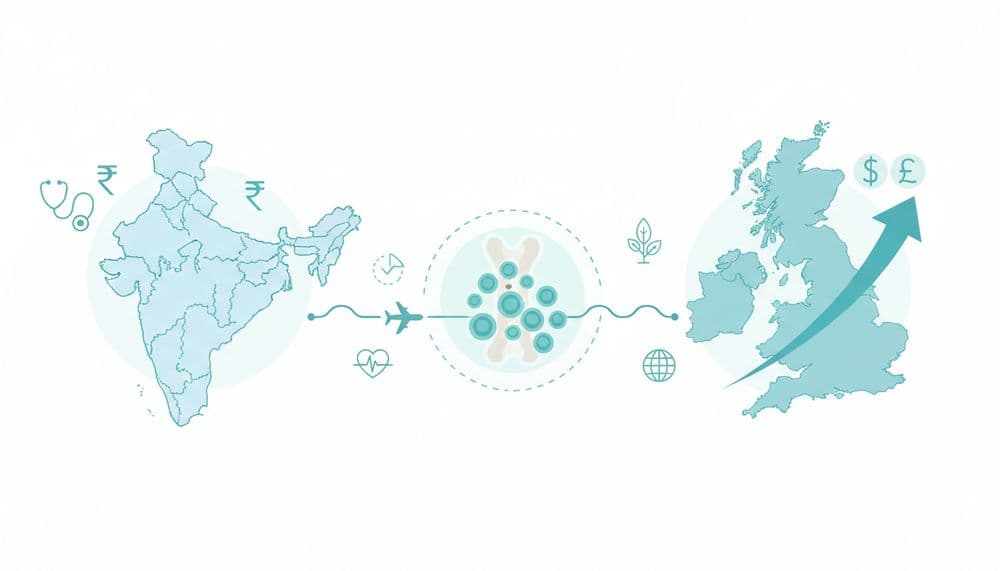
A Bone Marrow Transplant (BMT), also known as a Stem Cell Transplant, is a medical procedure used to treat various conditions, including cancers like leukemia and lymphoma, as well as certain blood and immune system disorders. For Non-Resident Indians (NRIs) arranging care for family or international patients considering treatment in India, understanding the financial and logistical landscape is crucial.
This guide provides a detailed comparison of BMT costs between India, the United States, and the United Kingdom. It also outlines the process for finding a donor, planning your trip, and navigating the healthcare system in India for this complex procedure.
Bone Marrow Transplant Costs: At a Glance
Costs are estimates and can vary based on the hospital, city, patient's condition, and specific treatment requirements. Indian costs are for private hospitals.
- Autologous BMT Cost in India — ₹10,00,000 - ₹22,00,000 (approx. $14,000 - $25,800)
- Allogeneic BMT (Sibling Donor) Cost in India — ₹15,00,000 - ₹28,00,000 (approx. $20,500 - $33,400)
- Allogeneic BMT (Unrelated Donor) Cost in India — ₹28,00,000 - ₹50,00,000 (approx. $28,000 - $62,000)
- Haploidentical BMT Cost in India — ₹25,00,000 - ₹40,00,000 (approx. $30,000 - $52,000)
- Typical BMT Cost in the USA — $400,000 - $1,261,800+
- Typical Private BMT Cost in the UK — £150,000 - €850,000 (approx. $250,000 - $850,000+)
Rates shown are as per the Central Government Health Scheme (CGHS) rate schedule, Ministry of Health & Family Welfare (2026) and are subject to periodic revision. Always verify the latest approved rates on the official source.
Cost of Bone Marrow Transplant: India vs. USA & UK
The cost of a bone marrow transplant in India is significantly lower than in Western countries like the US and UK, making it a considerable option for international patients and NRIs. Indian private hospital costs are often presented as a package that includes the pre-transplant evaluation, conditioning therapy, stem cell infusion, a standard hospital stay in a specialized HEPA-filtered isolation room, and post-transplant monitoring for a set period.
In India, the cost varies based on the type of transplant:
An **Autologous BMT**, which uses the patient's own stem cells, is the least expensive option. The cost generally ranges from ₹10,00,000 to ₹22,00,000 (approximately USD 14,000 to USD 25,800).
An **Allogeneic BMT** using a matched sibling donor typically costs between ₹15,00,000 and ₹28,00,000 (approximately USD 20,500 to USD 33,400). The higher price reflects costs for donor testing (HLA typing), stem cell collection, and managing potential complications like Graft-versus-Host Disease (GvHD).
A **Matched Unrelated Donor (MUD) Allogeneic BMT** is more expensive, ranging from ₹28,00,000 to ₹50,00,000 (approximately USD 28,000 to USD 62,000). The search for a donor in national and international registries can add ₹8 lakh to ₹15 lakh to the total cost.
A **Haploidentical BMT**, using a half-matched family donor, usually costs between ₹25,00,000 and ₹40,00,000 (approximately USD 30,000 to USD 52,000).
In stark contrast, BMT costs in the United States can range from $400,000 to over $800,000. A 2025 Milliman report cited an average cost of $577,000 for an autologous BMT and $1,261,800 for an allogeneic BMT. In the United Kingdom, private patient costs are estimated to be between £150,000 and €850,000 (approximately $250,000 to over $850,000), depending on complexity.
It's worth noting that costs at government-affiliated centres in India, such as the All India Institute of Medical Sciences (AIIMS), can be substantially lower. As of July 2023, a subsidized autologous transplant at AIIMS could cost around ₹3,00,000, and a matched sibling allogeneic transplant around ₹5,00,000. While the Central Government Health Scheme (CGHS) does cover BMT, a specific all-inclusive package rate is not publicly available. The Rashtriya Arogya Nidhi (RAN) scheme also lists BMT as an eligible treatment for Below Poverty Line (BPL) families.
The Bone Marrow Transplant Process in India
The BMT process is intensive and requires careful coordination. It begins with a comprehensive pre-transplant evaluation to assess the patient's overall health.
Following the evaluation, the patient undergoes 'conditioning'. This involves high-dose chemotherapy and/or radiation therapy to eliminate the diseased cells and prepare the bone marrow to receive the new stem cells. After conditioning, the new stem cells are infused into the patient's bloodstream, similar to a blood transfusion. This is the transplant itself.
The critical waiting period that follows is known as engraftment. This is when the transplanted stem cells travel to the bone marrow and begin to produce new, healthy blood cells. Engraftment typically takes two to four weeks. During this time, the patient is highly susceptible to infection and is cared for in a sterile, HEPA-filtered isolation room.
- **Total Hospitalization:** The inpatient hospital stay for the transplant process usually lasts 3 to 6 weeks.
- **Autologous BMT Stay:** Typically requires 21 to 28 days in the hospital.
- **Allogeneic BMT Stay:** Often requires a longer stay of 28 to 60 days due to a higher risk of complications.
Finding a Donor: Registries in India
For allogeneic transplants where a matched sibling is not available, patients must rely on registries of volunteer donors. India has a robust system for finding both domestic and international donors.
**DATRI (Blood Stem Cell Donors Registry):** As India's largest registry with over 660,000 registered voluntary donors, DATRI is a key resource. A transplant center can initiate a search on behalf of the patient. DATRI is also a member of the World Marrow Donor Association (WMDA), which connects it to a global network of registries, allowing for international searches. The cost for a volunteer to register and undergo HLA typing is INR 1800.
**DKMS-BMST Foundation India:** This is a joint venture between DKMS, a large international donor center, and the Bangalore Medical Services Trust (BMST). It provides access to a vast, ethnically diverse global pool of donors from its centers across seven countries. This unified database represents 25% of all registered unrelated donors worldwide and can be searched by physicians for a suitable match.
Planning Your Trip to India for a BMT
A BMT is not a short medical trip; it requires a significant time commitment in India for pre-treatment workups, the procedure itself, and crucial post-transplant monitoring.
The total duration of your stay in India will depend on the type of transplant. For an autologous BMT, a total stay of 4 to 6 weeks is generally required. For an allogeneic BMT, the requirement is much longer, with a minimum stay of 10 to 16 weeks. It is often advised that allogeneic transplant patients do not fly commercially for up to six months after the procedure to minimize risks.
After being discharged from the hospital, the patient must remain close to the transplant center for frequent follow-up appointments, blood tests, and monitoring. This outpatient period can last 1-2 weeks for autologous patients and 4-8 weeks for allogeneic patients. A total stay of about three months near the hospital is often recommended for the body to adjust and for the new immune system to strengthen.
Medical Visa and Logistics for International Patients
Navigating the logistics for medical travel is a key part of the process. The journey for an international patient typically follows a clear pathway.
- **Initial Consultation:** The process starts by sharing the patient's medical records with Indian hospitals or medical travel facilitators. The hospital will review the case and provide a proposed treatment plan, a formal cost estimate, and often a second opinion.
- **Medical Visa (M-Visa):** Patients must obtain a Medical Visa (M-Visa) to undergo treatment in India. A companion or family member can travel on a Medical Attendant Visa. The most critical document for the application is a visa invitation letter from the treating hospital in India. You will also need a valid passport, the visa application form, medical reports confirming the diagnosis, and proof of sufficient funds for the treatment and stay.
- **Types of Medical Visas:** An e-Medical Visa is available for citizens of many countries and is valid for 60 days with triple entry. For a longer stay, a standard medical visa can be granted for up to a year and may be extended based on medical requirements.
- **Accommodation:** You will need to arrange accommodation for the entire duration of your stay. It is highly recommended to find a place within a 15-20 minute radius of the hospital to facilitate easy access for follow-up appointments post-discharge.
- **Post-Treatment Follow-up:** After returning to your home country, long-term follow-up care is essential. Many major Indian hospitals support international patients with telemedicine and virtual consultations. A typical follow-up schedule might include remote check-ins at 2 weeks, 6 weeks, and 3 months after returning home.
More guides for NRIs and international patients
Related guides from our NRI and international patient hub:
- Hysterectomy Cost in India vs. the USA, UK, and Australia
- Air Ambulance & Medical Evacuation in India: A Guide for NRIs
- A Guide to India's Medical Visa and e-Medical Visa for International Patients
- Knee Replacement Cost in India vs. USA, UK & Australia
- Healthcare in India for NRIs and international patients: all guides
Frequently Asked Questions
How much does a bone marrow transplant cost in India in US dollars?
The cost varies by type. An autologous BMT typically ranges from $14,000 to $25,800. An allogeneic BMT with a sibling donor costs around $20,500 to $33,400, while one with a matched unrelated donor (MUD) can cost from $28,000 up to $62,000 due to donor search fees.
What is the total time I need to stay in India for a BMT?
The total in-country stay is extensive. For an autologous BMT, expect to stay for 4 to 6 weeks. For an allogeneic BMT, a minimum stay of 10 to 16 weeks is required for pre-transplant workup, hospitalization, and post-discharge monitoring.
How do I find a matched unrelated donor (MUD) for a BMT in India?
If you don't have a matched sibling, your transplant center in India will initiate a search through national and international registries. They utilize organizations like DATRI, India's largest registry, and DKMS-BMST Foundation India, which provide access to a global pool of volunteer donors.
What is included in the BMT package cost in Indian hospitals?
A BMT package in a private Indian hospital typically includes the pre-transplant evaluation, conditioning therapy (chemotherapy/radiation), the stem cell infusion, a standard hospital stay of 3-6 weeks in a specialized HEPA-filtered room, and a defined period of post-transplant monitoring.
What visa do I need for medical treatment in India and how do I get it?
You need a Medical Visa (M-Visa), and your attendant needs a Medical Attendant Visa. To apply, you first need a visa invitation letter from the Indian hospital where you will be treated. This letter, along with your passport, medical records, and proof of funds, is submitted with your visa application.
Is it safe to fly back home immediately after a BMT in India?
No, it is not safe to fly immediately. After hospital discharge, you must stay near the hospital for several weeks for close monitoring. For allogeneic transplants, medical professionals may advise against commercial air travel for up to six months post-transplant due to the risk of infection and complications.
What's the difference in cost between using a sibling donor and an unrelated donor in India?
Using a matched sibling donor for an allogeneic BMT typically costs ₹15 lakh to ₹28 lakh. Using a matched unrelated donor (MUD) is more expensive, ranging from ₹28 lakh to ₹50 lakh. The higher cost for a MUD transplant is largely due to the fees for searching international donor registries, which can add ₹8 lakh to ₹15 lakh to the total bill.
Related
- Healthcare in India for NRIs and international patients: the complete hub
- Treatment costs in India: a complete guide
- Government health schemes in India: a guide
- How to apply for a CGHS card
Medical Disclaimer
The information provided in this article is for general informational and educational purposes only. It is not intended as a substitute for professional medical advice, diagnosis, or treatment. Always seek the advice of your physician or other qualified healthcare provider with any questions you may have regarding a medical condition. Never disregard professional medical advice or delay in seeking it because of something you have read in this article.
Top doctors on Zospital
Verified specialists you can book in minutes.
- Book appointment
Dr N. S . Paliwal
Rehabilitation Specialist
Lucknow
Verified - Book appointment

Dr. Ankit Maheshwari
Gastrologist / Gastroenterologist
Lucknow
Verified•4.7 - Book appointment

Dr. Mrinal Jaiswal
Orthopedic Surgeon
Varanasi
Verified•4.9 - Book appointment
Dr. Salman Khan
ENT
Lucknow
Verified•4.8 - Book appointment

Dr. Richa Gangwar
Gynecologist
Lucknow
Verified•4.9 - Book appointment

Dr. Abhinav Srivastava
Spine Surgeon
Lucknow
Verified•4.9
Have More Questions?
Find quick answers to common questions about our services, appointments, and patient care.
The cost varies by type. An autologous BMT typically ranges from $14,000 to $25,800. An allogeneic BMT with a sibling donor costs around $20,500 to $33,400, while one with a matched unrelated donor (MUD) can cost from $28,000 up to $62,000 due to donor search fees.
The total in-country stay is extensive. For an autologous BMT, expect to stay for 4 to 6 weeks. For an allogeneic BMT, a minimum stay of 10 to 16 weeks is required for pre-transplant workup, hospitalization, and post-discharge monitoring.
If you don't have a matched sibling, your transplant center in India will initiate a search through national and international registries. They utilize organizations like DATRI, India's largest registry, and DKMS-BMST Foundation India, which provide access to a global pool of volunteer donors.
A BMT package in a private Indian hospital typically includes the pre-transplant evaluation, conditioning therapy (chemotherapy/radiation), the stem cell infusion, a standard hospital stay of 3-6 weeks in a specialized HEPA-filtered room, and a defined period of post-transplant monitoring.
You need a Medical Visa (M-Visa), and your attendant needs a Medical Attendant Visa. To apply, you first need a visa invitation letter from the Indian hospital where you will be treated. This letter, along with your passport, medical records, and proof of funds, is submitted with your visa application.
No, it is not safe to fly immediately. After hospital discharge, you must stay near the hospital for several weeks for close monitoring. For allogeneic transplants, medical professionals may advise against commercial air travel for up to six months post-transplant due to the risk of infection and complications.
Using a matched sibling donor for an allogeneic BMT typically costs ₹15 lakh to ₹28 lakh. Using a matched unrelated donor (MUD) is more expensive, ranging from ₹28 lakh to ₹50 lakh. The higher cost for a MUD transplant is largely due to the fees for searching international donor registries, which can add ₹8 lakh to ₹15 lakh to the total bill.
Related Articles

How to Book Indian Government Hospital Appointments for Family from Abroad: An NRI Guide
A complete guide for Non-Resident Indians (NRIs) living abroad to navigate the process of booking an Out-Patient Department (OPD) appointment at an Indian government hospital for a parent or relative in India, using the official ORS portal.

OPD Appointment Guide: BPS Government Medical College for Women, Khanpur Kalan
A practical patient guide to accessing outpatient services at Bhagat Phool Singh Government Medical College and Hospital (BPSGMC), Khanpur Kalan, Sonipat, Haryana — covering the appointment process, registration, OPD timings, departments, and financial assistance under government health schemes.
Breast Cancer: Ghar Par Jaanch Kaise Karein, Kab Dikhayein
Breast me gaanth ka matlab hamesha cancer nahi. Janiye ghar par self-exam kaise karein, kaunse lakshan gambhir hain, aur jaanch kaise hoti hai.
Written by Dr. Nikhil Singh
Last reviewed: 11 August 2026
Medical Disclaimer
The content provided on Zospital is for general informational and educational purposes only. It is not intended as a substitute for professional medical advice, diagnosis, or treatment. Always seek the advice of your physician or other qualified healthcare provider with any questions you may have regarding a medical condition. Never disregard professional medical advice or delay in seeking it because of something you have read on this website. If you think you may have a medical emergency, call your doctor or emergency services immediately.
Are you a doctor or run a clinic or hospital?
Patients across India are searching Zospital right now. Get a free profile with reviews, timings and direct WhatsApp bookings.