Why Do Leg Cramps Increase During Summer? Causes, Prevention and Relief Tips
Medically reviewed by Dr. Nikhil Singh, Anaesthesia, MBBS, MD
Last reviewed: 24 Aug 2026 · How we review health content
Introduction
Have you noticed that leg cramps seem to occur more frequently during the summer months?
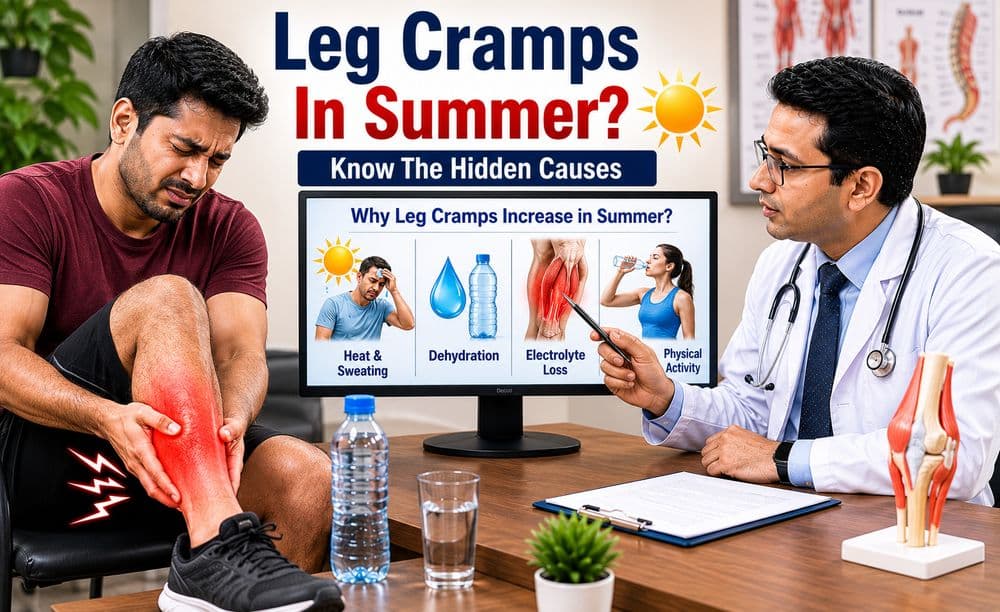
Many people experience sudden, painful muscle cramps in the calves, feet, or thighs when temperatures rise. While occasional cramps are common, recurring episodes may be linked to dehydration, electrolyte loss, or increased physical activity in hot weather.
Understanding why summer heat can trigger leg cramps may help you take steps to prevent them and maintain muscle health.
What Are Leg Cramps?
Leg cramps are sudden, involuntary muscle contractions that commonly affect:
- Calf muscles
- Thigh muscles
- Feet
- Toes
They often occur suddenly and may last from a few seconds to several minutes.
Why Do Leg Cramps Become More Common During Summer?
1. Dehydration
One of the most common causes of summer leg cramps is dehydration.
During hot weather, the body loses more fluids through sweating.
Low fluid levels may affect muscle function and increase the likelihood of cramps.
2. Electrolyte Loss
Sweat contains important minerals such as:
- Sodium
- Potassium
- Magnesium
- Calcium
Excessive sweating may reduce electrolyte levels and contribute to muscle cramping.
3. Increased Physical Activity
Summer often encourages:
- Outdoor exercise
- Sports activities
- Walking
- Physical labor
Overworked muscles may become more prone to cramping.
4. Heat Exposure
High temperatures place additional stress on the body's muscles and circulatory system.
This may increase the risk of muscle fatigue and cramp development.
5. Poor Hydration Habits
Many people do not replace lost fluids adequately throughout the day.
Even mild dehydration may increase muscle irritability.
Common Symptoms of Leg Cramps
People may experience:
- Sudden sharp pain
- Muscle tightening
- Hard muscle knot
- Difficulty moving the leg temporarily
- Residual soreness after the cramp
The calf is often the most commonly affected area.
Who Is More Likely to Experience Summer Leg Cramps?
Leg cramps are more common among:
- Outdoor workers
- Athletes
- Older adults
- Individuals who sweat heavily
- People with inadequate fluid intake
- Individuals standing for long hours
Can Summer Leg Cramps Indicate a Health Problem?
Occasional cramps are usually harmless.
However, frequent cramps may sometimes be associated with:
- Electrolyte imbalance
- Vitamin deficiencies
- Circulation problems
- Nerve-related conditions
- Certain medications
Persistent symptoms should be evaluated by a healthcare professional.
How Can You Prevent Leg Cramps During Summer?
Stay Hydrated
Drink water regularly throughout the day, especially when outdoors.
Replace Electrolytes
After excessive sweating, maintaining electrolyte balance may be beneficial.
Stretch Regularly
Gentle stretching before and after physical activity may help reduce cramp risk.
Avoid Overexertion
Gradually increase activity levels and take breaks when needed.
Wear Comfortable Footwear
Proper support may reduce muscle strain during prolonged activity.
Maintain a Balanced Diet
Adequate intake of essential nutrients supports healthy muscle function.
What Should You Do During a Leg Cramp?
If a cramp occurs:
Gently Stretch the Muscle
Stretching may help relax the affected muscle.
Massage the Area
Gentle massage may reduce muscle tightness.
Stay Hydrated
Drink water if dehydration is suspected.
Apply Warmth
A warm compress may help relax tight muscles.
When Should You See a Doctor?
Consult a healthcare professional if:
- Cramps occur frequently
- Pain is severe
- Swelling develops
- Weakness accompanies cramps
- Symptoms interfere with daily activities
Medical evaluation may help identify underlying causes.
Conclusion
Leg cramps often become more common during summer due to dehydration, electrolyte loss, heat exposure, and increased physical activity. While occasional cramps are usually temporary, frequent episodes may signal an underlying issue that requires attention.
Maintaining proper hydration, stretching regularly, and supporting electrolyte balance can help reduce the risk of summer-related leg cramps.
Related reading
Top Anesthesiologist doctors in Gorakhpur on Zospital
Verified specialists you can book in minutes.
- Book appointment

Dr Karanvir Singh Sidhu
Anesthesiologist
Lucknow
Verified•4.8 - Book appointment
Aveline Pascual Jerome, MD
Anesthesiologist
Ajmer
5 - Book appointment
Dr. Vivek Kumar Sharma - Laser & Advanced Laparoscopy Surgeon In Ajmer
Anesthesiologist
Ajmer
4.7 - Book appointment
Dr.Jay M. Panchal
Anesthesiologist
Ahmedabad
5 - Book appointment

Amit T. Darnule, MD
Anesthesiologist
Agra
4.9 - Book appointment
Dr Rajat Arora
Anesthesiologist
Agra
Have More Questions?
Find quick answers to common questions about our services, appointments, and patient care.
Dehydration and electrolyte loss from sweating are common reasons.
Yes. Inadequate fluid intake may affect muscle function and trigger cramps.
Potassium, magnesium, calcium, and sodium play important roles in muscle health.
Occasional cramps are usually harmless, but frequent or severe cramps should be evaluated.
Calf muscles are heavily used during daily activities and are commonly affected.

“Your Health, Our Priority. Your Voice, Our Guide”
Dr. Nikhil Singh
Anaesthesia, MBBS, MD
Private hospitals in Gorakhpur on Zospital
Prefer a private option? These hospitals in Gorakhpur list their doctors and take bookings.
- Shankar Eye and Maternity Clinic- Best eye hospital | Best eye surgeon | Eye and Maternity clinic in Gorakhpur
- Trimurti Hospital - Dr. Sanjeev kumar Singh
- Shakuntala Hospital
Related Articles
Why Do Lips Get Dry Even After Drinking Water?
Dry lips even after drinking water can be due to weather, habits, or underlying health issues. Understanding the cause helps in effective treatment.
Why Do My Feet Feel Hot at Night? Causes & Solutions
Burning feet at night? Learn causes, symptoms, and when to see a doctor for proper treatment and relief.
Why Do Some People Feel Breathless While Climbing Stairs?
Feeling breathless while climbing stairs can sometimes be linked to low fitness levels, excess weight, respiratory conditions, or heart-related issues. Learn the possible causes and when to seek medical advice.

Written by Dr. Nikhil Singh
Anaesthesia, MBBS, MD
Last reviewed: 24 August 2026
Medical Disclaimer
The content provided on Zospital is for general informational and educational purposes only. It is not intended as a substitute for professional medical advice, diagnosis, or treatment. Always seek the advice of your physician or other qualified healthcare provider with any questions you may have regarding a medical condition. Never disregard professional medical advice or delay in seeking it because of something you have read on this website. If you think you may have a medical emergency, call your doctor or emergency services immediately.
Are you a doctor or run a clinic or hospital?
Patients across India are searching Zospital right now. Get a free profile with reviews, timings and direct WhatsApp bookings.