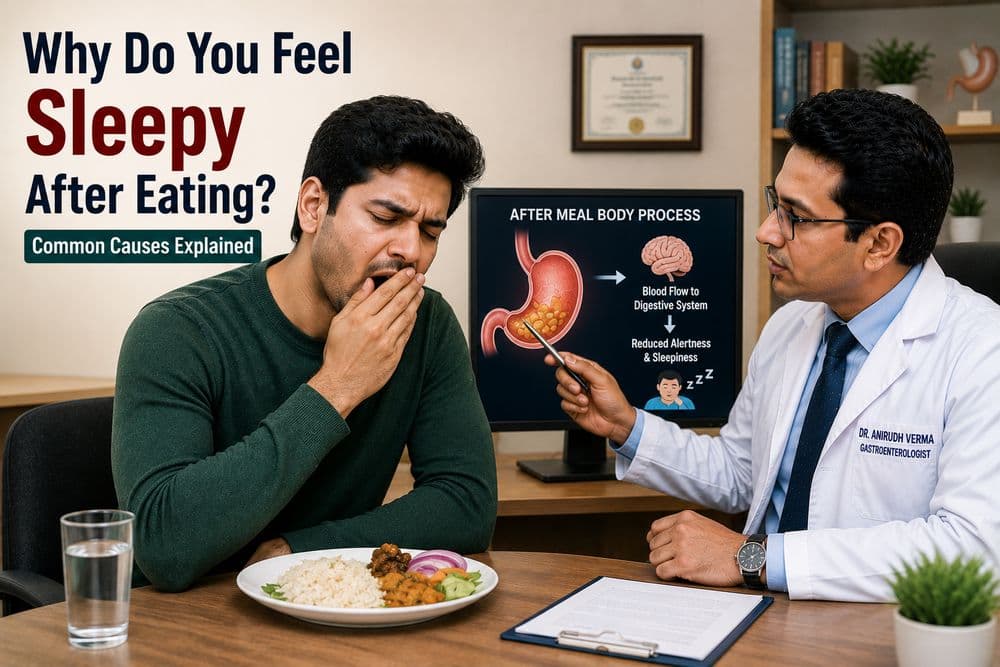
Why Do You Feel Sleepy After Eating? Common Causes Explained
Medically reviewed by Dr. Divyansh Bhatt, Gastrologist
Last reviewed: 9 Aug 2026 · How we review health content
Introduction
Have you ever felt unusually sleepy, tired, or sluggish after finishing a meal?
Many people experience drowsiness after eating, especially after lunch or large meals. While occasional sleepiness after meals is often normal, frequent post-meal fatigue may sometimes be related to food choices, digestion, sleep habits, or underlying health conditions.
Understanding why this happens can help you make healthier dietary and lifestyle decisions.
Khana Khane Ke Baad Neend Kyu Aati Hai?
Khana khane ke baad neend ya susti aana bilkul aam baat hai. Khana khane par sharir ka blood digestion ke kaam me lag jata hai, jisse dimag ko thodi kam energy milti hai. Zyada carbohydrate (jaise chawal, mithai) khane se sugar level pehle badhta hai aur phir tezi se girta hai — isse bhi neend aati hai.
Agar aapko har roz bahut zyada neend aati hai, ya susti ke saath kamzori bhi rehti hai, to yeh diabetes, thyroid ya khoon ki kami (anemia) jaisi samasya ka ishara bhi ho sakta hai. Aise me doctor se jaanch karwana behtar hai. Neeche puri jankari English me di gayi hai.
Is It Normal to Feel Sleepy After Eating?
Yes, mild sleepiness after eating is common.
After a meal, the body shifts its focus toward digestion. This process may temporarily influence energy levels and make some individuals feel relaxed or sleepy.
However, excessive or frequent drowsiness should not always be ignored.
Common Reasons You Feel Sleepy After Eating
1. Digestion Requires Energy
After eating, the digestive system becomes active in breaking down food and absorbing nutrients.
This natural process may contribute to feelings of:
- Relaxation
- Tiredness
- Reduced alertness
2. Large Meals
Eating a heavy meal can make the digestive system work harder.
Large meals often cause:
- Fullness
- Sluggishness
- Sleepiness
This is particularly common after lunch and dinner.
3. High-Carbohydrate Foods
Meals rich in carbohydrates may cause fluctuations in blood sugar levels.
Examples include:
- White rice
- Bread
- Sweets
- Sugary beverages
Rapid changes in blood sugar may contribute to post-meal fatigue.
4. Foods Containing Tryptophan
Certain foods contain tryptophan, an amino acid associated with the production of serotonin and melatonin.
Examples include:
- Milk
- Cheese
- Eggs
- Turkey
- Nuts
These compounds may promote relaxation and sleepiness.
5. Poor Night-Time Sleep
Individuals who do not get enough sleep may notice increased drowsiness after meals.
Lack of quality sleep often makes post-meal fatigue more noticeable.
6. Dehydration
Inadequate hydration may contribute to:
- Fatigue
- Reduced concentration
- Low energy levels
Many people mistake dehydration-related fatigue for hunger or post-meal sleepiness.
7. Sedentary Lifestyle
Limited physical activity may affect energy levels throughout the day and contribute to feelings of tiredness after eating.
Foods That May Increase Sleepiness
Some foods are more commonly associated with post-meal drowsiness:
- Heavy fried foods
- Sugary desserts
- Processed carbohydrates
- Large portions of rice or pasta
- High-fat meals
These foods may increase feelings of sluggishness in some individuals.
Symptoms That May Accompany Post-Meal Sleepiness
In addition to feeling sleepy, people may experience:
- Low energy
- Difficulty concentrating
- Feeling sluggish
- Reduced productivity
- Heavy eyelids
- Lack of motivation
When Could It Indicate a Health Problem?
Occasional sleepiness after meals is usually normal.
However, frequent or severe symptoms may sometimes be associated with:
Blood Sugar Issues
Significant fluctuations in blood sugar levels may contribute to fatigue after eating.
Diabetes
Some individuals with diabetes may experience unusual tiredness after meals.
Sleep Disorders
Poor sleep quality may worsen daytime fatigue.
Nutritional Deficiencies
Certain vitamin and mineral deficiencies may affect energy levels.
How Can You Reduce Sleepiness After Eating?
Eat Smaller Meals
Smaller portions may help prevent excessive digestive workload.
Stay Hydrated
Drink enough water throughout the day.
Avoid Excess Sugar
Limiting sugary foods may help reduce blood sugar fluctuations.
Include Protein and Fiber
Balanced meals may help maintain stable energy levels.
Take a Short Walk
Light activity after eating may help improve alertness and digestion.
Improve Sleep Quality
Getting adequate sleep each night can significantly reduce daytime fatigue.
When Should You See a Doctor?
Consult a healthcare professional if:
- Sleepiness becomes excessive
- Fatigue occurs after every meal
- Symptoms interfere with daily activities
- Unexplained weight changes occur
- Other symptoms such as dizziness or excessive thirst are present
A medical evaluation may help identify any underlying health concerns.
Conclusion
Feeling sleepy after eating is often a normal response to digestion and food intake. Large meals, high-carbohydrate foods, poor sleep habits, and lifestyle factors are among the most common reasons for post-meal drowsiness.
Maintaining a balanced diet, staying active, and getting adequate sleep may help improve energy levels and reduce feelings of fatigue after meals.
Related reading
Top Gastroenterologist doctors in Lucknow on Zospital
Verified specialists you can book in minutes.
- Book appointment

Dr. Ankit Maheshwari
Gastroenterologist
Lucknow
Verified•4.7 - Book appointment

Dr. Sanil Parekh
Gastroenterologist
Mumbai
Verified•4.9 - Book appointment
Dr Varun Palanati
Gastroenterologist
Guntur
- Book appointment

Dr. Hardik Parikh
Gastroenterologist
Ahmedabad
4.9 - Book appointment

Dr. Yogesh Harwani
Gastroenterologist
Ahmedabad
4.8 - Book appointment

Dr. Harshad Soni
Gastroenterologist
Ahmedabad
5
Have More Questions?
Find quick answers to common questions about our services, appointments, and patient care.
Yes. Mild drowsiness after meals is common and often related to digestion.
Large meals, carbohydrates, and natural digestive processes may contribute to post-lunch fatigue.
Rapid blood sugar changes may contribute to tiredness in some individuals.
Yes. Dehydration may worsen feelings of tiredness and low energy.
Heavy meals require more digestive effort, which may contribute to sluggishness.
Yes. Lack of sleep often makes fatigue more noticeable after eating.
“Gastrologist: MBBS, MD–Medicine ,Dr. NB Gastroenterology”
Dr. Divyansh Bhatt
Gastrologist
Private hospitals in Lucknow on Zospital
Prefer a private option? These hospitals in Lucknow list their doctors and take bookings.
- Paarth Eye Hospital & Retina Centre
- Urmila Devi Memorial Hospital- Child Specialist Hospital in Lucknow | Pediatrician hospital
- SPARSH CHILDREN'S HOSPITAL & VACCINATION CENTER | Child Hospital in Raebareli Road Lucknow | Dr. Akhilesh Pandey |
Related Articles
Why Do Your Fingers Become Numb During Sleep? Common Causes and When to Seek Medical Help
Finger numbness during sleep is often caused by nerve compression, sleeping posture, or underlying health conditions. Learn the possible causes and warning signs.
Why Do Your Hands Fall Asleep at Night? Common Causes and When to Seek Medical Help
Waking up with numb or tingling hands at night is often caused by nerve compression, sleeping posture, or underlying medical conditions. Learn the possible causes and warning signs.
Why Doctors Are Seeing More Heat Stroke Cases Every Year
Heat stroke cases are increasing worldwide due to rising temperatures, prolonged heatwaves, and lifestyle factors. Learn why doctors are becoming increasingly concerned about this serious heat-related condition.
Written by Dr. Divyansh Bhatt
Gastrologist
Last reviewed: 9 August 2026
Medical Disclaimer
The content provided on Zospital is for general informational and educational purposes only. It is not intended as a substitute for professional medical advice, diagnosis, or treatment. Always seek the advice of your physician or other qualified healthcare provider with any questions you may have regarding a medical condition. Never disregard professional medical advice or delay in seeking it because of something you have read on this website. If you think you may have a medical emergency, call your doctor or emergency services immediately.
Are you a doctor or run a clinic or hospital?
Patients across India are searching Zospital right now. Get a free profile with reviews, timings and direct WhatsApp bookings.