Why Does Stomach Pain Occur After Eating Spicy Food?
Medically reviewed by Dr. Nikhil Singh, Anaesthesia, MBBS, MD
Last reviewed: 24 Aug 2026 · How we review health content
Introduction
Do you often experience stomach pain, burning, or discomfort after eating spicy food?
While spicy foods are enjoyed by many people, they can sometimes trigger digestive symptoms in sensitive individuals. Occasional discomfort may not be serious, but frequent stomach pain after spicy meals may indicate an underlying digestive issue.
Understanding the possible causes can help you manage symptoms and protect your digestive health.
How Can Spicy Food Affect the Stomach?
Spicy foods contain compounds such as capsaicin, which gives chili peppers their heat.
In some individuals, capsaicin may:
- Irritate the digestive tract
- Increase stomach discomfort
- Trigger acidity symptoms
- Worsen existing digestive conditions
The response varies from person to person.
Common Causes of Stomach Pain After Eating Spicy Food
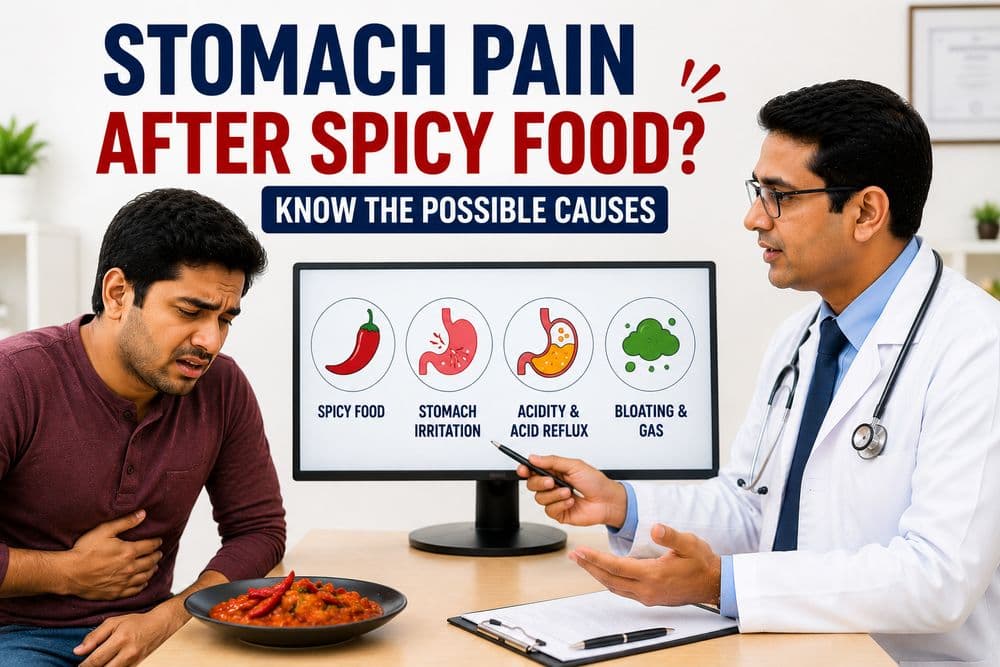
1. Stomach Irritation
Spicy foods may temporarily irritate the stomach lining in sensitive individuals.
This can cause:
- Burning sensation
- Mild stomach pain
- Discomfort after meals
2. Acidity and Acid Reflux
Spicy meals may trigger:
- Heartburn
- Acid reflux
- Chest burning
- Sour burps
especially in people who are prone to acidity.
3. Gastritis
Gastritis refers to inflammation of the stomach lining.
Symptoms may include:
- Upper abdominal pain
- Burning sensation
- Nausea
- Bloating
Spicy food may worsen symptoms in some people.
4. Indigestion
Heavy or spicy meals can sometimes slow digestion and lead to:
- Stomach discomfort
- Fullness
- Burping
- Gas formation
5. Irritable Bowel Syndrome (IBS)
People with IBS may notice worsening symptoms after consuming spicy foods.
Symptoms may include:
- Abdominal pain
- Bloating
- Diarrhea
- Digestive discomfort
6. Peptic Ulcer Disease
Individuals with stomach or duodenal ulcers may experience increased pain after eating foods that irritate the digestive tract.
Symptoms That May Accompany Stomach Pain
People may also experience:
- Acidity
- Heartburn
- Bloating
- Gas
- Nausea
- Burping
- Loose motions
- Stomach burning
Who Is More Likely to Experience This Problem?
Higher-risk groups include:
- People with acidity
- Individuals with gastritis
- People with IBS
- Those with sensitive digestion
- Frequent consumers of spicy foods
How Can You Reduce Stomach Pain After Spicy Meals?
Eat Spicy Foods in Moderation
Reducing the quantity may help minimize symptoms.
Avoid Overeating
Large meals can increase digestive discomfort.
Stay Hydrated
Adequate water intake supports healthy digestion.
Identify Trigger Foods
Some individuals may be sensitive to specific spices or ingredients.
Maintain Regular Meal Times
Irregular eating habits may worsen digestive symptoms.
When Should You See a Doctor?
Consult a healthcare professional if:
- Pain occurs frequently
- Symptoms are worsening
- Blood appears in vomit or stool
- Unexplained weight loss occurs
- Severe acidity develops
- Symptoms interfere with daily life
Medical evaluation may help identify the underlying cause.
Conclusion
Stomach pain after eating spicy food may occur due to irritation of the digestive tract, acidity, gastritis, indigestion, IBS, or other digestive conditions. While occasional discomfort is common, persistent or severe symptoms should not be ignored.
Understanding your triggers and seeking timely medical advice can help improve digestive health and reduce discomfort.
Related reading
Top Anesthesiologist doctors in Gorakhpur on Zospital
Verified specialists you can book in minutes.
- Book appointment

Dr Karanvir Singh Sidhu
Anesthesiologist
Lucknow
Verified•4.8 - Book appointment
Aveline Pascual Jerome, MD
Anesthesiologist
Ajmer
5 - Book appointment
Dr. Vivek Kumar Sharma - Laser & Advanced Laparoscopy Surgeon In Ajmer
Anesthesiologist
Ajmer
4.7 - Book appointment
Dr.Jay M. Panchal
Anesthesiologist
Ahmedabad
5 - Book appointment

Amit T. Darnule, MD
Anesthesiologist
Agra
4.9 - Book appointment
Dr Rajat Arora
Anesthesiologist
Agra
Have More Questions?
Find quick answers to common questions about our services, appointments, and patient care.
Spicy foods may irritate the digestive tract or trigger acidity and indigestion.
Yes. Spicy meals may worsen acid reflux symptoms in some individuals.
Occasional discomfort can occur, but frequent symptoms should be evaluated.
Spicy food does not directly cause gastritis but may worsen symptoms.
Yes. Many people with IBS notice worsening symptoms after spicy meals.

“Your Health, Our Priority. Your Voice, Our Guide”
Dr. Nikhil Singh
Anaesthesia, MBBS, MD
Private hospitals in Gorakhpur on Zospital
Prefer a private option? These hospitals in Gorakhpur list their doctors and take bookings.
- Shankar Eye and Maternity Clinic- Best eye hospital | Best eye surgeon | Eye and Maternity clinic in Gorakhpur
- Trimurti Hospital - Dr. Sanjeev kumar Singh
- Shakuntala Hospital
Related Articles

Why Does the Nose Get Blocked at Night Only?
Nasal blockage at night can be due to allergies, sinus issues, or sleeping position. Understanding the cause helps improve breathing and sleep quality.

Why Feet Burn at Night: Causes, Symptoms and Relief
Burning feet at night can be linked to nerve issues, circulation problems, or other health conditions. Learn possible causes, symptoms, relief tips, and when to seek medical advice.

Why Transparency is Key for Trust in Indian Healthcare
An in-depth look at why transparency is the cornerstone of a trustworthy healthcare system in India, empowering patients to make informed decisions.

Written by Dr. Nikhil Singh
Anaesthesia, MBBS, MD
Last reviewed: 24 August 2026
Medical Disclaimer
The content provided on Zospital is for general informational and educational purposes only. It is not intended as a substitute for professional medical advice, diagnosis, or treatment. Always seek the advice of your physician or other qualified healthcare provider with any questions you may have regarding a medical condition. Never disregard professional medical advice or delay in seeking it because of something you have read on this website. If you think you may have a medical emergency, call your doctor or emergency services immediately.
Are you a doctor or run a clinic or hospital?
Patients across India are searching Zospital right now. Get a free profile with reviews, timings and direct WhatsApp bookings.