Why Does My Stomach Burn After Eating? Causes & Relief
Medically reviewed by Dr. Divyansh Bhatt, Gastrologist
Last reviewed: 18 Jul 2026
Why Does My Stomach Burn After Eating?
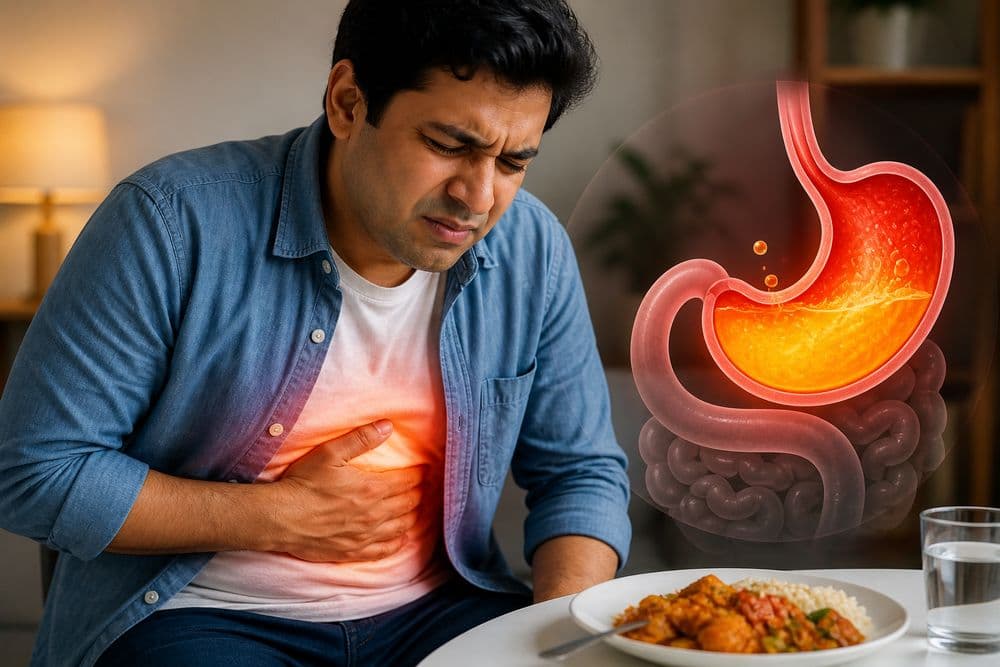
Feeling a burning sensation in your stomach after meals can be uncomfortable and concerning. In many cases, it is related to acid production or digestive imbalance. While occasional burning may not be serious, frequent symptoms should not be ignored.
Common Causes of Stomach Burning
1. Acid Reflux (Acidity)
One of the most common reasons is acid reflux, where stomach acid flows back into the esophagus. This can cause a burning feeling in the stomach or chest, especially after eating spicy or oily food.
2. Gastritis
Inflammation of the stomach lining (gastritis) can lead to burning pain, especially after meals. It may be caused by infection, stress, or long-term use of certain medicines.
3. Overeating
Eating large meals puts pressure on the stomach, leading to increased acid production and discomfort.
4. Spicy or Oily Food
Foods that are spicy, fried, or high in fat can irritate the stomach lining and trigger burning sensation.
5. Peptic Ulcers
Ulcers in the stomach lining can cause burning pain, especially when the stomach is empty or after eating.
6. Stress and Lifestyle Factors
Stress, irregular eating habits, smoking, and alcohol can worsen digestive health and lead to stomach burning.
Symptoms That May Accompany
- Burning sensation in stomach or chest
- Bloating or heaviness
- Sour taste in mouth
- Nausea or discomfort after meals
- Belching or gas
When Should You See a Doctor?
- Burning sensation happens frequently
- Pain is severe or worsening
- Difficulty in swallowing
- Unexplained weight loss
- Vomiting or blood in stool
These signs may indicate a more serious digestive condition.
Effective Ways to Get Relief
1. Eat Smaller Meals
Avoid overeating and eat in smaller portions to reduce pressure on the stomach.
2. Avoid Trigger Foods
Limit spicy, oily, and acidic foods that can irritate the stomach.
3. Stay Upright After Eating
Avoid lying down immediately after meals.
4. Maintain a Healthy Lifestyle
Reduce stress, quit smoking, and avoid alcohol.
5. Stay Hydrated
Drinking enough water helps digestion and reduces acidity.
Conclusion
Stomach burning after eating is often linked to acidity or digestive issues. While occasional discomfort is common, frequent symptoms should not be ignored. Proper diet, lifestyle changes, and timely consultation can help manage the condition effectively.
Related reading
Written by
Top Gastrologist / Gastroenterologist doctors in Lucknow on Zospital
Verified specialists you can book in minutes.
- Book appointment

Dr. Ankit Maheshwari
Gastrologist / Gastroenterologist
Lucknow
Verified•4.7 - Book appointment

Dr. Anurag Bajpayee
Gastroenterology
Faizabad
4.3 - Book appointment

Dr. Ashish Kumar Jha
Gastroenterology
Patna
4.5 - Book appointment

Dr. Manish Kumar
Gastroenterology
Patna
4.8 - Book appointment

Dr. Nitin Kumar
Gastroenterology
Patna
4.9 - Book appointment

Dr. Amitesh Kumar
Gastroenterology
Patna
4.9
Have More Questions?
Find quick answers to common questions about our services, appointments, and patient care.
Spicy food can irritate the stomach lining and increase acid production.
Yes, stress can increase acid production and affect digestion.
Often yes, but it can also be due to gastritis or ulcers.
Avoid trigger foods, drink water, and stay upright after meals.
If symptoms are frequent, severe, or associated with other warning signs.
“Gastrologist: MBBS, MD–Medicine ,Dr. NB Gastroenterology”
Dr. Divyansh Bhatt
Gastrologist
Related Articles

Why Does Neck Pain Increase After Working on a Laptop? Common Causes and Prevention Tips
Laptop-related neck pain is becoming increasingly common due to poor posture and prolonged screen time. Learn the causes, symptoms, and prevention tips

Why Does Shoulder Pain Increase at Night? Common Causes and When to Seek Medical Help
Shoulder pain that worsens at night may be linked to rotator cuff problems, inflammation, sleeping position, or joint conditions. Learn common causes and warning signs.

Why Does Skin Feel Itchy After a Bath?
Itchy skin after a bath can be due to dry skin, hot water, or soap irritation. Identifying the cause helps prevent discomfort and protect skin health.
Written by Dr. Divyansh Bhatt
Gastrologist
Last reviewed: 18 July 2026
Medical Disclaimer
The content provided on Zospital is for general informational and educational purposes only. It is not intended as a substitute for professional medical advice, diagnosis, or treatment. Always seek the advice of your physician or other qualified healthcare provider with any questions you may have regarding a medical condition. Never disregard professional medical advice or delay in seeking it because of something you have read on this website. If you think you may have a medical emergency, call your doctor or emergency services immediately.
Are you a doctor or run a clinic or hospital?
Patients across India are searching Zospital right now. Get a free profile with reviews, timings and direct WhatsApp bookings.