Why Do Eyes Feel Heavy After Screen Time? Causes, Symptoms and Prevention Tips
Medically reviewed by Dr. Nikhil Singh, Anaesthesia, MBBS, MD
Last reviewed: 24 Aug 2026
Introduction
Do your eyes feel tired, heavy, or strained after spending several hours on a smartphone, laptop, tablet, or television screen?
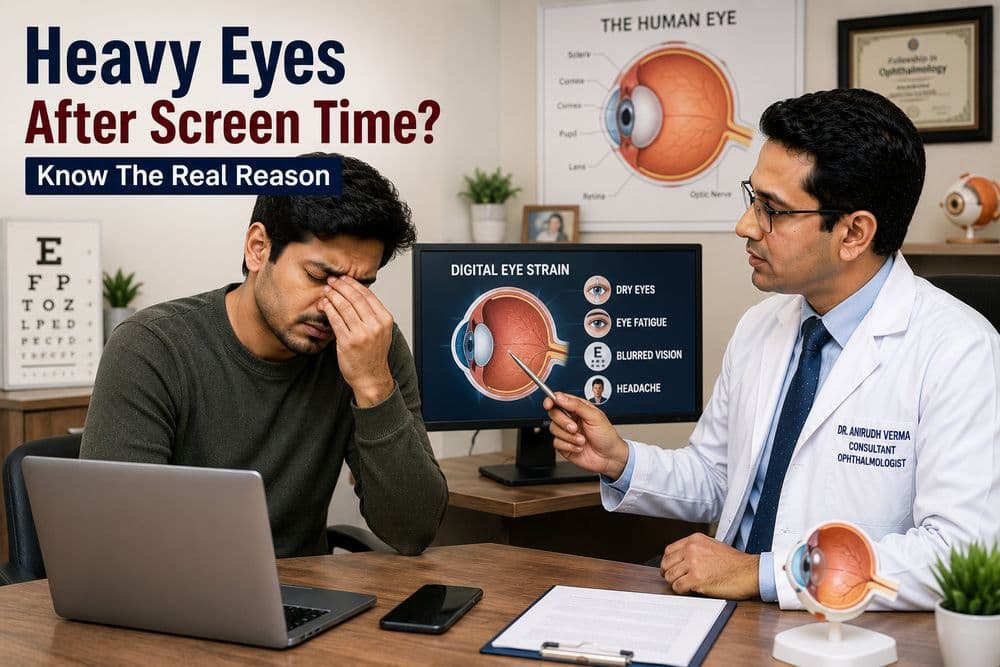
This is a common complaint in today's digital world and is often associated with Digital Eye Strain, also known as Computer Vision Syndrome.
While occasional eye fatigue is usually temporary, prolonged screen exposure can make the eyes work harder, leading to discomfort and reduced visual comfort.
Understanding the causes of heavy eyes after screen time can help you develop healthier screen habits and protect your vision.
Why Do Eyes Feel Heavy After Screen Use?
When using digital devices, your eyes continuously focus on nearby objects for extended periods.
This constant effort may lead to:
- Eye muscle fatigue
- Reduced blinking
- Dryness
- Visual stress
- Temporary focusing difficulties
As a result, the eyes may feel tired, heavy, or uncomfortable.
Common Causes of Heavy Eyes After Screen Time
1. Digital Eye Strain
Digital Eye Strain is one of the most common causes of eye fatigue.
It may occur when:
- Using screens for several hours
- Taking few visual breaks
- Maintaining continuous focus
Common symptoms include:
- Heavy eyes
- Eye discomfort
- Blurred vision
- Headaches
2. Reduced Blinking
People naturally blink less often while looking at screens.
Reduced blinking may cause:
- Dry eyes
- Irritation
- Burning sensation
- Eye fatigue
3. Blue Light Exposure
Digital devices emit blue light.
Excessive screen exposure, especially at night, may contribute to:
- Eye strain
- Visual discomfort
- Sleep disturbances
4. Poor Lighting Conditions
Using screens in very bright or very dark environments may increase eye stress.
Glare from screens can also contribute to visual fatigue.
5. Improper Screen Distance
Holding devices too close to the eyes forces the eye muscles to work harder.
This may increase strain and fatigue.
6. Uncorrected Vision Problems
Existing vision issues such as:
- Nearsightedness
- Farsightedness
- Astigmatism
may become more noticeable during prolonged screen use.
Symptoms That May Accompany Heavy Eyes
In addition to eye heaviness, people may experience:
- Dry eyes
- Burning sensation
- Blurred vision
- Headaches
- Watery eyes
- Difficulty focusing
- Light sensitivity
- Neck and shoulder pain
Who Is Most at Risk?
Heavy eyes after screen time are commonly seen in:
- Office workers
- Students
- Gamers
- Software professionals
- Content creators
- Frequent smartphone users
Anyone spending several hours daily on digital devices may experience symptoms.
How Can You Reduce Eye Fatigue?
Follow the 20-20-20 Rule
Every 20 minutes:
- Look 20 feet away
- For at least 20 seconds
This helps relax the eye muscles.
Blink More Frequently
Conscious blinking may help maintain eye moisture.
Adjust Screen Brightness
Avoid screens that are excessively bright or too dim.
Maintain Proper Viewing Distance
Keep digital screens at a comfortable distance from your eyes.
Take Regular Breaks
Short breaks throughout the day may reduce visual stress.
Use Proper Lighting
Good room lighting helps reduce glare and eye strain.
Can Heavy Eyes Be a Sign of an Eye Problem?
Occasional eye fatigue is usually related to screen use.
However, persistent symptoms may sometimes indicate:
- Refractive errors
- Dry eye syndrome
- Eye muscle strain
- Vision problems requiring correction
An eye examination may be beneficial if symptoms continue.
When Should You See an Eye Doctor?
Consult an eye specialist if:
- Symptoms occur frequently
- Vision becomes blurry
- Headaches increase
- Eye discomfort persists
- Screen use becomes difficult
Early evaluation can help identify underlying eye conditions.
Conclusion
Heavy eyes after screen time are commonly caused by digital eye strain, reduced blinking, blue light exposure, and prolonged focusing on digital devices. While symptoms are often temporary, regular screen breaks and healthy eye habits can significantly improve comfort.
If eye fatigue becomes frequent or persistent, consulting an eye care professional may help identify and address the underlying cause.
Related reading
Top Anesthesiologist doctors in Lucknow on Zospital
Verified specialists you can book in minutes.
- Book appointment

Dr. Sanni Deyol Gautam
Anesthesiologist
Lucknow
4.8 - Book appointment

Dr Karanvir Singh Sidhu
Anesthesiologist
Lucknow
4.8 - Book appointment

Dr Harpreet Kaur
Anesthesiologist
Lucknow
4.8 - Book appointment

Dr. Akshat Trivedi
Anesthesiologist
Lucknow
4.5 - Book appointment
Aveline Pascual Jerome, MD
Anesthesiologist
Ajmer
5 - Book appointment
Dr. Vivek Kumar Sharma - Laser & Advanced Laparoscopy Surgeon In Ajmer
Anesthesiologist
Ajmer
4.7
Have More Questions?
Find quick answers to common questions about our services, appointments, and patient care.
Prolonged screen use may cause digital eye strain and muscle fatigue.
Yes. Continuous focusing on screens can lead to tired and heavy eyes.
It is a condition caused by prolonged use of digital screens, resulting in eye discomfort and fatigue.
Excessive exposure may contribute to visual discomfort and eye strain.
Taking breaks, blinking frequently, and following the 20-20-20 rule may help.
Reduced blinking may lead to dry eyes and irritation.
Yes. Eye strain may sometimes contribute to headaches.

“Your Health, Our Priority. Your Voice, Our Guide”
Dr. Nikhil Singh
Anaesthesia, MBBS, MD
Private hospitals in Lucknow on Zospital
Prefer a private option? These hospitals in Lucknow list their doctors and take bookings.
- Paarth Eye Hospital & Retina Centre
- Urmila Devi Memorial Hospital- Child Specialist Hospital in Lucknow | Pediatrician hospital
- SPARSH CHILDREN'S HOSPITAL & VACCINATION CENTER | Child Hospital in Raebareli Road Lucknow | Dr. Akhilesh Pandey |
Related Articles

Why Do Hands Tremble Without Any Reason?
Hand trembling without reason can be due to stress, कमजोरी, nerve issues, or medical conditions. Early evaluation helps prevent complications.

Why Do Headaches Increase During Summer? Common Causes and Prevention Tips
Summer heat, dehydration, sun exposure, and lifestyle changes can contribute to headaches. Learn the common reasons why headaches become more frequent during hot weather.

Why Do I Feel My Heartbeat Fast Without Exercise?
Feeling a fast heartbeat without exercise can be due to stress, anxiety, dehydration, or heart-related conditions. Early evaluation helps prevent complications.

Written by Dr. Nikhil Singh
Anaesthesia, MBBS, MD
Last reviewed: 24 August 2026
Medical Disclaimer
The content provided on Zospital is for general informational and educational purposes only. It is not intended as a substitute for professional medical advice, diagnosis, or treatment. Always seek the advice of your physician or other qualified healthcare provider with any questions you may have regarding a medical condition. Never disregard professional medical advice or delay in seeking it because of something you have read on this website. If you think you may have a medical emergency, call your doctor or emergency services immediately.
Are you a doctor or run a clinic or hospital?
Patients across India are searching Zospital right now. Get a free profile with reviews, timings and direct WhatsApp bookings.