What Causes Clicking Sounds in the Knee? Common Reasons and When to Worry
Medically reviewed by Dr. Abhinav Srivastava, Orthopaedic Surgeon, MBBS, MS
Last reviewed: 18 Jul 2026
Introduction
Many people notice clicking, popping, or cracking sounds coming from their knees while walking, climbing stairs, squatting, or standing up. In most cases, these sounds are painless and harmless.
However, if knee clicking is accompanied by pain, swelling, stiffness, or instability, it may indicate an underlying knee condition that requires medical attention.
Understanding why these sounds occur can help determine whether they are a normal part of joint movement or a sign of a knee problem.
What Is Knee Clicking?
Knee clicking refers to audible sounds such as:
- Clicking
- Popping
- Cracking
- Snapping
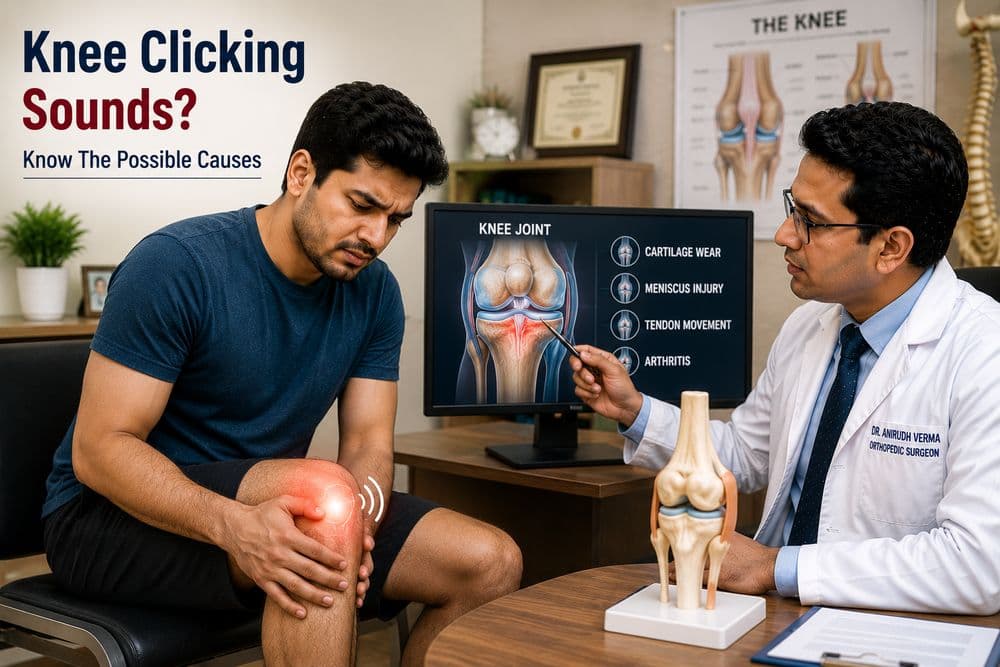
These sounds may occur during movement and are medically referred to as crepitus.
Is Knee Clicking Normal?
In many cases, yes.
Painless clicking sounds are often caused by normal joint movement and usually do not indicate a serious problem.
However, persistent clicking associated with pain or other symptoms should be evaluated by a healthcare professional.
Common Causes of Clicking Sounds in the Knee
1. Gas Bubbles Inside the Joint
The knee joint contains fluid that helps lubricate movement.
Sometimes gas bubbles form within this fluid and burst during movement, creating a popping or clicking sound.
This is usually harmless.
2. Tendons or Ligaments Moving Over Bone
As the knee bends and straightens, tendons and ligaments may shift slightly over nearby bones.
This movement can sometimes produce a clicking sensation.
3. Cartilage Wear and Tear
Cartilage acts as a cushion between bones within the knee.
When cartilage becomes rough or worn, movement may cause:
- Grinding sensations
- Clicking sounds
- Joint discomfort
This is more common with aging and .
4. Patellofemoral Syndrome
The kneecap (patella) moves within a groove during knee motion.
Improper tracking of the kneecap may result in:
- Clicking
- Popping
- Pain while climbing stairs
- Discomfort after prolonged sitting
5. Meniscus Injury
The meniscus is a cartilage structure that helps absorb shock within the knee.
A meniscus tear may cause:
- Clicking
- Locking sensation
- Pain
- Swelling
- Reduced mobility
6. Early Osteoarthritis
Osteoarthritis develops when joint cartilage gradually wears down.
Common symptoms include:
- Knee stiffness
- Clicking sounds
- Swelling
- Pain during movement
7. Previous Knee Injury
Past injuries involving ligaments, cartilage, or bones may alter joint mechanics and contribute to persistent knee noises.
When Should Knee Clicking Be a Concern?
Knee clicking may require medical evaluation if it occurs with:
Pain
Painful clicking should not be ignored.
Swelling
Joint swelling may indicate inflammation or injury.
Locking of the Knee
If the knee becomes stuck during movement, cartilage or meniscus problems may be present.
Instability
A feeling that the knee may give way can suggest ligament-related issues.
Reduced Range of Motion
Difficulty bending or straightening the knee may require assessment.
Symptoms That May Accompany Knee Clicking
Depending on the cause, symptoms may include:
- Knee pain
- Swelling
- Stiffness
- Locking sensation
- Weakness
- Instability
- Difficulty climbing stairs
Who Is More Likely to Experience Knee Clicking?
Knee clicking is commonly seen in:
- Athletes
- Runners
- Older adults
- Individuals with arthritis
- People with previous knee injuries
- Those performing repetitive knee movements
How Can You Protect Your Knee Joints?
Maintain a Healthy Weight
Excess body weight increases stress on the knee joints.
Strengthen Leg Muscles
Strong thigh and leg muscles help support knee stability.
Stay Physically Active
Regular exercise supports joint health and flexibility.
Warm Up Before Exercise
Proper warm-up may reduce stress on knee structures.
Avoid Overloading the Knee
Excessive repetitive stress may increase the risk of injury.
When Should You See a Doctor?
Consult an orthopedic specialist if:
- Clicking is accompanied by pain
- Swelling develops
- The knee locks repeatedly
- Walking becomes difficult
- Symptoms persist or worsen
- Instability occurs
Early diagnosis may help prevent further joint damage.
Can Knee Clicking Be Treated?
Treatment depends on the underlying cause and may include:
- Physical therapy
- Strengthening exercises
- Activity modification
- Weight management
- Medications for inflammation
- Advanced orthopedic treatment when necessary
A proper evaluation is important for determining the most appropriate treatment approach.
Conclusion
Clicking sounds in the knee are often harmless and may occur due to normal joint movement, gas bubbles, or tendon motion. However, when clicking is associated with pain, swelling, locking, or instability, it may indicate cartilage damage, meniscus injury, or arthritis.
If symptoms persist or interfere with daily activities, consulting an orthopedic specialist can help identify the cause and guide appropriate treatment.
Related reading
Top doctors on Zospital
Verified specialists you can book in minutes.



Have More Questions?
Find quick answers to common questions about our services, appointments, and patient care.
Knee clicking may occur due to gas bubbles, tendon movement, cartilage changes, or joint conditions.
Painless knee clicking is often normal and usually not a cause for concern.
Yes. Cartilage wear associated with arthritis may lead to clicking or grinding sounds.
Crepitus refers to popping, cracking, or clicking sounds that occur within a joint.
Yes. Meniscus injuries may produce clicking, locking, and knee pain.
Usually not. Painless clicking is often harmless.

Related Articles

What Causes Frequent Dry Mouth in the Morning? Common Reasons You Should Know
Waking up with a dry mouth every morning can be uncomfortable and may sometimes indicate dehydration, mouth breathing, medication side effects, or sleep-related conditions. Learn the common causes and ways to improve oral comfort.
What Causes Hair Thinning at a Young Age?
Hair thinning at a young age can be caused by stress, hormonal imbalance, poor nutrition, or genetics. Early care helps prevent further hair loss.

What Causes Sudden Sweating Without Exercise?
Sudden sweating without physical activity may occur due to stress, heat exposure, low blood sugar, hormonal changes, infections, or certain medical conditions. Learn the possible causes and warning signs.

Written by Dr. Abhinav Srivastava
Orthopaedic Surgeon, MBBS, MS
Last reviewed: 18 July 2026
Medical Disclaimer
The content provided on Zospital is for general informational and educational purposes only. It is not intended as a substitute for professional medical advice, diagnosis, or treatment. Always seek the advice of your physician or other qualified healthcare provider with any questions you may have regarding a medical condition. Never disregard professional medical advice or delay in seeking it because of something you have read on this website. If you think you may have a medical emergency, call your doctor or emergency services immediately.
Are you a doctor or run a clinic or hospital?
Patients across India are searching Zospital right now. Get a free profile with reviews, timings and direct WhatsApp bookings.