What Causes Sudden Sweating Without Exercise?
Medically reviewed by Dr. Nikhil Singh, Anaesthesia, MBBS, MD
Last reviewed: 24 Aug 2026 · How we review health content
Introduction
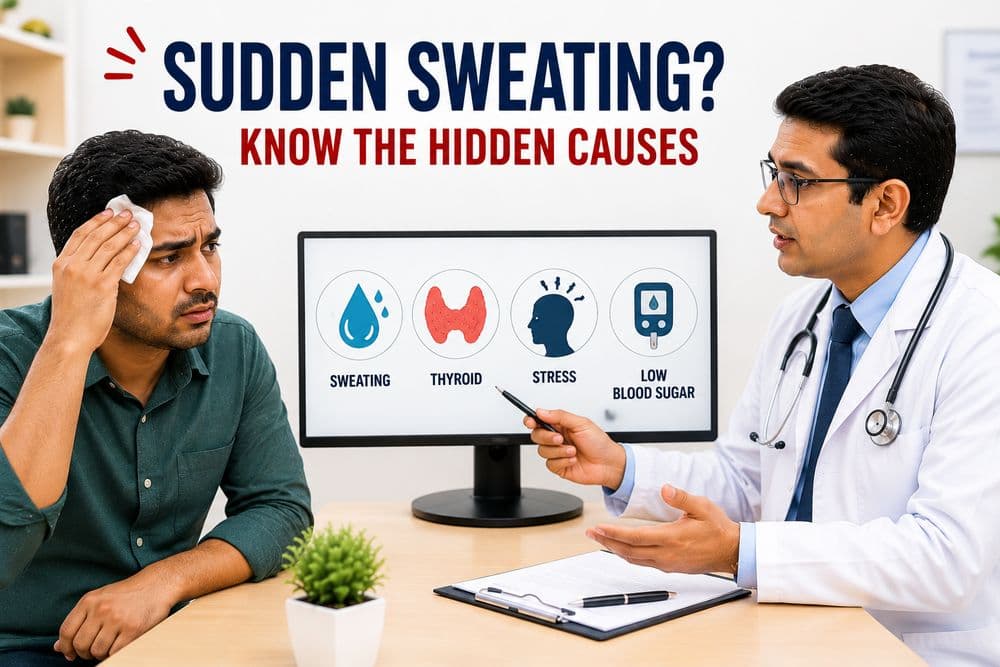
Sweating is the body's natural way of regulating temperature. It commonly occurs during exercise, hot weather, or physical activity.
However, some people experience sudden sweating even while resting, sitting, or performing normal daily activities. While occasional episodes may be harmless, frequent or unexplained sweating can sometimes indicate an underlying health condition.
Understanding the possible causes can help determine when medical evaluation may be necessary.
Is Sudden Sweating Always a Problem?
Not always.
Temporary sweating can occur due to:
- Emotional stress
- Anxiety
- Hot environments
- Spicy foods
However, repeated episodes without an obvious reason should not be ignored.
Common Causes of Sudden Sweating Without Exercise
1. Stress and Anxiety
Emotional stress activates the body's "fight-or-flight" response.
This may cause:
- Sweaty palms
- Forehead sweating
- Increased heart rate
- Nervousness
Even mild anxiety can sometimes trigger sweating.
2. Hot Weather and Heat Exposure
The body may continue sweating even without physical activity if environmental temperatures are high.
This is especially common during summer.
3. Low Blood Sugar
A sudden drop in blood sugar levels may cause:
- Excess sweating
- Weakness
- Dizziness
- Shakiness
People with diabetes may experience these symptoms more frequently.
4. Fever and Infections
When the body fights an infection, sweating may occur as temperature fluctuates.
Symptoms may include:
- Fever
- Chills
- Fatigue
- Night sweats
5. Hormonal Changes
Hormonal fluctuations can sometimes cause excessive sweating.
Examples include:
- Menopause
- Thyroid disorders
- Hormonal imbalances
6. Certain Medications
Some medicines may list sweating as a side effect.
Examples include medications used for:
- Blood pressure
- Depression
- Diabetes
7. Overactive Thyroid (Hyperthyroidism)
An overactive thyroid may increase metabolism and lead to:
- Excess sweating
- Weight loss
- Rapid heartbeat
- Heat intolerance
Warning Signs That Should Not Be Ignored
Consult a doctor if sweating is accompanied by:
- Chest pain
- Shortness of breath
- Unexplained weight loss
- Frequent dizziness
- Fainting
- Persistent fever
- Palpitations
These symptoms may require medical evaluation.
Night Sweats vs Daytime Sweating
Daytime Sweating
Often linked to:
- Heat
- Stress
- Physical activity
Night Sweats
May sometimes be associated with:
- Infections
- Hormonal changes
- Certain medical conditions
Persistent night sweats should be discussed with a healthcare professional.
How Is Excessive Sweating Evaluated?
A doctor may review:
- Medical history
- Current medications
- Symptoms
- Blood tests if needed
The goal is to identify any underlying cause.
How Can You Manage Excess Sweating?
Stay Hydrated
Regular water intake helps replace lost fluids.
Avoid Known Triggers
Such as:
- Excess caffeine
- Spicy foods
- Stressful situations
Wear Breathable Clothing
Loose, lightweight clothing may improve comfort.
Seek Medical Advice
Persistent sweating should be professionally evaluated.
Conclusion
Sudden sweating without exercise can occur for many reasons, including stress, heat exposure, low blood sugar, infections, hormonal changes, and thyroid-related conditions. While occasional sweating is often harmless, persistent or unexplained episodes should not be ignored.
Early medical evaluation can help identify the cause and ensure appropriate management.
Related reading
Top Anesthesiologist doctors in Gorakhpur on Zospital
Verified specialists you can book in minutes.
- Book appointment

Dr Karanvir Singh Sidhu
Anesthesiologist
Lucknow
Verified•4.8 - Book appointment
Aveline Pascual Jerome, MD
Anesthesiologist
Ajmer
5 - Book appointment
Dr. Vivek Kumar Sharma - Laser & Advanced Laparoscopy Surgeon In Ajmer
Anesthesiologist
Ajmer
4.7 - Book appointment
Dr.Jay M. Panchal
Anesthesiologist
Ahmedabad
5 - Book appointment

Amit T. Darnule, MD
Anesthesiologist
Agra
4.9 - Book appointment
Dr Rajat Arora
Anesthesiologist
Agra
Have More Questions?
Find quick answers to common questions about our services, appointments, and patient care.
Occasional sweating can be normal, but frequent unexplained episodes may need evaluation.
Yes. Stress and anxiety commonly trigger sweating.
Yes. Sweating is a common symptom of low blood sugar.
An overactive thyroid may increase sweating and heat intolerance.

“Your Health, Our Priority. Your Voice, Our Guide”
Dr. Nikhil Singh
Anaesthesia, MBBS, MD
Private hospitals in Gorakhpur on Zospital
Prefer a private option? These hospitals in Gorakhpur list their doctors and take bookings.
- Shankar Eye and Maternity Clinic- Best eye hospital | Best eye surgeon | Eye and Maternity clinic in Gorakhpur
- Trimurti Hospital - Dr. Sanjeev kumar Singh
- Shakuntala Hospital
Related Articles

What Causes White Spots on Skin?
White spots on skin can be due to fungal infections, pigmentation issues, or medical conditions like vitiligo. Early diagnosis helps in proper treatment.
What Happens If You Sit for More Than 8 Hours Daily? Health Risks You Should Know
Sitting for more than 8 hours daily may affect your spine, circulation, muscles, metabolism, and overall health. Learn the potential risks and prevention tips.

What Is Coronary Artery Disease? Causes, Symptoms and Treatment
A clear guide to coronary artery disease, its risk factors, symptoms and treatment options including angioplasty and bypass surgery.

Written by Dr. Nikhil Singh
Anaesthesia, MBBS, MD
Last reviewed: 24 August 2026
Medical Disclaimer
The content provided on Zospital is for general informational and educational purposes only. It is not intended as a substitute for professional medical advice, diagnosis, or treatment. Always seek the advice of your physician or other qualified healthcare provider with any questions you may have regarding a medical condition. Never disregard professional medical advice or delay in seeking it because of something you have read on this website. If you think you may have a medical emergency, call your doctor or emergency services immediately.
Are you a doctor or run a clinic or hospital?
Patients across India are searching Zospital right now. Get a free profile with reviews, timings and direct WhatsApp bookings.