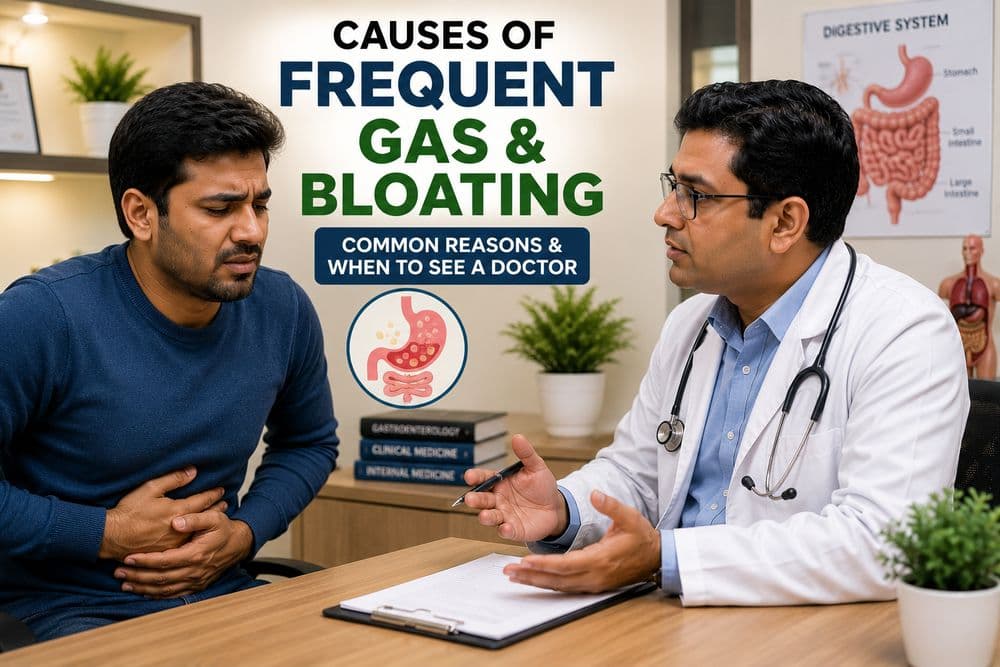
What Causes Frequent Gas and Bloating? Common Reasons and When to Seek Medical Advice
Medically reviewed by Dr. Divyansh Bhatt, Gastrologist
Last reviewed: 9 Aug 2026 · How we review health content
Introduction
Gas and bloating are among the most common digestive complaints experienced by people of all ages. Occasional bloating after a heavy meal is usually normal, but if gas and abdominal fullness occur frequently, they may indicate an underlying digestive issue.
Many people describe bloating as a feeling of tightness, swelling, or fullness in the abdomen. While it is often related to eating habits, it can sometimes be associated with digestive disorders that require medical attention.
Understanding the possible causes can help identify whether simple lifestyle changes may help or if professional medical evaluation is needed.
What Is Bloating?
Bloating refers to a sensation of abdominal fullness or pressure that may occur with or without visible swelling of the stomach.
It is often accompanied by:
- Excess gas
- Burping
- Abdominal discomfort
- Feeling overly full after meals
- Increased stomach size
Common Causes of Frequent Gas and Bloating
1. Eating Too Quickly
When people eat rapidly, they often swallow excess air along with food.
This may lead to:
- Increased gas formation
- Burping
- Abdominal bloating
Eating slowly and chewing food properly may help reduce symptoms.
2. Overeating
Large meals can overload the digestive system and slow digestion.
This may result in:
- Stomach fullness
- Gas formation
- Digestive discomfort
3. Gas-Producing Foods
Certain foods naturally produce more gas during digestion.
Examples include:
- Beans
- Lentils
- Cabbage
- Broccoli
- Onions
- Carbonated beverages
Not everyone reacts the same way to these foods.
4. Food Intolerance
Some people have difficulty digesting specific foods.
Common examples include:
- Lactose intolerance
- Gluten sensitivity
- Certain artificial sweeteners
Food intolerance may cause:
- Gas
- Bloating
- Stomach cramps
- Diarrhea
5. Constipation
When bowel movements become infrequent, gas may accumulate in the digestive tract.
Constipation can lead to:
- Abdominal pressure
- Fullness
- Bloating
- Discomfort
6. Irritable Bowel Syndrome (IBS)
IBS is a common digestive condition that may cause:
- Bloating
- Gas
- Abdominal pain
- Changes in bowel habits
Many individuals with IBS report frequent abdominal fullness.
7. Poor Digestive Habits
Certain habits may increase digestive discomfort, including:
- Skipping meals
- Eating irregularly
- Excessive junk food intake
- Low water consumption
8. Stress and Anxiety
The digestive system and brain are closely connected.
Stress may affect digestion and contribute to:
- Bloating
- Gas
- Stomach discomfort
- Changes in bowel movements
Symptoms That May Accompany Bloating
Depending on the cause, bloating may occur with:
- Excessive gas
- Burping
- Abdominal pain
- Nausea
- Constipation
- Diarrhea
- Feeling full quickly
When Should You Be Concerned?
Occasional bloating is usually not serious.
However, medical evaluation may be recommended if bloating is associated with:
- Unexplained weight loss
- Persistent abdominal pain
- Blood in stool
- Severe constipation
- Frequent vomiting
- Difficulty eating
- Symptoms lasting for several weeks
These symptoms may require further investigation.
How Can Frequent Gas and Bloating Be Reduced?
Eat Slowly
Chew food properly and avoid rushing meals.
Stay Hydrated
Adequate water intake supports healthy digestion.
Identify Trigger Foods
Keeping a food diary may help identify foods that worsen symptoms.
Increase Physical Activity
Regular movement may support digestion and reduce gas accumulation.
Manage Stress
Relaxation techniques and stress management may help improve digestive comfort.
Can Gas and Bloating Be a Sign of a Digestive Disorder?
Yes. Frequent symptoms may sometimes be linked to:
- IBS
- Food intolerance
- Acid reflux
- Constipation
- Digestive enzyme deficiencies
- Other gastrointestinal conditions
Persistent symptoms should be medically evaluated.
When Should You See a Doctor?
Consult a healthcare professional if:
- Symptoms occur frequently
- Bloating affects daily activities
- Abdominal pain becomes severe
- Appetite decreases
- Symptoms continue despite lifestyle changes
Early diagnosis may help identify and manage underlying digestive conditions.
Conclusion
Frequent gas and bloating are commonly related to eating habits, food intolerance, constipation, stress, or digestive disorders. While occasional bloating is usually harmless, recurring symptoms should not be ignored.
Healthy dietary habits, regular physical activity, and timely medical evaluation when needed can help improve digestive health and reduce discomfort.
Related reading
Top Gastroenterologist doctors in Lucknow on Zospital
Verified specialists you can book in minutes.
- Book appointment

Dr. Ankit Maheshwari
Gastroenterologist
Lucknow
Verified•4.7 - Book appointment

Dr. Sanil Parekh
Gastroenterologist
Mumbai
Verified•4.9 - Book appointment
Dr Varun Palanati
Gastroenterologist
Guntur
- Book appointment

Dr. Hardik Parikh
Gastroenterologist
Ahmedabad
4.9 - Book appointment

Dr. Yogesh Harwani
Gastroenterologist
Ahmedabad
4.8 - Book appointment

Dr. Harshad Soni
Gastroenterologist
Ahmedabad
5
Have More Questions?
Find quick answers to common questions about our services, appointments, and patient care.
Common causes include overeating, eating too quickly, food intolerance, constipation, IBS, and certain gas-producing foods.
Occasional bloating after meals is common, but persistent bloating may require evaluation.
Beans, lentils, cabbage, broccoli, onions, and carbonated drinks are commonly associated with increased gas production.
Yes. Stress and anxiety may affect digestion and contribute to bloating and abdominal discomfort.
Yes. Gas accumulation due to constipation is a common cause of abdominal fullness.
Gas refers to air in the digestive tract, while bloating is the sensation of abdominal fullness or swelling.
Yes. Difficulty digesting dairy products may lead to gas, bloating, and stomach discomfort.
“Gastrologist: MBBS, MD–Medicine ,Dr. NB Gastroenterology”
Dr. Divyansh Bhatt
Gastrologist
Private hospitals in Lucknow on Zospital
Prefer a private option? These hospitals in Lucknow list their doctors and take bookings.
- Paarth Eye Hospital & Retina Centre
- Urmila Devi Memorial Hospital- Child Specialist Hospital in Lucknow | Pediatrician hospital
- SPARSH CHILDREN'S HOSPITAL & VACCINATION CENTER | Child Hospital in Raebareli Road Lucknow | Dr. Akhilesh Pandey |
Related Articles

Causes of Swelling in One Leg: When to Worry?
Swelling in one leg is not always normal. It can be caused by injury, infection, or circulation problems and may need medical attention
OPD Appointment Guide: CCM Government Medical College, Durg
A practical guide for patients seeking outpatient care at Chandulal Chandrakar Memorial Government Medical College Hospital, Durg, covering registration, costs, and government scheme coverage.
Cervical (Gardan Ka Dard): Karan, Exercise Aur Ilaj
Gardan ka dard, haath me jhunjhunahat ya chakkar — cervical ke lakshan, sahi exercise, aur specialist ko kab dikhayein. Aasan jankari.
Written by Dr. Divyansh Bhatt
Gastrologist
Last reviewed: 9 August 2026
Medical Disclaimer
The content provided on Zospital is for general informational and educational purposes only. It is not intended as a substitute for professional medical advice, diagnosis, or treatment. Always seek the advice of your physician or other qualified healthcare provider with any questions you may have regarding a medical condition. Never disregard professional medical advice or delay in seeking it because of something you have read on this website. If you think you may have a medical emergency, call your doctor or emergency services immediately.
Are you a doctor or run a clinic or hospital?
Patients across India are searching Zospital right now. Get a free profile with reviews, timings and direct WhatsApp bookings.