What Causes Frequent Dry Mouth in the Morning? Common Reasons You Should Know
Medically reviewed by Dr. Nikhil Singh, Anaesthesia, MBBS, MD
Last reviewed: 24 Aug 2026 · How we review health content
Introduction
Do you frequently wake up with a dry, sticky feeling in your mouth?
Occasional morning dry mouth is common, especially after sleeping in a warm room or drinking less water during the day. However, if the problem occurs regularly, it may be linked to certain habits, medications, or underlying health conditions.
Understanding the possible causes can help you take steps to improve comfort and maintain good oral health.
What Is Dry Mouth?
Dry mouth, also known as xerostomia, occurs when the salivary glands do not produce enough saliva.
Saliva plays an important role in:
- Keeping the mouth moist
- Protecting teeth and gums
- Supporting digestion
- Helping with swallowing and speaking
- Reducing harmful bacteria in the mouth
When saliva production decreases, dryness and discomfort may develop.
Common Causes of Frequent Dry Mouth in the Morning
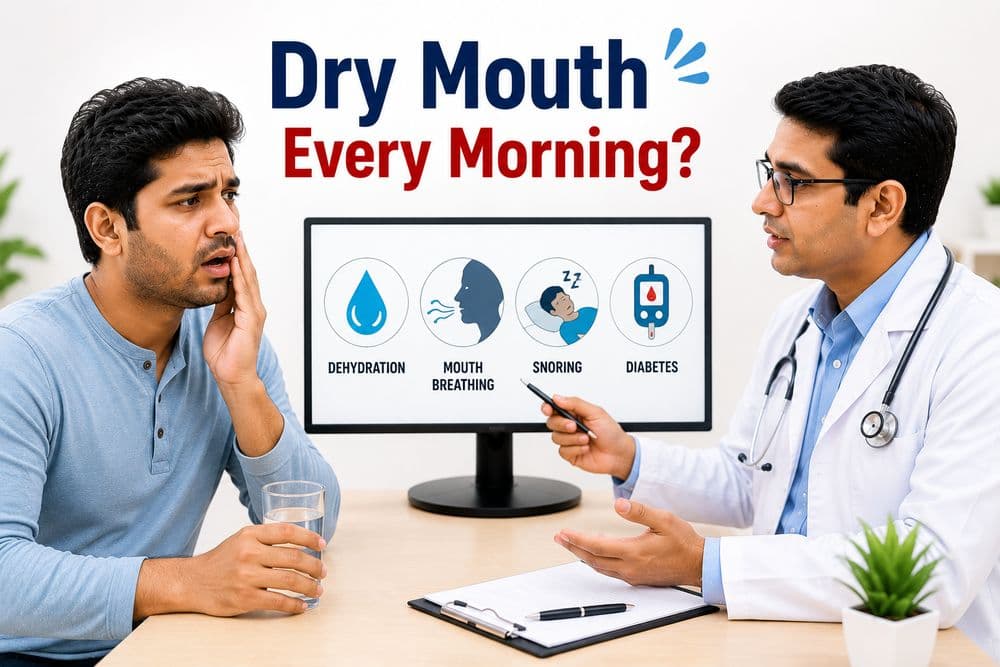
1. Dehydration
One of the most common reasons for morning dry mouth is dehydration.
This may happen due to:
- Not drinking enough water
- Excessive sweating
- Hot weather
- Fever
- Diarrhea or vomiting
When the body lacks adequate fluids, saliva production may decrease.
2. Sleeping With an Open Mouth
Many people unknowingly breathe through their mouth while sleeping.
Mouth breathing may occur because of:
- Nasal congestion
- Allergies
- Deviated nasal septum
- Habitual mouth breathing
This can cause the mouth and throat to feel dry upon waking.
3. Snoring
People who snore often wake up with:
- Dry mouth
- Dry throat
- Irritated throat
The increased airflow through the mouth can reduce moisture during sleep.
4. Sleep Apnea
Obstructive Sleep Apnea (OSA) is a sleep disorder that may cause:
- Loud snoring
- Interrupted breathing during sleep
- Daytime fatigue
- Morning dry mouth
Persistent dry mouth combined with snoring should be evaluated by a healthcare professional.
5. Certain Medications
Many commonly prescribed medications may cause dry mouth as a side effect.
Examples include medications for:
- High blood pressure
- Allergies
- Depression
- Anxiety
- Pain management
6. Air Conditioning and Dry Air
Sleeping in an air-conditioned room or dry environment may reduce moisture in the air and contribute to morning dryness.
7. Diabetes
Frequent dry mouth can sometimes be associated with elevated blood sugar levels.
Additional symptoms may include:
- Increased thirst
- Frequent urination
- Fatigue
- Blurred vision
8. Smoking and Tobacco Use
Smoking may affect saliva production and increase oral dryness.
Tobacco use can also increase the risk of oral health problems.
Symptoms That May Accompany Dry Mouth
People experiencing dry mouth may also notice:
- Sticky feeling inside the mouth
- Cracked lips
- Bad breath
- Dry throat
- Increased thirst
- Difficulty swallowing
- Burning sensation in the mouth
Why Should Persistent Dry Mouth Not Be Ignored?
Long-term dry mouth may increase the risk of:
- Tooth decay
- Gum disease
- Mouth infections
- Difficulty speaking
- Difficulty swallowing
Identifying the underlying cause is important for proper management.
How Can You Reduce Morning Dry Mouth?
Stay Hydrated
Drink adequate water throughout the day, especially during hot weather.
Improve Nasal Breathing
Managing nasal congestion may reduce mouth breathing during sleep.
Limit Alcohol and Tobacco
Avoiding these substances may help improve oral moisture levels.
Maintain Good Oral Hygiene
Regular brushing, flossing, and dental check-ups support oral health.
Review Medications
If symptoms began after starting a new medication, discuss it with your doctor.
When Should You See a Doctor?
Consult a healthcare professional if:
- Dry mouth occurs daily
- Symptoms are worsening
- Excessive thirst develops
- Snoring is severe
- Difficulty swallowing occurs
- You suspect sleep apnea
Medical evaluation may help identify the underlying cause.
Conclusion
Frequent dry mouth in the morning is commonly caused by dehydration, mouth breathing, snoring, medications, or sleep-related disorders. While occasional dryness is usually harmless, persistent symptoms should not be ignored.
Maintaining hydration, improving sleep habits, and addressing underlying conditions can help reduce discomfort and support better oral health.
Related reading
Top Anesthesiologist doctors in Gorakhpur on Zospital
Verified specialists you can book in minutes.
- Book appointment

Dr Karanvir Singh Sidhu
Anesthesiologist
Lucknow
Verified•4.8 - Book appointment
Aveline Pascual Jerome, MD
Anesthesiologist
Ajmer
5 - Book appointment
Dr. Vivek Kumar Sharma - Laser & Advanced Laparoscopy Surgeon In Ajmer
Anesthesiologist
Ajmer
4.7 - Book appointment
Dr.Jay M. Panchal
Anesthesiologist
Ahmedabad
5 - Book appointment

Amit T. Darnule, MD
Anesthesiologist
Agra
4.9 - Book appointment
Dr Rajat Arora
Anesthesiologist
Agra
Have More Questions?
Find quick answers to common questions about our services, appointments, and patient care.
Common causes include dehydration, mouth breathing, snoring, and certain medications.
Yes. Inadequate fluid intake is one of the most common causes.
Yes. Snoring may increase airflow through the mouth and lead to dryness.
Persistent dry mouth can sometimes be associated with high blood sugar levels.
It can be, especially when accompanied by loud snoring and daytime fatigue.

“Your Health, Our Priority. Your Voice, Our Guide”
Dr. Nikhil Singh
Anaesthesia, MBBS, MD
Private hospitals in Gorakhpur on Zospital
Prefer a private option? These hospitals in Gorakhpur list their doctors and take bookings.
- Shankar Eye and Maternity Clinic- Best eye hospital | Best eye surgeon | Eye and Maternity clinic in Gorakhpur
- Trimurti Hospital - Dr. Sanjeev kumar Singh
- Shakuntala Hospital
Related Articles

What Causes Hair Thinning at a Young Age?
Hair thinning at a young age can be caused by stress, hormonal imbalance, poor nutrition, or genetics. Early care helps prevent further hair loss.

What Causes Sudden Sweating Without Exercise?
Sudden sweating without physical activity may occur due to stress, heat exposure, low blood sugar, hormonal changes, infections, or certain medical conditions. Learn the possible causes and warning signs.

What Causes White Spots on Skin?
White spots on skin can be due to fungal infections, pigmentation issues, or medical conditions like vitiligo. Early diagnosis helps in proper treatment.

Written by Dr. Nikhil Singh
Anaesthesia, MBBS, MD
Last reviewed: 24 August 2026
Medical Disclaimer
The content provided on Zospital is for general informational and educational purposes only. It is not intended as a substitute for professional medical advice, diagnosis, or treatment. Always seek the advice of your physician or other qualified healthcare provider with any questions you may have regarding a medical condition. Never disregard professional medical advice or delay in seeking it because of something you have read on this website. If you think you may have a medical emergency, call your doctor or emergency services immediately.
Are you a doctor or run a clinic or hospital?
Patients across India are searching Zospital right now. Get a free profile with reviews, timings and direct WhatsApp bookings.