What Happens If You Sit for More Than 8 Hours Daily? Health Risks You Should Know
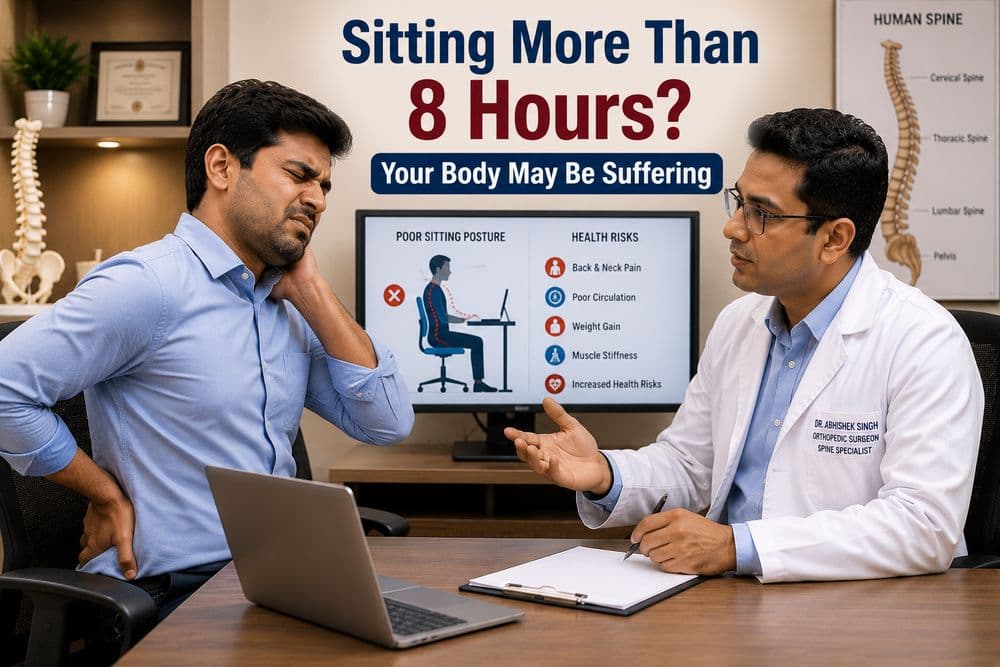
Medically reviewed by Dr. Abhinav Srivastava, Orthopaedic Surgeon, MBBS, MS
Last reviewed: 9 Aug 2026 · How we review health content
Introduction
Modern lifestyles have made prolonged sitting a part of everyday life. Whether working in an office, attending online classes, driving, or spending time on digital devices, many people remain seated for extended periods without realizing the impact on their health.
Research has shown that sitting for more than 8 hours daily may contribute to several physical and metabolic health problems. While sitting itself is not harmful, remaining inactive for long periods without movement can place stress on different parts of the body.
Understanding these effects can help individuals make healthier lifestyle choices.
Why Is Prolonged Sitting a Concern?
The human body is designed for movement. When physical activity decreases for several hours, muscles become less active, circulation slows down, and various body systems may not function as efficiently.
Long sitting hours can affect:
- Spine health
- Muscle strength
- Blood circulation
- Metabolism
- Joint mobility
- Energy levels
What Happens When You Sit for More Than 8 Hours Daily?
1. Increased Back Pain
One of the most common complaints among people with sedentary lifestyles is lower back pain.
Prolonged sitting may:
- Increase pressure on spinal discs
- Cause muscle stiffness
- Affect posture
- Lead to chronic back discomfort
2. Neck and Shoulder Strain
Looking at screens for long periods often causes people to lean forward.
This may result in:
- Neck pain
- Shoulder tightness
- Muscle fatigue
- Postural imbalance
3. Poor Blood Circulation
Long sitting periods may reduce blood flow in the legs.
This can contribute to:
- Leg heaviness
- Swelling
- Tingling sensations
- Circulatory problems
Regular movement helps maintain healthy circulation.
4. Weight Gain
Physical inactivity reduces calorie expenditure.
Combined with unhealthy eating habits, prolonged sitting may increase the risk of:
- Weight gain
- Obesity
- Metabolic problems
5. Reduced Muscle Strength
When muscles remain inactive for long periods, they may gradually weaken.
This commonly affects:
- Core muscles
- Hip muscles
- Leg muscles
- Back muscles
Weak muscles may increase the risk of pain and injury.
6. Increased Risk of Poor Posture
Sitting for several hours daily may encourage:
- Rounded shoulders
- Forward head posture
- Slouching
Poor posture may contribute to long-term spinal discomfort.
7. Joint Stiffness
Lack of movement can cause:
- Hip stiffness
- Knee discomfort
- Reduced flexibility
Many people notice stiffness when standing after prolonged sitting.
8. Eye Strain and Fatigue
Extended screen use while sitting often leads to:
- Dry eyes
- Blurred vision
- Headaches
- Digital eye strain
Following the 20-20-20 rule may help reduce symptoms.
9. Reduced Energy Levels
Long periods of inactivity may leave people feeling:
- Tired
- Less productive
- Mentally fatigued
Regular movement often helps improve energy levels.
10. Increased Risk of Metabolic Disorders
Research suggests prolonged inactivity may be associated with:
- Type 2 diabetes
- High blood pressure
- Elevated cholesterol levels
- Metabolic syndrome
This is one reason health experts encourage regular physical activity throughout the day.
Warning Signs That You May Be Sitting Too Much
You may notice:
- Frequent back pain
- Neck stiffness
- Leg heaviness
- Reduced flexibility
- Fatigue
- Poor posture
- Weight gain
- Eye strain
These symptoms often develop gradually over time.
How Can You Reduce the Risks?
Take Movement Breaks
Stand up and move every 30–60 minutes.
Walk Regularly
Short walks throughout the day help improve circulation.
Use Proper Ergonomics
Ensure:
- Proper chair support
- Correct screen height
- Comfortable sitting posture
Stretch Frequently
Simple stretching exercises may help reduce stiffness.
Exercise Regularly
Regular physical activity supports:
- Muscle strength
- Joint mobility
- Heart health
- Weight management
Who Is Most at Risk?
People who commonly sit for extended periods include:
- Office workers
- Students
- Drivers
- Gamers
- Remote workers
- Content creators
Awareness and preventive measures are particularly important for these groups.
When Should You See a Doctor?
Consult a healthcare professional if you experience:
- Persistent back pain
- Chronic neck pain
- Frequent leg swelling
- Numbness or tingling
- Reduced mobility
- Symptoms affecting daily activities
Early evaluation may help prevent long-term complications.
Conclusion
Sitting for more than 8 hours daily may affect the spine, muscles, circulation, metabolism, and overall well-being. While modern lifestyles often require prolonged sitting, incorporating regular movement, stretching, and physical activity can significantly reduce associated health risks.
Small daily changes can make a big difference in maintaining long-term health and preventing sedentary lifestyle-related problems.
Related reading
Top Spine Surgeon doctors in Lucknow on Zospital
Verified specialists you can book in minutes.
- Book appointment
Pegasus Spine & Joint Institute - Dallas
Spine Surgeon
Alappuzha
4.8 - Book appointment
Tarpon Interventional Pain & Spine Care
Spine Surgeon
Alappuzha
4.8 - Book appointment
Dr Bama Spine Care
Spine Surgeon
Alappuzha
4.9 - Book appointment
Dr. Nigil Sadanandan Spine surgeon
Spine Surgeon
Alappuzha
5 - Book appointment

Pain and Spine Physicians | Chronic Pain | Frisco
Spine Surgeon
Aizawl
4.4 - Book appointment
Rajesh Arakal, MD
Spine Surgeon
Aizawl
4.9
Have More Questions?
Find quick answers to common questions about our services, appointments, and patient care.
Prolonged sitting without regular movement may contribute to several health problems over time.
Yes. Long sitting hours increase pressure on the spine and may contribute to back discomfort.
Yes. Sitting for extended periods may reduce circulation, especially in the legs.
Physical inactivity may reduce calorie burning and contribute to weight gain.
Many experts recommend moving every 30–60 minutes.
Yes. It may contribute to slouching, forward head posture, and rounded shoulders.

Private hospitals in Lucknow on Zospital
Prefer a private option? These hospitals in Lucknow list their doctors and take bookings.
- Paarth Eye Hospital & Retina Centre
- Urmila Devi Memorial Hospital- Child Specialist Hospital in Lucknow | Pediatrician hospital
- SPARSH CHILDREN'S HOSPITAL & VACCINATION CENTER | Child Hospital in Raebareli Road Lucknow | Dr. Akhilesh Pandey |
Related Articles

What Is Coronary Artery Disease? Causes, Symptoms and Treatment
A clear guide to coronary artery disease, its risk factors, symptoms and treatment options including angioplasty and bypass surgery.

What is Irritable Bowel Syndrome (IBS)? Symptoms, Causes & Treatment
Irritable Bowel Syndrome (IBS) is a common digestive disorder that affects the large intestine and causes symptoms like abdominal pain, bloating, and irregular bowel habits.

What Is Tech Neck Syndrome? Causes, Symptoms and Prevention Tips
Tech Neck Syndrome is a posture-related condition caused by prolonged use of smartphones, tablets, and computers. Learn its symptoms, causes, and prevention tips.

Written by Dr. Abhinav Srivastava
Orthopaedic Surgeon, MBBS, MS
Last reviewed: 9 August 2026
Medical Disclaimer
The content provided on Zospital is for general informational and educational purposes only. It is not intended as a substitute for professional medical advice, diagnosis, or treatment. Always seek the advice of your physician or other qualified healthcare provider with any questions you may have regarding a medical condition. Never disregard professional medical advice or delay in seeking it because of something you have read on this website. If you think you may have a medical emergency, call your doctor or emergency services immediately.
Are you a doctor or run a clinic or hospital?
Patients across India are searching Zospital right now. Get a free profile with reviews, timings and direct WhatsApp bookings.