Is It Just Period Pain, Or Endometriosis?
More in Gynecologist Guides
Medically reviewed by Dr Aparna Khandelia, Obs & Gynae Surgeon, MBBS, MS
Last reviewed: 9 Aug 2026 · How we review health content
The monsoon clouds are rolling in, and for many, that means a different kind of storm is brewing inside. That monthly dread. Not just the inconvenience of periods (mahwari), but the debilitating pain that has you cancelling plans and curling up with a hot water bottle.
For generations, we've been told this is just part of being a woman. 'Sahan karo,' they say. 'It’s just bad period pain.' But what if it isn't? What if that agony you've been taught to normalize is actually a sign of a medical condition called endometriosis?
Let's set the record straight. Excruciating pain that disrupts your life is not normal. It’s time to stop dismissing it and start understanding what's really going on.
That's Not 'Normal' Period Pain
You've probably heard that some cramping is expected. And it is. But we're not talking about a little discomfort you can solve with a cup of chai and a painkiller. We're talking about pain so intense it makes you miss work or school, causes nausea, or leaves you unable to get out of bed.
This is the reality for many with endometriosis. Simply put, it's a condition where tissue similar to the lining of your uterus (the endometrium) starts growing outside of it — on your ovaries, fallopian tubes, and even your bowel or bladder. This misplaced tissue behaves like it's supposed to: it thickens, breaks down, and bleeds with each menstrual cycle. But unlike the lining of your uterus, this blood has no way to exit your body.
It gets trapped. This causes inflammation, scarring, and intense pain. It isn't 'in your head' and it isn't a low pain tolerance. It's a physical problem.
Symptoms Everyone Ignores (But Shouldn't)
Endometriosis is much more than just bad cramps. Because the tissue can grow in different places, the symptoms can be confusing and often get misdiagnosed as 'gas trouble' or a urinary tract infection.
Consider a 32-year-old teacher in Mumbai. For years, she had killer periods, but she also had painful bloating and bowel movements that she just blamed on a sensitive stomach. She thought it was just her body's reaction to stress. It wasn't until she and her husband had trouble conceiving that a doctor connected the dots. All those separate issues were actually one big one: endometriosis.
Look out for these red flags, especially if they get worse around your period:
- Painful periods (a condition called dysmenorrhea) that aren't helped by standard painkillers.
- Pain during or after sex.
- Painful bowel movements or urination.
- Heavy bleeding during periods or spotting between periods.
- Chronic pain in your lower back and pelvis.
- Struggling to get pregnant (garbhavastha).
Experiencing this? Dr Aparna Khandelia (MBBS, MS (Obstetrics & Gynaecology)) treats IVF treatment, normal and cesarean deliveries, high-risk pregnancy management, prenatal and postnatal care, family planning counseling, irregular periods and PCOS treatment, pregnancy ultrasounds at ERA's Lucknow Medical College & Hospital and B Hope Hospital in Lucknow. Book an appointment.
Why 'Just Bear It' is Bad Advice
In many Indian families, especially joint families, a woman's pain is often put last. You're expected to keep up with household duties, work, and family obligations, no matter how you feel. Complaining about period pain can be seen as making excuses or being weak. This culture of silence is incredibly damaging.
Ignoring the symptoms of endometriosis doesn't make it go away. In fact, it can get worse. The inflammation and scarring can lead to long-term problems, including the formation of cysts on the ovaries (known as 'chocolate cysts') and difficulties with fertility. It can seriously impact your quality of life, relationships, and mental health.
Your pain is valid. It deserves attention.
Your First Doctor's Visit: What to Expect
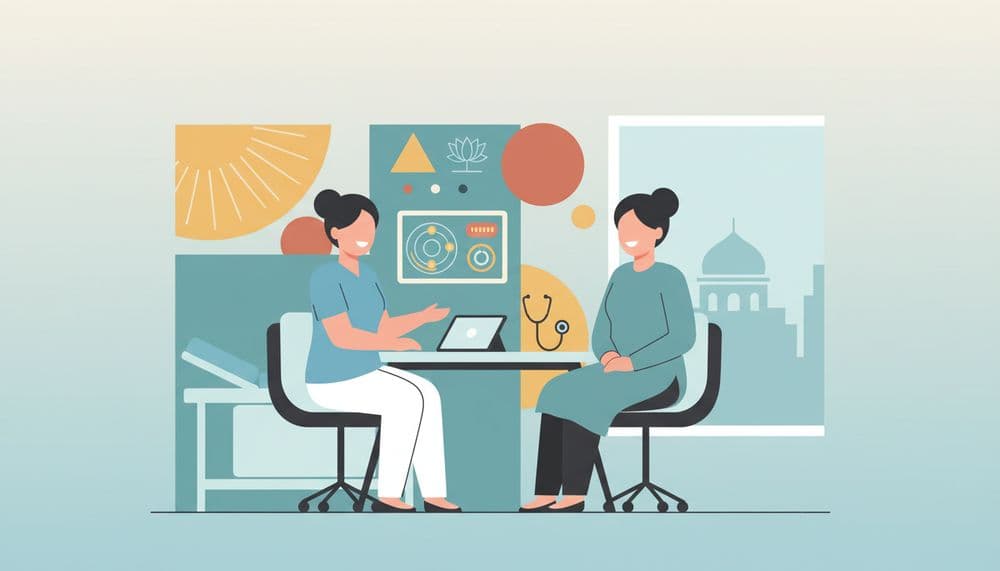
Deciding to see a gynaecologist can feel intimidating, but knowing what happens can help. Your doctor's goal is to understand your symptoms, not to judge you. Be prepared to talk honestly about your pain—when it started, what it feels like, and how it affects your daily routine.
A doctor will likely start with a detailed conversation about your medical history and symptoms. They may perform a pelvic exam to feel for any abnormalities. The next step is often a pelvic ultrasound. It's a simple, painless scan that uses sound waves to create a picture of your reproductive organs. While it can't always definitively diagnose endometriosis, it can help rule out other problems and identify cysts.
In some cases, a laparoscopy (a type of keyhole surgery) might be suggested for a clear diagnosis. But that's usually not the first step. The most important thing is to start the conversation with a qualified healthcare provider who listens to you.
Frequently Asked Questions
Can endometriosis be cured with home remedies like haldi doodh or special diets?
While a healthy diet with anti-inflammatory foods like turmeric (haldi), ginger, and leafy greens can help manage symptoms, they are not a cure for endometriosis. These are good supportive habits, but they can't remove the misplaced tissue. Medical treatment is necessary to manage the condition effectively.
Does having endometriosis mean I can't get pregnant?
Not necessarily. Many women with endometriosis conceive without any issues. However, it can make getting pregnant more difficult for some, as the inflammation and scarring can affect the ovaries and fallopian tubes. If you have endometriosis and are planning a family, it's a good idea to discuss it with your gynaecologist.
Is surgery the only treatment for endometriosis?
No, surgery is not the only option. Treatment depends on your symptoms, their severity, and your family planning goals. Options can range from pain medication and hormone therapy (like birth control pills) to minimally invasive surgery to remove the endometrial growths. Your doctor will discuss the most suitable approach for you.
Why did it take so long for my pain to be diagnosed?
This is a frustratingly common experience. On average, it can take several years to get a diagnosis. This is because symptoms overlap with other conditions, and there's a widespread (and incorrect) belief that severe period pain is normal. This is why advocating for yourself and clearly describing all your symptoms to a doctor is so important.
Medical Disclaimer
The information provided in this article is for general informational and educational purposes only. It is not intended as a substitute for professional medical advice, diagnosis, or treatment. Always seek the advice of your physician or other qualified healthcare provider with any questions you may have regarding a medical condition. Never disregard professional medical advice or delay in seeking it because of something you have read in this article.
Related reading
Top Gynecologist doctors in Lucknow on Zospital
Verified specialists you can book in minutes.
- Book appointment
Dr. Richa Gangwar
Gynecologist
Lucknow
Verified•4.9 - Book appointment
Dr. Roli Purwar
Gynecologist
Gorakhpur
Verified - Book appointment
Dr Pooja Bansal
Gynecologist
Navi Mumbai
4.9 - Book appointment
Dr. Vidya Shetty
Gynecologist
Thane
5 - Book appointment
Dr. Shruti Ugran
Gynecologist
Navi Mumbai
4.9 - Book appointment
Dr. Shruti Chandak
Gynecologist
Thane
Have More Questions?
Find quick answers to common questions about our services, appointments, and patient care.
While a healthy diet with anti-inflammatory foods like turmeric (haldi), ginger, and leafy greens can help manage symptoms, they are not a cure for endometriosis. These are good supportive habits, but they can't remove the misplaced tissue. Medical treatment is necessary to manage the condition effectively.
Not necessarily. Many women with endometriosis conceive without any issues. However, it can make getting pregnant more difficult for some, as the inflammation and scarring can affect the ovaries and fallopian tubes. If you have endometriosis and are planning a family, it's a good idea to discuss it with your gynaecologist.
No, surgery is not the only option. Treatment depends on your symptoms, their severity, and your family planning goals. Options can range from pain medication and hormone therapy (like birth control pills) to minimally invasive surgery to remove the endometrial growths. Your doctor will discuss the most suitable approach for you.
This is a frustratingly common experience. On average, it can take several years to get a diagnosis. This is because symptoms overlap with other conditions, and there's a widespread (and incorrect) belief that severe period pain is normal. This is why advocating for yourself and clearly describing all your symptoms to a doctor is so important.

“Your Partner in Health, From Adolescence to Motherhood & Beyond.”
Dr Aparna Khandelia
Obs & Gynae Surgeon, MBBS, MS
Private hospitals in Lucknow on Zospital
Prefer a private option? These hospitals in Lucknow list their doctors and take bookings.
- Paarth Eye Hospital & Retina Centre
- Urmila Devi Memorial Hospital- Child Specialist Hospital in Lucknow | Pediatrician hospital
- SPARSH CHILDREN'S HOSPITAL & VACCINATION CENTER | Child Hospital in Raebareli Road Lucknow | Dr. Akhilesh Pandey |
Related Articles
Energy and Vitality Wellness Programs for NRIs in India
India offers holistic energy and vitality programs for NRIs. These combine ancient healing with modern comfort for natural balance.
Enlarged Prostate (BPH): Symptoms, Causes and Treatment
A plain-language guide to benign prostatic hyperplasia (BPH), its symptoms and treatment.
ENT: Ear, Nose & Throat Care Guide
Learn about otolaryngology, the medical specialty for the ear, nose, and throat. This guide covers common ENT issues and when to see a specialist.

Written by Dr Aparna Khandelia
Obs & Gynae Surgeon, MBBS, MS
Last reviewed: 9 August 2026
Medical Disclaimer
The content provided on Zospital is for general informational and educational purposes only. It is not intended as a substitute for professional medical advice, diagnosis, or treatment. Always seek the advice of your physician or other qualified healthcare provider with any questions you may have regarding a medical condition. Never disregard professional medical advice or delay in seeking it because of something you have read on this website. If you think you may have a medical emergency, call your doctor or emergency services immediately.
Are you a doctor or run a clinic or hospital?
Patients across India are searching Zospital right now. Get a free profile with reviews, timings and direct WhatsApp bookings.