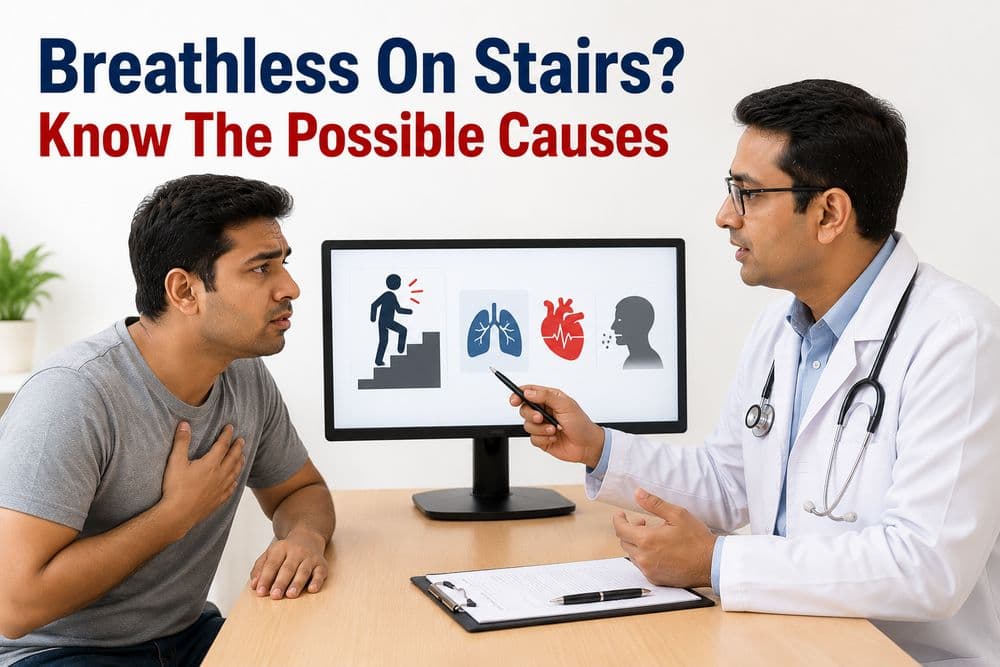
Why Do Some People Feel Breathless While Climbing Stairs?
Medically reviewed by Dr. Nikhil Singh, Anaesthesia, MBBS, MD
Last reviewed: 24 Aug 2026 · How we review health content
Introduction
Do you find yourself getting out of breath after climbing just a few flights of stairs?
Occasional breathlessness during intense physical activity can be normal. However, if climbing stairs regularly leaves you unusually short of breath, it may be worth understanding the possible reasons behind it.
Breathlessness can occur for various reasons, ranging from low physical fitness to underlying heart or lung conditions.
Why Does Breathlessness Occur While Climbing Stairs?
Climbing stairs requires the body to work harder than walking on a flat surface.
During stair climbing:
- Heart rate increases
- Breathing becomes faster
- Muscles require more oxygen
- The lungs work harder
If the body's oxygen demand is not met efficiently, breathlessness may occur.
Common Causes of Breathlessness While Climbing Stairs
1. Low Physical Fitness
One of the most common reasons is reduced physical conditioning.
People who exercise infrequently may experience:
- Early fatigue
- Rapid breathing
- Reduced stamina
during stair climbing.
2. Excess Body Weight
Carrying extra weight places additional stress on:
- The heart
- The lungs
- The joints
This may make stair climbing more challenging.
3. Anemia
Low hemoglobin levels reduce the blood's ability to carry oxygen.
Symptoms may include:
- Breathlessness
- Weakness
- Fatigue
- Dizziness
4. Asthma
People with asthma may experience:
- Shortness of breath
- Wheezing
- Chest tightness
especially during physical activity.
5. Heart-Related Conditions
The heart plays a major role in delivering oxygen-rich blood throughout the body.
Some heart conditions may cause:
- Breathlessness on exertion
- Fatigue
- Reduced exercise tolerance
6. Lung Conditions
Respiratory conditions may reduce lung efficiency.
Examples include:
- Chronic lung diseases
- Previous lung infections
- Airway disorders
7. Aging
As people age, physical endurance and lung capacity may naturally decline, making stair climbing more demanding.
Symptoms That Should Not Be Ignored
Seek medical evaluation if breathlessness is accompanied by:
- Chest pain
- Dizziness
- Fainting
- Palpitations
- Swelling in the legs
- Persistent cough
- Wheezing
These symptoms may require professional assessment.
Who Is More Likely to Experience Breathlessness?
Higher-risk groups include:
- Sedentary individuals
- People with obesity
- Smokers
- Individuals with asthma
- Older adults
- People with heart disease
- People with anemia
How Can You Improve Stair-Climbing Endurance?
Stay Physically Active
Regular exercise may improve cardiovascular fitness.
Maintain a Healthy Weight
Weight management can reduce strain on the heart and lungs.
Follow a Balanced Diet
Proper nutrition supports energy levels and overall health.
Stay Hydrated
Adequate hydration helps support normal body functions.
Manage Existing Medical Conditions
Conditions such as asthma, anemia, and heart disease should be monitored and treated appropriately.
When Should You See a Doctor?
Consult a healthcare professional if:
- Breathlessness is worsening
- It occurs with minimal activity
- Chest discomfort develops
- Daily activities become difficult
- Symptoms occur repeatedly
Early evaluation can help identify the underlying cause.
Conclusion
Feeling breathless while climbing stairs may occur due to low fitness levels, excess body weight, anemia, asthma, or heart and lung conditions. While occasional shortness of breath can be normal, persistent or worsening symptoms should not be ignored.
Understanding the cause and seeking timely medical advice can help improve overall health and quality of life.
Related reading
Top Anesthesiologist doctors in Gorakhpur on Zospital
Verified specialists you can book in minutes.
- Book appointment

Dr Karanvir Singh Sidhu
Anesthesiologist
Lucknow
Verified•4.8 - Book appointment
Aveline Pascual Jerome, MD
Anesthesiologist
Ajmer
5 - Book appointment
Dr. Vivek Kumar Sharma - Laser & Advanced Laparoscopy Surgeon In Ajmer
Anesthesiologist
Ajmer
4.7 - Book appointment
Dr.Jay M. Panchal
Anesthesiologist
Ahmedabad
5 - Book appointment

Amit T. Darnule, MD
Anesthesiologist
Agra
4.9 - Book appointment
Dr Rajat Arora
Anesthesiologist
Agra
Have More Questions?
Find quick answers to common questions about our services, appointments, and patient care.
Mild breathlessness during exertion can be normal, but persistent symptoms may require evaluation.
Yes. Reduced fitness is a common cause of shortness of breath during physical activity.
Yes. Low hemoglobin levels may reduce oxygen delivery to tissues.
In some cases, breathlessness on exertion may be associated with heart-related conditions.

“Your Health, Our Priority. Your Voice, Our Guide”
Dr. Nikhil Singh
Anaesthesia, MBBS, MD
Private hospitals in Gorakhpur on Zospital
Prefer a private option? These hospitals in Gorakhpur list their doctors and take bookings.
- Shankar Eye and Maternity Clinic- Best eye hospital | Best eye surgeon | Eye and Maternity clinic in Gorakhpur
- Trimurti Hospital - Dr. Sanjeev kumar Singh
- Shakuntala Hospital
Related Articles
Why Do You Feel Sleepy After Eating? Common Causes Explained
Feeling sleepy after meals is common and may be linked to digestion, food choices, blood sugar changes, and lifestyle habits. Learn the possible reasons behind post-meal drowsiness.
Why Do Your Fingers Become Numb During Sleep? Common Causes and When to Seek Medical Help
Finger numbness during sleep is often caused by nerve compression, sleeping posture, or underlying health conditions. Learn the possible causes and warning signs.
Why Do Your Hands Fall Asleep at Night? Common Causes and When to Seek Medical Help
Waking up with numb or tingling hands at night is often caused by nerve compression, sleeping posture, or underlying medical conditions. Learn the possible causes and warning signs.

Written by Dr. Nikhil Singh
Anaesthesia, MBBS, MD
Last reviewed: 24 August 2026
Medical Disclaimer
The content provided on Zospital is for general informational and educational purposes only. It is not intended as a substitute for professional medical advice, diagnosis, or treatment. Always seek the advice of your physician or other qualified healthcare provider with any questions you may have regarding a medical condition. Never disregard professional medical advice or delay in seeking it because of something you have read on this website. If you think you may have a medical emergency, call your doctor or emergency services immediately.
Are you a doctor or run a clinic or hospital?
Patients across India are searching Zospital right now. Get a free profile with reviews, timings and direct WhatsApp bookings.