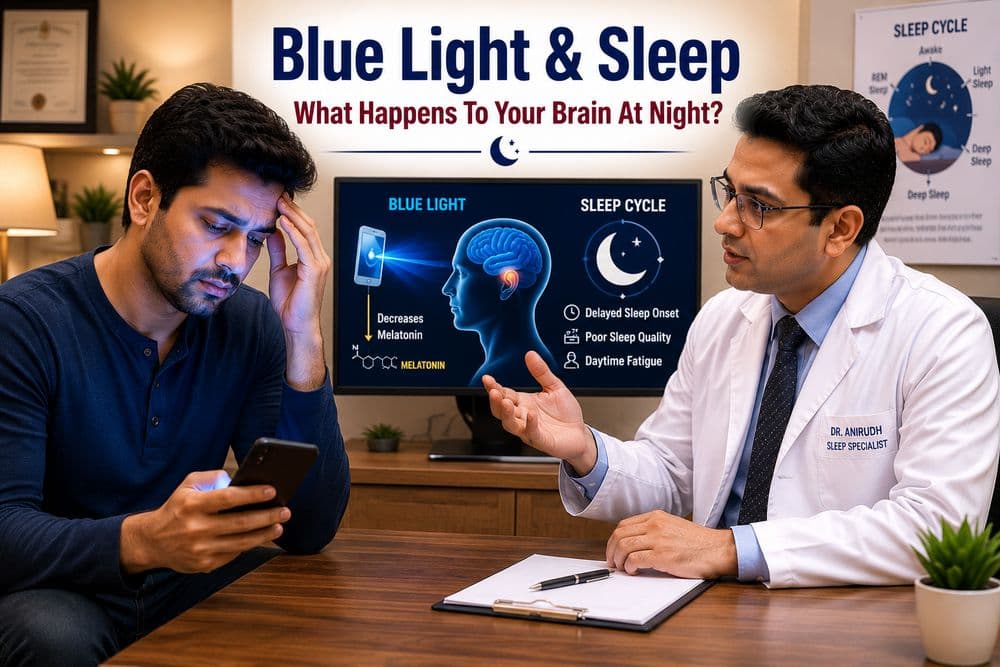
Why Does Blue Light From Mobile Phones Affect Sleep? Understanding the Science Behind It
Medically reviewed by Dr. Nikhil Singh, Anaesthesia, MBBS, MD
Last reviewed: 24 Aug 2026 · How we review health content
Introduction
Many people use smartphones before bedtime to watch videos, browse social media, reply to messages, or read articles. While this habit may seem harmless, prolonged screen exposure late in the evening can sometimes make it harder to fall asleep.
One of the main reasons is blue light, a type of light emitted by mobile phones, tablets, laptops, and other digital screens. Researchers have found that excessive exposure to blue light at night may affect the body's natural sleep-wake cycle and reduce sleep quality.
Understanding how blue light affects sleep can help individuals develop healthier bedtime habits.
What Is Blue Light?
Blue light is a portion of visible light with relatively short wavelengths and high energy.
It is naturally present in:
- Sunlight
- LED lights
- Smartphones
- Tablets
- Computers
- Television screens
During the daytime, blue light helps improve alertness, attention, and mood. However, excessive exposure at night may interfere with normal sleep patterns.
How Does the Body Know When It's Time to Sleep?
The body follows an internal clock known as the circadian rhythm.
This biological clock helps regulate:
- Sleep timing
- Wakefulness
- Hormone release
- Body temperature
As evening approaches, the brain naturally prepares the body for sleep by increasing the production of a hormone called melatonin.
What Is Melatonin?
Melatonin is often referred to as the "sleep hormone."
It helps:
- Signal the body that it is time to sleep
- Promote relaxation
- Support healthy sleep patterns
Melatonin levels usually rise in the evening and remain elevated during the night.
How Does Blue Light Affect Sleep?
1. Reduced Melatonin Production
Blue light exposure at night may suppress melatonin production.
As a result:
- Sleepiness may be delayed
- Falling asleep may become more difficult
- Sleep timing may shift later
2. Increased Alertness
Blue light can signal the brain to stay awake and alert.
Even when feeling tired, screen exposure may make the brain think it is still daytime.
3. Delayed Sleep Onset
People who spend significant time on mobile phones before bed may take longer to fall asleep compared to those who avoid screens before bedtime.
4. Poor Sleep Quality
Late-night screen use may contribute to:
- Frequent awakenings
- Lighter sleep
- Reduced sleep duration
- Feeling less refreshed in the morning
Common Signs That Blue Light May Be Affecting Your Sleep
You may notice:
- Difficulty falling asleep
- Delayed bedtime
- Feeling tired in the morning
- Frequent night awakenings
- Daytime sleepiness
- Eye strain after screen use
Who Is Most Affected?
Blue light may particularly affect:
- Teenagers
- Students
- Office workers
- Gamers
- Individuals who use screens before bed
- People with irregular sleep schedules
Children and adolescents may be more sensitive to evening blue light exposure.
How Can You Reduce Blue Light Exposure at Night?
Limit Screen Time Before Bed
Many experts recommend reducing screen use at least 30–60 minutes before sleeping.
Use Night Mode
Most smartphones offer:
- Night Mode
- Blue Light Filter
- Eye Comfort Mode
These settings reduce blue light emission.
Keep Devices Away From the Bed
Avoid scrolling through social media or watching videos while lying in bed.
Improve Bedroom Lighting
Using dim, warm lighting in the evening may help support natural melatonin production.
Follow a Consistent Sleep Schedule
Going to bed and waking up at similar times each day may improve sleep quality.
Can Blue Light Cause Eye Problems?
Blue light is more commonly associated with:
- Eye strain
- Dry eyes
- Fatigue during prolonged screen use
Current research continues to evaluate its long-term effects on eye health.
When Should You Seek Medical Advice?
Consult a healthcare professional if:
- Sleep problems persist for several weeks
- Insomnia becomes frequent
- Daytime fatigue affects daily activities
- Sleep quality continues to decline despite lifestyle changes
Persistent sleep disturbances may have causes beyond screen exposure.
Conclusion
Blue light from mobile phones and other digital devices may interfere with the body's natural sleep cycle by reducing melatonin production and increasing alertness. While occasional screen use is unlikely to cause major problems, prolonged exposure before bedtime may contribute to difficulty falling asleep and poorer sleep quality.
Limiting screen use before bed, using blue light filters, and maintaining healthy sleep habits can help support better rest and overall well-being.
Related reading
Top Anesthesiologist doctors in Gorakhpur on Zospital
Explore professional profiles and available appointment options.
- Book appointment

Dr Karanvir Singh Sidhu
Anesthesiologist
Lucknow
Verified•4.8 - Book appointment
Aveline Pascual Jerome, MD
Anesthesiologist
Ajmer
5 - Book appointment
Dr. Vivek Kumar Sharma - Laser & Advanced Laparoscopy Surgeon In Ajmer
Anesthesiologist
Ajmer
4.7 - Book appointment
Dr.Jay M. Panchal
Anesthesiologist
Ahmedabad
5 - Book appointment

Amit T. Darnule, MD
Anesthesiologist
Agra
4.9 - Book appointment
Dr Rajat Arora
Anesthesiologist
Agra
Have More Questions?
Find quick answers to common questions about our services, appointments, and patient care.
Blue light is a high-energy visible light emitted by sunlight and digital screens such as smartphones and computers.
Blue light may reduce melatonin production and signal the brain to stay alert.
Excessive screen use before bedtime may contribute to difficulty falling asleep in some individuals.
Melatonin is a hormone that helps regulate the body's sleep-wake cycle.
Many experts recommend reducing screen exposure at least 30–60 minutes before bedtime.
Yes. Night mode and blue light filters may reduce blue light emission from screens.

“Your Health, Our Priority. Your Voice, Our Guide”
Dr. Nikhil Singh
Anaesthesia, MBBS, MD
Private hospitals in Gorakhpur on Zospital
Prefer a private option? These hospitals in Gorakhpur list their doctors and take bookings.
- Shankar Eye and Maternity Clinic- Best eye hospital | Best eye surgeon | Eye and Maternity clinic in Gorakhpur
- Trimurti Hospital - Dr. Sanjeev kumar Singh
- Shakuntala Hospital
Related Articles

Why Does My Body Feel Shaky and Weak Suddenly? Causes & What to Do
Sudden shakiness and weakness in the body can be alarming. It may be due to low energy, stress, or underlying health issues.

Why Do Dark Circles Increase Suddenly?
Sudden increase in dark circles can be due to lack of sleep, stress, dehydration, or health issues. Identifying the cause helps in effective treatment.
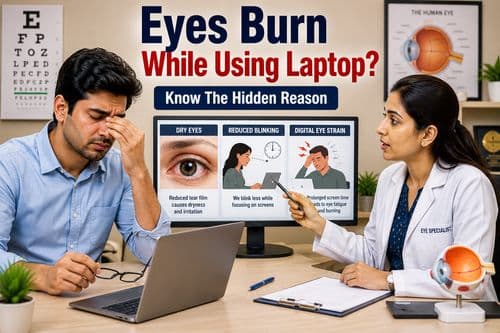
Why Do Eyes Burn While Using a Laptop? Common Causes and Prevention Tips
Burning eyes while using a laptop are often linked to digital eye strain, reduced blinking, and dry eyes. Learn the causes, symptoms, and prevention tips.

Written by Dr. Nikhil Singh
Anaesthesia, MBBS, MD
Last reviewed: 24 August 2026
Medical Disclaimer
The content provided on Zospital is for general informational and educational purposes only. It is not intended as a substitute for professional medical advice, diagnosis, or treatment. Always seek the advice of your physician or other qualified healthcare provider with any questions you may have regarding a medical condition. Never disregard professional medical advice or delay in seeking it because of something you have read on this website. If you think you may have a medical emergency, call your doctor or emergency services immediately.
Are you a doctor or run a clinic or hospital?
Patients across India are searching Zospital right now. Get a free profile with reviews, timings and direct WhatsApp bookings.