Why Does Acidity Get Worse at Night? Causes & Relief
Medically reviewed by Dr. Divyansh Bhatt, Gastrologist
Last reviewed: 18 Jul 2026
Why Does Acidity Get Worse at Night?
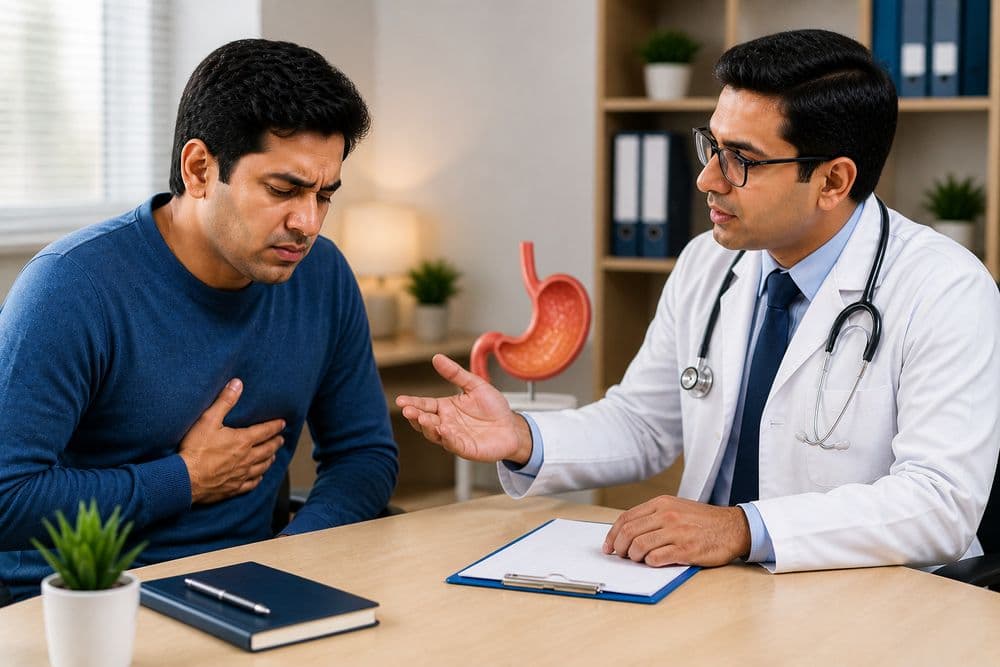
Many people notice that acidity or heartburn becomes more intense at night, especially after lying down. This happens because your body position and digestion patterns change during nighttime, making acid reflux more likely.
When you lie flat, stomach acid can easily flow back into the food pipe (esophagus), causing a burning sensation in the chest or upper abdomen.
Common Reasons for Night-Time Acidity
1. Lying Down After Meals
Gravity plays an important role in digestion. When you lie down soon after eating, acid can move upward, leading to reflux and burning sensation.
2. Late Night Eating
Eating heavy meals late at night does not give your body enough time to digest food properly. This increases acid production and discomfort.
3. Overeating at Dinner
Large meals stretch the stomach and increase pressure, which can push acid upward.
4. Acid Reflux (GERD)
People with frequent acidity may have gastroesophageal reflux disease (GERD), where acid repeatedly flows back into the esophagus, especially at night.
5. Spicy or Oily Food
Dinner that includes spicy, fried, or fatty food can irritate the stomach lining and worsen acidity.
6. Weak Lower Esophageal Sphincter (LES)
This muscle normally prevents acid from coming back up. If it becomes weak, reflux symptoms increase—especially when lying down.
7. Stress and Lifestyle
Stress, smoking, alcohol, and irregular eating habits can worsen acidity symptoms.
Symptoms of Night-Time Acidity
- Burning sensation in chest (heartburn)
- Sour or bitter taste in mouth
- Regurgitation of food or acid
- Bloating and heaviness
- Sleep disturbance due to discomfort
Why Night-Time Acidity Should Not Be Ignored
Frequent acidity at night can lead to irritation of the food pipe, poor sleep quality, and long-term digestive issues. If ignored, it may cause complications like inflammation or ulcers.
When Should You See a Doctor?
- Acidity occurs frequently (more than 2–3 times a week)
- Severe burning sensation or chest discomfort
- Difficulty swallowing
- Chronic cough or throat irritation
- Sleep is regularly disturbed
Effective Ways to Reduce Night-Time Acidity
1. Avoid Late Night Meals
Try to have dinner at least 2–3 hours before bedtime.
2. Sleep with Head Elevated
Using an extra pillow or elevating your head can reduce acid reflux.
3. Eat Light Dinner
Prefer simple, less spicy, and easily digestible food at night.
4. Avoid Trigger Foods
Limit caffeine, chocolate, fried food, citrus, and carbonated drinks.
5. Maintain Healthy Weight
Excess weight increases pressure on the stomach, worsening reflux.
6. Stay Upright After Eating
Avoid lying down immediately after meals.
Conclusion
Acidity getting worse at night is mainly due to body position and lifestyle habits. Simple changes like early dinner, proper posture, and avoiding trigger foods can significantly reduce symptoms. If the problem persists, medical evaluation is important for proper diagnosis and treatment.
Related reading
Written by
Top Gastrologist / Gastroenterologist doctors in Lucknow on Zospital
Verified specialists you can book in minutes.
- Book appointment

Dr. Ankit Maheshwari
Gastrologist / Gastroenterologist
Lucknow
Verified•4.7 - Book appointment

Dr. Anurag Bajpayee
Gastroenterology
Faizabad
4.3 - Book appointment

Dr. Ashish Kumar Jha
Gastroenterology
Patna
4.5 - Book appointment

Dr. Manish Kumar
Gastroenterology
Patna
4.8 - Book appointment

Dr. Nitin Kumar
Gastroenterology
Patna
4.9 - Book appointment

Dr. Amitesh Kumar
Gastroenterology
Patna
4.9
Have More Questions?
Find quick answers to common questions about our services, appointments, and patient care.
Because lying down allows stomach acid to move upward more easily.
At least 2–3 hours after meals.
Yes, elevating your head can help reduce acid reflux.
Spicy, oily, fried, caffeine, and citrus foods.
If frequent, it can lead to complications and should be evaluated.
“Gastrologist: MBBS, MD–Medicine ,Dr. NB Gastroenterology”
Dr. Divyansh Bhatt
Gastrologist
Related Articles
Why Does Blue Light From Mobile Phones Affect Sleep? Understanding the Science Behind It
Blue light emitted from smartphones and digital devices may interfere with the body's natural sleep cycle. Learn how it affects sleep and ways to reduce its impact.

Why Does My Body Feel Shaky and Weak Suddenly? Causes & What to Do
Sudden shakiness and weakness in the body can be alarming. It may be due to low energy, stress, or underlying health issues.

Why Do Dark Circles Increase Suddenly?
Sudden increase in dark circles can be due to lack of sleep, stress, dehydration, or health issues. Identifying the cause helps in effective treatment.
Written by Dr. Divyansh Bhatt
Gastrologist
Last reviewed: 18 July 2026
Medical Disclaimer
The content provided on Zospital is for general informational and educational purposes only. It is not intended as a substitute for professional medical advice, diagnosis, or treatment. Always seek the advice of your physician or other qualified healthcare provider with any questions you may have regarding a medical condition. Never disregard professional medical advice or delay in seeking it because of something you have read on this website. If you think you may have a medical emergency, call your doctor or emergency services immediately.
Are you a doctor or run a clinic or hospital?
Patients across India are searching Zospital right now. Get a free profile with reviews, timings and direct WhatsApp bookings.