Health Insurance Claim Rejected Reasons for Seniors in India
Medically reviewed by Dr. Nikhil Singh, Anaesthesia, MBBS, MD
Last reviewed: 24 Aug 2026
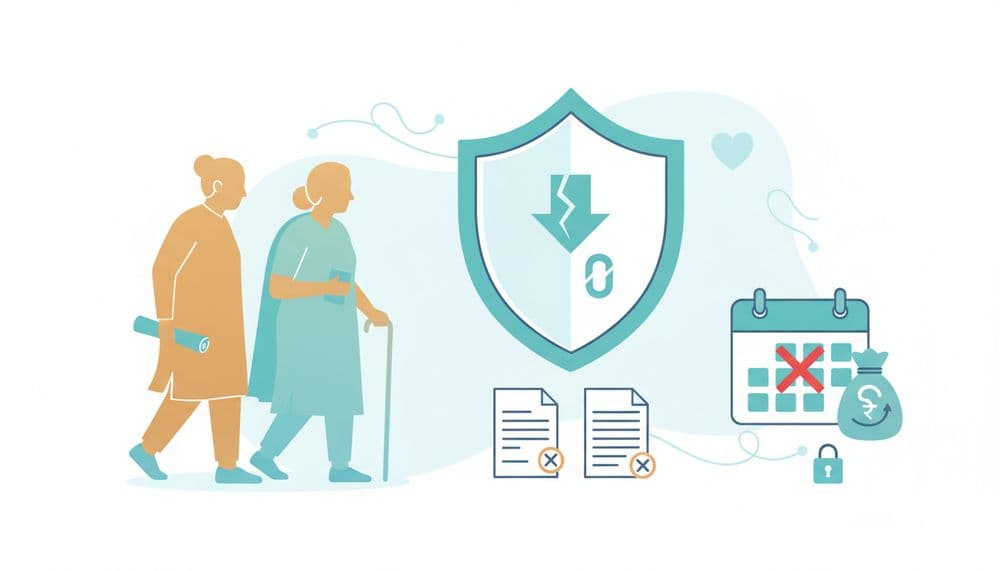
For any family, and especially for those caring for elderly parents, a rejected health insurance claim can be a source of immense stress. When a claim is denied, it is not an arbitrary decision. Insurers must follow specific rules laid out by the Insurance Regulatory and Development Authority of India (IRDAI).
Understanding the documented health insurance claim rejected reasons is the first step towards ensuring your rights are protected. This guide explains the valid grounds for denial, the new rules that protect policyholders, and the exact steps to take if you believe a claim for a senior citizen family member has been wrongly denied.
Key IRDAI Claim Rules for Policyholders (Effective 2024)
Figures are based on the IRDAI Master Circular on Health Insurance Business, dated May 29, 2024. These timelines are mandatory for all insurers.
- Cashless Request Decision Time — Within 1 hour
- Final Discharge Authorization Time — Within 3 hours
- Reimbursement Claim Settlement Time — Within 30 days
- Maximum Pre-Existing Disease (PED) Waiting Period — 36 months
- Policy Moratorium Period (for continuous coverage) — 60 months (5 years)
- Insurance Ombudsman Claim Dispute Limit — Up to ₹50 lakh
Rates shown are as per the Insurance Regulatory and Development Authority of India (IRDAI) (2024) and are subject to periodic revision. Always verify the latest approved rates on the official source.
Common Health Insurance Claim Rejected Reasons in India
An insurer in India cannot deny a claim based on guesswork. The rejection letter must clearly state the reason and reference the specific policy clause that has been violated. For senior citizens, claims are most often rejected for the following reasons:
- Non-Disclosure of a Pre-Existing Disease (PED): This is a primary reason for claim rejection. If a condition that existed before the policy was bought is not declared on the proposal form, a future claim for it can be denied. Per IRDAI, a PED is a condition diagnosed or treated within the 36 months before the policy began. The insurer must provide medical evidence to prove non-disclosure; they cannot act on suspicion alone.
- Breach of Waiting Periods: Policies have mandatory waiting periods during which claims are not paid. This includes an initial 30-day period for all illnesses (except accidents), a 24-36 month period for specific listed illnesses (like cataracts or joint replacement), and a waiting period for declared PEDs.
- Claiming Within the PED Waiting Period: As of April 1, 2024, the maximum waiting period for pre-existing diseases is 36 months. If you file a claim for a declared PED before this period is over, it will be rejected.
- Policy Exclusions: Every health insurance policy has a list of permanent exclusions, which are conditions and treatments never covered. These typically include cosmetic procedures, self-inflicted injuries, and certain types of alternative medicine.
- Procedural Mistakes: Simple errors can lead to a claim being denied, though these are often correctable. Common mistakes include not informing the insurer about hospitalization within the required time (usually 24 hours for emergencies) or submitting an incomplete set of documents.
MECHANISM: How Non-Payable Items Reduce Your Claim Amount
Even when a claim is approved, you may find the final amount paid by the insurer is less than the total hospital bill. This often happens due to 'non-payable items' or 'consumables'. These are non-medical items that IRDAI allows insurers to exclude from coverage. These items can account for 5-15% of a hospital bill.
Let's work through a clear example to see how this is calculated:
Illustrative Example: Claim with Non-Payable Consumables
An elderly parent is hospitalized for a covered procedure. The total bill from the hospital comes to ₹1,50,000.
1. Total Hospital Bill: ₹1,50,000
2. Itemized Bill Analysis: The insurer's claims team or Third-Party Administrator (TPA) scrutinizes the itemized bill and identifies non-payable consumables. This could include items like gloves, syringes, administrative charges, laundry, and housekeeping charges.
3. Calculating Non-Payable Amount: The total cost of these identified consumables comes to ₹12,000.
4. Final Approved Claim Amount: The insurer deducts this amount from the total bill.
- Calculation: ₹1,50,000 (Total Bill) - ₹12,000 (Non-Payable Items) = ₹1,38,000
5. Amount Paid by Insurer: ₹1,38,000
6. Amount to be Paid by Policyholder: ₹12,000
In this scenario, the family must pay the ₹12,000 for consumables out of their own pocket, even with an approved claim. Some policies offer an optional add-on cover to include these items, which can be considered at the time of purchase.
ENTITLEMENT: Your Right to Timely Claim Decisions and Penalties for Delay
As a policyholder, you have a legal right to a prompt and efficient claims process. Delays by insurance companies are a major grievance, and the regulator has put strict rules in place to address this. Your key entitlement comes from the IRDAI Master Circular on Health Insurance Business, dated May 29, 2024.
This circular mandates specific Turnaround Times (TATs) for insurers to make decisions on claims. Your legal rights are:
1. Right to a 1-Hour Decision on Cashless Pre-Authorization: When a hospital submits a request for cashless treatment, the insurer MUST respond within one hour.
2. Right to a 3-Hour Decision at Discharge: At the time of discharge, the insurer must give the final authorization for the cashless claim within three hours of receiving the request and all necessary documents from the hospital. This is designed to prevent long waits for patients after they are medically cleared to go home.
3. Right to a 30-Day Decision on Reimbursement Claims: If you have paid the hospital bill yourself and are claiming reimbursement, the insurer must settle or reject the claim within 30 days of you submitting the last required document.
4. Right to Interest on Delays: If the insurer fails to meet these timelines, they are legally required to pay you interest at a rate of 2% above the current bank rate for the period of the delay. This is an automatic penalty on the insurer, not something you need to specifically claim.
The Moratorium Period: A Key Protection for Senior Citizens
One of the most important protections for a long-term policyholder is the moratorium period. As of May 29, 2024, IRDAI has reduced this period from 8 years to 5 years (60 months).
This rule states that once your policy has been continuously active for 60 months, the insurer cannot reject a claim on grounds of non-disclosure or misrepresentation. This means if you had unintentionally forgotten to declare a minor health condition when you bought the policy, the insurer cannot use that as a reason to deny a claim after five continuous years of coverage.
The only exception to this powerful protection is if the insurer can prove that the non-disclosure was fraudulent. This shifts the burden of proof heavily onto the insurance company. This change provides significant peace of mind, especially for senior citizens who have maintained their policies diligently for many years.
What to Do When Your Insurance Claim is Denied in India
If your claim is rejected and you believe the decision is wrong, do not give up. There is a formal, three-step grievance redressal mechanism you can follow. This process is free of charge at the Ombudsman stage.
Step 1: Complain to the Insurer's Grievance Redressal Officer (GRO)
Your first action is to file a written complaint with the insurance company's own GRO. The contact details are in your policy document and on the company's website. The insurer must acknowledge your complaint within 3 working days and provide a final response within 15 days.
Step 2: Escalate to IRDAI's Bima Bharosa Portal
If the insurer doesn't reply within 15 days or you are not satisfied with their response, you can take your complaint to the regulator. File a grievance on the IRDAI's Bima Bharosa online portal (`bimabharosa.irdai.gov.in`). This brings your case under the regulator's supervision and puts pressure on the insurer to resolve it fairly.
Step 3: Approach the Insurance Ombudsman
If the issue is still not resolved within 30 days of your initial complaint to the insurer, you can approach the Insurance Ombudsman. This is an independent body set up to settle disputes. The Ombudsman can handle claim disputes up to ₹50 lakh. Their decision, or 'award', is binding on the insurance company if you accept it. The insurer must comply within 30 days. However, if you are not satisfied with the Ombudsman's award, you are still free to approach a consumer court.
Document Checklist for a Claim Dispute
When challenging a rejected claim, organized documentation is your most powerful tool. Keep a file with the following items ready:
- The Rejection Letter: The official letter from the insurer is the most important document. It must state the exact reason for the denial.
- Policy Documents: Your original proposal form (to prove what you disclosed), the policy schedule, and all premium receipts to show continuous coverage.
- Complete Hospital Records: This includes the discharge summary, all original itemized bills, pharmacy receipts, and all investigation reports (like blood tests, X-rays, and MRI scans).
- Past Medical History: If the dispute is about a pre-existing disease, having medical records from before you bought the policy can help prove your case.
- Communication Record: Keep copies of all emails and letters, and a log of phone calls (with dates, times, and names) with the insurer or their TPA.
Disclaimer
The information provided on this page is for educational and informational purposes only and does not constitute medical or financial advice. Health insurance policies are complex contracts. Please read your policy documents carefully. For any health-related decisions, consult a qualified medical professional. For financial decisions, including the purchase or renewal of an insurance policy, it is recommended to consult a qualified financial advisor.
More insurance guides
Related guides from our India health insurance hub:
- Family Floater vs Individual Health Insurance for Parents: A Guide
- Health Insurance Without Medical Test for Senior Citizens: A Guide
- Section 80D Deduction for Senior Citizens: A Tax Guide
- Health Insurance for Senior Citizens in India: A 2026 Guide
- Senior citizen health insurance in India: all guides
- Health insurance in India: the complete guide
Frequently Asked Questions
What are the most common health insurance claim rejected reasons for seniors?
The most frequent reasons include not disclosing a pre-existing disease (PED) at the time of purchase, filing a claim during a waiting period (initial, specific illness, or PED waiting period), and procedural issues like late intimation to the insurer or submitting incomplete documents.
What is the new PED waiting period as per IRDAI 2024 rules?
As of April 1, 2024, the maximum waiting period for any declared Pre-Existing Disease (PED) has been reduced by IRDAI from 48 months to 36 months. This means a claim for a PED can be made after three consecutive years of the policy being in force.
How does the 5-year moratorium period protect me?
The moratorium period, now reduced to 60 months (5 years) as of May 2024, is a significant protection. After your policy has been active continuously for 5 years, an insurer cannot reject a claim for non-disclosure, unless they can prove established fraud. This protects you from claim denials due to unintentional mistakes made on the proposal form years ago.
How quickly must an insurer approve a cashless claim at discharge?
According to the IRDAI Master Circular of May 29, 2024, an insurer must give the final authorization for a cashless claim within 3 hours of receiving the discharge request and all necessary documents from the hospital. This is a legal requirement to prevent long delays for patients.
What is the process if my claim is rejected for incomplete documents?
A rejection due to incomplete documentation is usually temporary. The insurer will list the missing documents in their communication. You should gather the required papers (e.g., original bills, discharge summary, reports) and resubmit them to the insurer. The claim will then be re-evaluated.
Is it free to file a complaint with the Insurance Ombudsman?
Yes, filing a complaint with the Insurance Ombudsman is a completely free service for the policyholder. You do not need a lawyer, and there are no fees involved in the process.
What is the maximum claim amount the Insurance Ombudsman can handle?
The Insurance Ombudsman has the jurisdiction to adjudicate on disputes where the claim amount is up to ₹50 lakh. For disputes involving higher amounts, you may need to approach a consumer court or civil court.
Can an insurer reject a claim just based on suspicion of a pre-existing disease?
No. IRDAI regulations are clear that an insurer cannot reject a claim based on 'presumptions and conjectures'. If the insurer alleges non-disclosure of a pre-existing disease, the burden of proof is on them to provide cogent medical evidence to support their claim.
Related
- Senior citizen health insurance in India
- Health insurance in India: the complete guide
- Government health schemes in India: a guide
- Ayushman Bharat PM-JAY eligibility check
Medical Disclaimer
The information provided in this article is for general informational and educational purposes only. It is not intended as a substitute for professional medical advice, diagnosis, or treatment. Always seek the advice of your physician or other qualified healthcare provider with any questions you may have regarding a medical condition. Never disregard professional medical advice or delay in seeking it because of something you have read in this article.
Written by
Top Anesthesiologist doctors in Lucknow on Zospital
Verified specialists you can book in minutes.
- Book appointment

Dr. Sanni Deyol Gautam
Anesthesiologist
Lucknow
4.8 - Book appointment

Dr Karanvir Singh Sidhu
Anesthesiologist
Lucknow
4.8 - Book appointment

Dr Harpreet Kaur
Anesthesiologist
Lucknow
4.8 - Book appointment

Dr. Akshat Trivedi
Anesthesiologist
Lucknow
4.5 - Book appointment

Aveline Pascual Jerome, MD
Anesthesiologist
Ajmer
5 - Book appointment
Dr. Vivek Kumar Sharma - Laser & Advanced Laparoscopy Surgeon In Ajmer
Anesthesiologist
Ajmer
4.7
Have More Questions?
Find quick answers to common questions about our services, appointments, and patient care.
The most frequent reasons include not disclosing a pre-existing disease (PED) at the time of purchase, filing a claim during a waiting period (initial, specific illness, or PED waiting period), and procedural issues like late intimation to the insurer or submitting incomplete documents.
As of April 1, 2024, the maximum waiting period for any declared Pre-Existing Disease (PED) has been reduced by IRDAI from 48 months to 36 months. This means a claim for a PED can be made after three consecutive years of the policy being in force.
The moratorium period, now reduced to 60 months (5 years) as of May 2024, is a significant protection. After your policy has been active continuously for 5 years, an insurer cannot reject a claim for non-disclosure, unless they can prove established fraud. This protects you from claim denials due to unintentional mistakes made on the proposal form years ago.
According to the IRDAI Master Circular of May 29, 2024, an insurer must give the final authorization for a cashless claim within 3 hours of receiving the discharge request and all necessary documents from the hospital. This is a legal requirement to prevent long delays for patients.
A rejection due to incomplete documentation is usually temporary. The insurer will list the missing documents in their communication. You should gather the required papers (e.g., original bills, discharge summary, reports) and resubmit them to the insurer. The claim will then be re-evaluated.
Yes, filing a complaint with the Insurance Ombudsman is a completely free service for the policyholder. You do not need a lawyer, and there are no fees involved in the process.
The Insurance Ombudsman has the jurisdiction to adjudicate on disputes where the claim amount is up to ₹50 lakh. For disputes involving higher amounts, you may need to approach a consumer court or civil court.
No. IRDAI regulations are clear that an insurer cannot reject a claim based on 'presumptions and conjectures'. If the insurer alleges non-disclosure of a pre-existing disease, the burden of proof is on them to provide cogent medical evidence to support their claim.

“Your Health, Our Priority. Your Voice, Our Guide”
Dr. Nikhil Singh
Anaesthesia, MBBS, MD
Private hospitals in Lucknow on Zospital
Prefer a private option? These hospitals in Lucknow list their doctors and take bookings.
- Paarth Eye Hospital & Retina Centre
- Urmila Devi Memorial Hospital- Child Specialist Hospital in Lucknow | Pediatrician hospital
- SPARSH CHILDREN'S HOSPITAL & VACCINATION CENTER | Child Hospital in Raebareli Road Lucknow | Dr. Akhilesh Pandey |
Related Articles

Senior Citizen Health Insurance in India: Ages 60, 70 and 75+
What is actually available to an Indian buyer aged 60, 70 or 75+ — how premiums are priced by age, what IRDAI now entitles older buyers to, and the free 70+ government route.
Medical Insurance Premium for Senior Citizens: A Calculation Guide
A detailed guide explaining the calculation of medical insurance premiums for senior citizens in India, based on factors like age, sum insured, city, and health conditions. This article helps families understand the components of their health insurance premium and how to manage costs.

Pregnancy Nausea or Severe Sickness? When to See a Doctor
Feeling sick during pregnancy is common, but severe, constant vomiting is not. Understand the key differences and red flags that signal you need medical attention.

Written by Dr. Nikhil Singh
Anaesthesia, MBBS, MD
Last reviewed: 24 August 2026
Medical Disclaimer
The content provided on Zospital is for general informational and educational purposes only. It is not intended as a substitute for professional medical advice, diagnosis, or treatment. Always seek the advice of your physician or other qualified healthcare provider with any questions you may have regarding a medical condition. Never disregard professional medical advice or delay in seeking it because of something you have read on this website. If you think you may have a medical emergency, call your doctor or emergency services immediately.
Are you a doctor or run a clinic or hospital?
Patients across India are searching Zospital right now. Get a free profile with reviews, timings and direct WhatsApp bookings.