Prostate Cancer Treatment Cost and Decisions in India
Medically reviewed by Dr. Nikhil Singh, Anaesthesia, MBBS, MD
Last reviewed: 24 Aug 2026
A Comprehensive Guide to Prostate Cancer Treatment Costs and Decisions in India
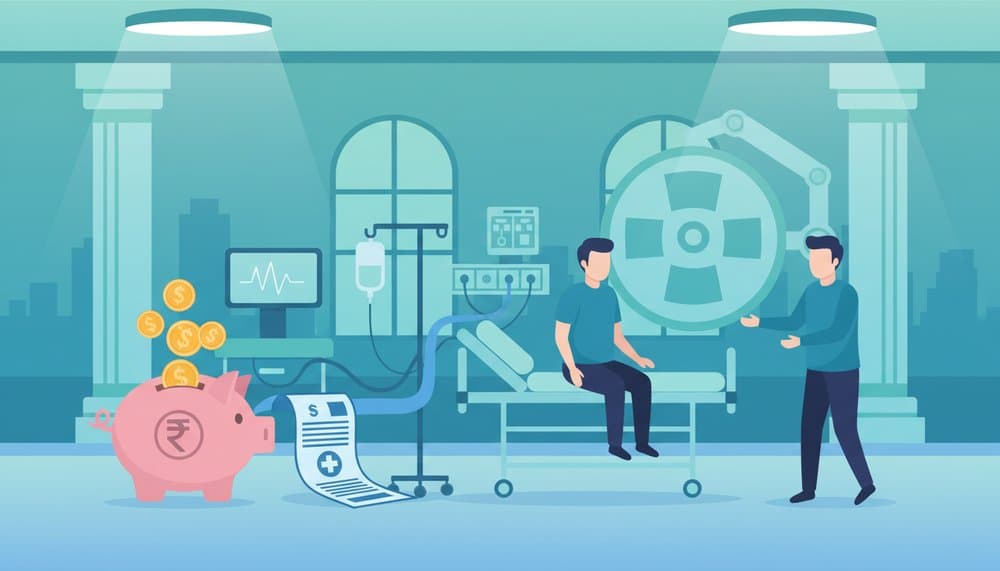
A diagnosis of prostate cancer brings with it a host of questions and concerns, not least of which are the financial and logistical aspects of treatment. This guide is designed for patients in India and Non-Resident Indians (NRIs) seeking clarity on the costs, treatment options, recovery timelines, and decision-making processes involved in managing prostate cancer. All information is presented to be practical and compliant with the guidelines of the National Medical Commission (NMC), focusing on factual data to aid in your decision-making journey.
Understanding Your Treatment Options
The choice of treatment for prostate cancer is highly individualised and depends on several factors, including the stage and grade of the cancer, your age and overall health, and your personal preferences regarding potential side effects and recovery. The primary treatment modalities include:
- Active Surveillance: For low-risk, slow-growing cancers, immediate treatment may not be necessary. Active surveillance involves closely monitoring the cancer with regular PSA tests, digital rectal exams (DREs), and periodic biopsies.
- Surgery (Radical Prostatectomy): This involves the surgical removal of the entire prostate gland. It can be performed as an open surgery or, more commonly, through minimally invasive techniques like robotic-assisted laparoscopic surgery.
- Radiation Therapy: This uses high-energy rays to destroy cancer cells. It can be delivered from outside the body (External Beam Radiation Therapy - EBRT) or by implanting radioactive seeds directly into the prostate (Brachytherapy).
- Hormone Therapy (Androgen Deprivation Therapy - ADT): Prostate cancer cells often rely on male hormones (androgens) like testosterone to grow. ADT aims to lower androgen levels or block their action.
In some cases, treatments like chemotherapy or targeted therapy may be recommended, particularly for advanced or metastatic prostate cancer.
Estimated Costs of Prostate Cancer Treatment in India
The cost of prostate cancer treatment in India is significantly lower than in many Western countries, making it a viable option for many, including NRIs. However, costs can vary widely based on the city, the type of hospital (private vs. government), the technology used, and the specific treatment plan. Tier-1 cities like Mumbai and Delhi generally have higher costs than Tier-2 and Tier-3 cities.
Diagnostic and Pre-Treatment Costs
Before starting treatment, a series of diagnostic tests are required to accurately stage the cancer. These costs are typically separate from the main treatment expenses.
Diagnostic Test — Estimated Cost (INR)
Urologist Consultation — ₹800 - ₹2,000 per visit
PSA (Prostate-Specific Antigen) Test — ₹800 - ₹1,500
Prostate Biopsy — ₹10,000 - ₹20,000
MRI or CT Scan — ₹5,000 - ₹15,000
Bone Scan — ₹8,000 - ₹12,000
PET Scan — Starting from ₹20,000
Total Estimated Diagnostic Cost — ₹23,000 - ₹1,00,000+
Treatment Cost Comparison
The following table provides an estimated range for the primary treatment modalities. These figures are indicative and can vary.
Treatment Modality — Estimated Cost Range (INR) — Notes
Active Surveillance — ₹30,000 - ₹1,00,000 per year — Includes regular PSA tests, consultations, and potential repeat biopsies.
Surgery (Radical Prostatectomy)
- Open Prostatectomy — ₹1,50,000 - ₹2,50,000 — Less common now; longer recovery.
- Robotic-Assisted Prostatectomy — ₹2,50,000 - ₹4,00,000+ — Shorter hospital stay and potentially quicker recovery.
Radiation Therapy
- External Beam (EBRT) — ₹1,50,000 - ₹3,00,000 — Standard radiation treatment.
- IMRT / VMAT — ₹3,00,000 - ₹10,00,000 — More precise forms of EBRT, sparing healthy tissue.
- Brachytherapy (Radioactive Seeds) — Starting from ₹800 per seed — Total cost can be comparable to EBRT.
Hormone Therapy (ADT) — ₹10,000 - ₹50,000 per cycle/month — Cost depends on the type of drug (oral vs. injections) and duration. Some sources cite higher annual costs up to ₹3,00,000.
Note: The costs mentioned are approximate and subject to change. It is advisable to get a detailed cost estimate from the chosen hospital.
A Framework for Making Your Treatment Decision
Choosing the right treatment can be overwhelming. Here’s a structured approach to guide your discussion with your healthcare team and family:
Step 1: Understand Your Diagnosis
- Cancer Stage and Grade: Is the cancer localized to the prostate, or has it spread? What is the Gleason score? Higher scores indicate more aggressive cancer.
- Your Overall Health: Are you fit for major surgery? Do you have other health conditions that might increase the risks of certain treatments?
Step 2: Evaluate Treatment Options and Their Goals
- Curative vs. Palliative: Is the goal to cure the cancer (common for localized disease) or to control its growth and manage symptoms (for advanced disease)?
- Weighing the Pros and Cons: Use a table to compare the potential benefits and side effects of each option.
Treatment — Potential Benefits — Potential Side Effects & Downsides
Active Surveillance — Avoids or delays treatment side effects. — Regular monitoring can cause anxiety. Risk of cancer progression.
Surgery — Definitive removal of the cancerous gland. — Risks of anaesthesia, infection, bleeding. Potential for urinary incontinence and erectile dysfunction.
Radiation Therapy — Non-invasive (EBRT). Effective for localized cancer. — Bowel and bladder problems (urgency, frequency). Fatigue. Potential for erectile dysfunction.
Hormone Therapy — Can slow the growth of advanced cancer. — Hot flashes, fatigue, loss of libido, bone thinning, weight gain.
Step 3: Consider Your Personal Values and Lifestyle
- Your Age and Life Expectancy: Younger, healthier men might opt for more aggressive treatments.
- Your Priorities: How important is it for you to maintain erectile function or urinary control? Are you willing to accept certain side effects to achieve a potentially higher chance of cure?
- Your Occupation and Lifestyle: Consider the recovery time and how it might impact your work and daily activities.
Step 4: Seek a Second Opinion It is always a good practice to get a second opinion from another qualified oncologist or urologist, especially when dealing with a complex diagnosis. This can provide new perspectives and increase your confidence in your chosen treatment path.
Hospital Selection Criteria for Cancer Care in India
Choosing the right hospital is as crucial as choosing the right treatment. Here are key factors to consider:
- Accreditation: Look for hospitals with national (NABH) and international (JCI) accreditations. These certifications indicate adherence to high standards of quality and patient safety.
- Specialist Experience: Seek out hospitals with a dedicated uro-oncology department. Enquire about the experience of the surgeons and radiation oncologists in treating prostate cancer. High-volume centers often have better outcomes.
- Technology and Infrastructure: Does the hospital have advanced technology like the Da Vinci robotic system for surgery or modern radiation machines (like IMRT or VMAT) that can improve precision and reduce side effects?
- Comprehensive Care: The best cancer hospitals provide multidisciplinary care, including access to medical oncologists, radiation oncologists, pathologists, radiologists, and support services like physiotherapy (for pelvic floor muscle training), counselling, and nutrition advice.
- Transparency in Costs: A good hospital will provide a detailed and transparent estimate of the treatment costs, including potential additional expenses.
Recovery Timelines: What to Expect
Recovery varies from person to person and depends on the treatment received.
After Surgery (Robotic Prostatectomy)
- Hospital Stay: Typically 1-3 days.
- Catheter: You will go home with a urinary catheter, which is usually removed after 7-14 days.
- Initial Recovery (First 4-6 weeks): You will likely feel tired. Gentle walking is encouraged, but strenuous activity and heavy lifting should be avoided. Most people can return to work within 3-4 weeks, especially if they work from home.
- Long-Term Recovery (3-12 months): Full recovery of energy and stamina can take a few months. Recovery of urinary control and erectile function is gradual and can take up to a year or more. Pelvic floor exercises are crucial for improving urinary control.
After Radiation Therapy (EBRT)
- During Treatment (4-9 weeks): Treatment is usually given five days a week. Fatigue is a common side effect that can build up over the course of the treatment. You may also experience urinary and bowel irritation in the latter half of the treatment period.
- Short-Term Recovery (First 3 months post-treatment): Fatigue may persist for several weeks after treatment ends. Urinary and bowel side effects usually improve gradually.
- Long-Term Recovery (6-12 months and beyond): Most acute side effects resolve. However, some men may experience long-term changes in bowel or bladder habits. Erectile dysfunction can also develop gradually over time.
During Hormone Therapy
Hormone therapy is often a long-term treatment, sometimes lasting for years. The side effects are ongoing and need to be managed with the help of your medical team. Regular monitoring of bone density and blood sugar levels may be required.
A Note on NMC Compliance
This guide adheres to the National Medical Commission's regulations on professional conduct, which prohibit making superlative claims ("best hospital"), guaran
Written by
Top Anesthesiologist doctors in Lucknow on Zospital
Verified specialists you can book in minutes.
- Book appointment

Dr. Sanni Deyol Gautam
Anesthesiologist
Lucknow
4.8 - Book appointment

Dr Karanvir Singh Sidhu
Anesthesiologist
Lucknow
4.8 - Book appointment

Dr Harpreet Kaur
Anesthesiologist
Lucknow
4.8 - Book appointment

Dr. Akshat Trivedi
Anesthesiologist
Lucknow
4.5 - Book appointment
Aveline Pascual Jerome, MD
Anesthesiologist
Ajmer
5 - Book appointment
Dr. Vivek Kumar Sharma - Laser & Advanced Laparoscopy Surgeon In Ajmer
Anesthesiologist
Ajmer
4.7

“Your Health, Our Priority. Your Voice, Our Guide”
Dr. Nikhil Singh
Anaesthesia, MBBS, MD
Private hospitals in Lucknow on Zospital
Prefer a private option? These hospitals in Lucknow list their doctors and take bookings.
- Paarth Eye Hospital & Retina Centre
- Urmila Devi Memorial Hospital- Child Specialist Hospital in Lucknow | Pediatrician hospital
- SPARSH CHILDREN'S HOSPITAL & VACCINATION CENTER | Child Hospital in Raebareli Road Lucknow | Dr. Akhilesh Pandey |
Related Articles
Prostate Hyperplasia Surgery Cost in India: Financial Overview
Explore the financial aspects of prostate hyperplasia surgery costs in India. Understand why surgery offers a long-term solution for enlarged prostate symptoms.

Prostate Surgery Cost in India: TURP and Laser Price Guide
A practical guide to typical prostate surgery (TURP and laser) costs in private hospitals in India.

Prostate (TURP) Surgery Cost: CGHS vs Private
A cost comparison of TURP prostate surgery across CGHS and private hospitals.

Written by Dr. Nikhil Singh
Anaesthesia, MBBS, MD
Last reviewed: 24 August 2026
Medical Disclaimer
The content provided on Zospital is for general informational and educational purposes only. It is not intended as a substitute for professional medical advice, diagnosis, or treatment. Always seek the advice of your physician or other qualified healthcare provider with any questions you may have regarding a medical condition. Never disregard professional medical advice or delay in seeking it because of something you have read on this website. If you think you may have a medical emergency, call your doctor or emergency services immediately.
Are you a doctor or run a clinic or hospital?
Patients across India are searching Zospital right now. Get a free profile with reviews, timings and direct WhatsApp bookings.