What Are the Early Signs of Smartphone Addiction? Health Effects You Should Not Ignore
Medically reviewed by Dr.Nikhil Singh, Anaesthesia, MBBS, MD
Last reviewed: 18 Jul 2026
Introduction
Smartphones have become an essential part of modern life. They help us communicate, work, study, shop, and stay entertained. However, excessive smartphone use can gradually affect both physical and mental health.
Many people spend several hours each day on social media, messaging apps, videos, and games without realizing how much time they spend looking at screens. Over time, this habit may develop into smartphone dependency, sometimes referred to as smartphone addiction.
Recognizing the early warning signs can help individuals maintain a healthier relationship with technology.
What Is Smartphone Addiction?
Smartphone addiction refers to excessive or uncontrolled mobile phone use that begins to interfere with daily activities, relationships, sleep, productivity, or overall well-being.
While smartphones themselves are not harmful, excessive dependence on them may contribute to various health concerns.
Early Signs of Smartphone Addiction
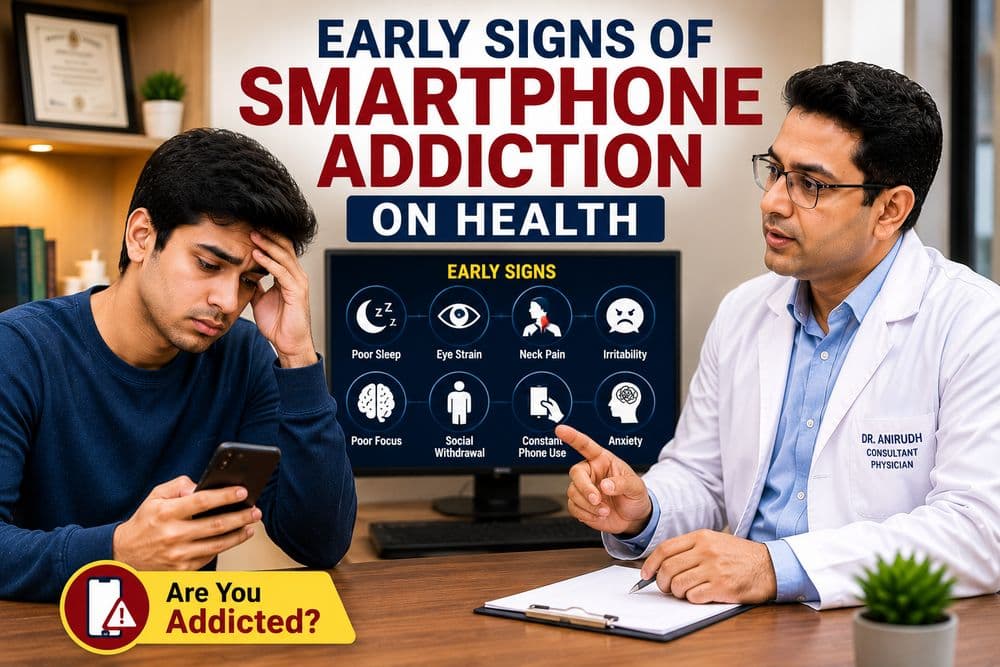
1. Constantly Checking the Phone
One of the earliest signs is repeatedly checking the phone without any important reason.
Examples include:
- Unlocking the phone every few minutes
- Frequently checking notifications
- Looking at social media repeatedly
2. Difficulty Staying Away From the Phone
Many individuals feel uncomfortable when they cannot access their phone.
This may include:
- Anxiety when the battery is low
- Constant urge to check messages
- Difficulty focusing without the phone nearby
3. Sleep Disturbances
Using a smartphone late at night may affect sleep quality.
Common signs include:
- Difficulty falling asleep
- Late sleeping habits
- Frequent night-time phone use
- Feeling tired in the morning
4. Increased Screen Time
Spending several hours daily on:
- Social media
- Gaming
- Video streaming
- Web browsing
may indicate excessive smartphone use.
5. Reduced Productivity
Smartphone addiction may interfere with:
- Work performance
- Academic activities
- Daily responsibilities
- Time management
People often report being distracted by notifications and apps.
6. Eye Strain and Vision Discomfort
Prolonged screen exposure may contribute to:
- Dry eyes
- Blurred vision
- Eye fatigue
- Headaches
These symptoms are often associated with digital eye strain.
7. Neck and Shoulder Pain
Looking down at a smartphone for extended periods can place stress on the neck and upper back.
This may lead to:
- Neck pain
- Shoulder stiffness
- Poor posture
- "Tech Neck" syndrome
8. Reduced Physical Activity
Excessive screen time often replaces physical movement.
This may contribute to:
- Sedentary lifestyle
- Weight gain
- Reduced fitness levels
9. Mood Changes
Some individuals may experience:
- Irritability
- Stress
- Anxiety
- Frustration
when they are unable to use their smartphone.
10. Ignoring Real-Life Activities
Smartphone dependency may gradually reduce interest in:
- Family interactions
- Outdoor activities
- Social gatherings
- Hobbies
How Smartphone Addiction Can Affect Health
Sleep Problems
Blue light exposure from screens may interfere with melatonin production and sleep quality.
Mental Health Effects
Excessive smartphone use has been associated with:
- Stress
- Anxiety
- Reduced concentration
- Mental fatigue
Musculoskeletal Problems
Poor posture during prolonged phone use may contribute to:
- Neck pain
- Back pain
- Shoulder discomfort
Eye Health Issues
Extended screen exposure may cause:
- Digital eye strain
- Dry eyes
- Temporary blurred vision
Who Is Most at Risk?
Smartphone addiction may be more common among:
- Teenagers
- Students
- Gamers
- Social media users
- Remote workers
- Individuals with high screen exposure
How Can Smartphone Addiction Be Reduced?
Set Daily Screen Time Limits
Monitoring screen time may help reduce unnecessary usage.
Avoid Phones Before Bed
Limiting mobile use before sleeping may improve sleep quality.
Take Regular Breaks
Following the 20-20-20 rule may help reduce eye strain.
Engage in Offline Activities
Activities such as walking, exercise, reading, and hobbies can help reduce screen dependence.
Disable Unnecessary Notifications
Reducing constant alerts may decrease the urge to check the phone repeatedly.
When Should You Seek Help?
Consider professional guidance if:
- Smartphone use affects work or studies
- Sleep problems become frequent
- Anxiety develops when away from the phone
- Relationships are negatively affected
- Daily activities become difficult to manage
Conclusion
Smartphones are valuable tools, but excessive use may gradually affect sleep, posture, eye health, productivity, and mental well-being. Early warning signs such as constant phone checking, sleep disturbances, eye strain, and reduced physical activity should not be ignored.
Developing healthy digital habits and maintaining a balance between online and offline activities can help protect overall health and well-being.
Related reading
Top doctors on Zospital
Verified specialists you can book in minutes.



Have More Questions?
Find quick answers to common questions about our services, appointments, and patient care.
Common causes include overeating, eating too quickly, food intolerance, constipation, IBS, and certain gas-producing foods.
Occasional bloating after meals is common, but persistent bloating may require evaluation.
Beans, lentils, cabbage, broccoli, onions, and carbonated drinks are commonly associated with increased gas production.
Yes. Stress and anxiety may affect digestion and contribute to bloating and abdominal discomfort.
Yes. Gas accumulation due to constipation is a common cause of abdominal fullness.
Gas refers to air in the digestive tract, while bloating is the sensation of abdominal fullness or swelling.
Yes. Difficulty digesting dairy products may lead to gas, bloating, and stomach discomfort.
Medical evaluation is recommended if bloating is associated with weight loss, severe pain, vomiting, or blood in the stool.

“Your Health, Our Priority. Your Voice, Our Guide”
Dr.Nikhil Singh
Anaesthesia, MBBS, MD
Related Articles

ECHS Rates Explained: How Ex-Servicemen Health Scheme Reimbursement Works
A clear explanation of how ECHS rates and reimbursement work for ex-servicemen, including CGHS-linked rates and the polyclinic referral system.
Ectopic Pregnancy: Early Signs You Shouldn't Ignore
A positive pregnancy test is usually a time of joy, but what if you experience confusing symptoms like pain or bleeding? Learn the early signs of an ectopic pregnancy that need urgent attention.

Egg Freezing in India: Who Should Consider It and When
Are you thinking about your future family but the timing isn't right? An experienced doctor explains egg freezing in India, a way to preserve your fertility for later.

Written by Dr.Nikhil Singh
Anaesthesia, MBBS, MD
Last reviewed: 18 July 2026
Medical Disclaimer
The content provided on Zospital is for general informational and educational purposes only. It is not intended as a substitute for professional medical advice, diagnosis, or treatment. Always seek the advice of your physician or other qualified healthcare provider with any questions you may have regarding a medical condition. Never disregard professional medical advice or delay in seeking it because of something you have read on this website. If you think you may have a medical emergency, call your doctor or emergency services immediately.
Are you a doctor or run a clinic or hospital?
Patients across India are searching Zospital right now. Get a free profile with reviews, timings and direct WhatsApp bookings.