Cataract Surgery Cost in India vs. USA, UK, and Australia
Medically reviewed by Dr. Nikhil Singh
Last reviewed: 11 Aug 2026
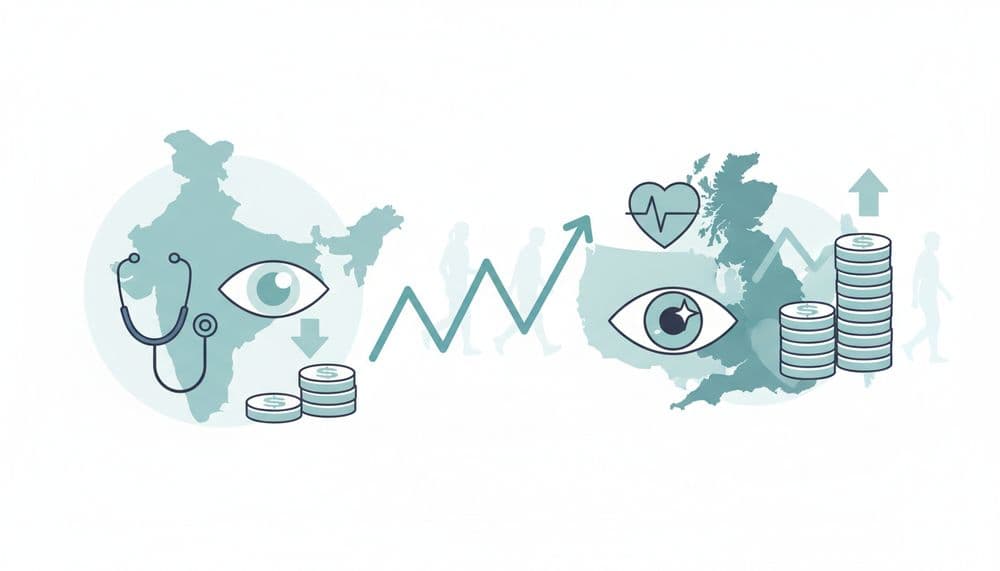
Cataract surgery is one of the most common and successful procedures performed worldwide. For Non-Resident Indians (NRIs) arranging care for family in India, or for international patients considering treatment, understanding the cost is a primary concern. The price of cataract surgery varies significantly across the globe, with India offering a wide spectrum of options at costs considerably lower than in Western countries.
This guide provides a detailed breakdown of cataract surgery costs in India's private and government-subsidised sectors, comparing them with typical prices in the United States, United Kingdom, and Australia. The information is intended to help you make an informed decision when planning for this vision-restoring procedure.
Cataract Surgery Costs at a Glance (Per Eye)
All figures are approximate and can vary based on the hospital, surgeon, city, and specific technology used. International currency conversions are indicative.
- India (Private, Monofocal Lens) — ₹15,000 - ₹60,000
- India (Private, Premium Lens) — ₹60,000 - ₹1,20,000+
- India (CGHS Rate, 2024) — ₹12,398 (NABH Hospital)
- USA (Uninsured) — $3,000 - $6,000
- UK (Private, Monofocal Lens) — £1,995 - £3,500
- Australia (Uninsured) — AUD $5,000
Rates shown are as per the Central Government Health Scheme (CGHS) rate schedule, Ministry of Health & Family Welfare (2024) and are subject to periodic revision. Always verify the latest approved rates on the official source.
Cataract Surgery Costs in India's Private Sector
In India, the cost of cataract surgery in private hospitals is primarily determined by the type of intraocular lens (IOL) implanted. Patients have a wide range of choices, from standard lenses to premium options that can reduce or eliminate the need for glasses after surgery. All prices are typically quoted per eye.
The costs generally fall into these categories:
- **Monofocal Lens:** This is the most common type of lens, designed to provide clear vision at a single distance (usually far). The cost for surgery with a standard monofocal lens ranges from approximately ₹15,000 to ₹60,000. Some facilities may offer packages starting from ₹10,000.
- **Toric Lens:** For patients with pre-existing astigmatism, a toric lens corrects this issue along with the cataract. The cost for this procedure is typically in the range of ₹35,000 to ₹80,000 per eye.
- **Multifocal, Trifocal, or EDOF Lenses:** These are premium lenses that offer clear vision at multiple distances (near, intermediate, and far), reducing dependency on glasses. The cost for surgery with these advanced lenses ranges from ₹60,000 to ₹1,20,000. For the most advanced procedures, such as Femtosecond Laser-Assisted Cataract Surgery (FLACS), the cost can go up to ₹2,00,000 per eye.
Government and Subsidised Rates in India: The Baseline
To understand the baseline cost of the procedure in India, it's helpful to look at the rates set by government health schemes. These rates cover the essential surgery and a standard monofocal lens.
The Central Government Health Scheme (CGHS) provides package rates for its beneficiaries. According to the 2024 rates for Delhi, the cost for phacoemulsification with a foldable IOL is:
These all-inclusive packages cover the basic procedure but do not include the cost of premium lenses. Another major government initiative, Ayushman Bharat (PM-JAY), offers cashless cataract surgery to eligible beneficiaries at empanelled hospitals, covering the procedure and a standard lens within a fixed package rate.
- **₹12,398** in a NABH-accredited hospital.
- **₹10,781** in a non-NABH accredited hospital.
Cataract Surgery Cost in the United States
The cost of cataract surgery in the U.S. is significantly higher than in India. For a patient without insurance, the out-of-pocket cost per eye can range from $3,000 to $6,000 (approximately ₹2,50,000 to ₹5,00,000), with some estimates reaching up to $7,000.
For individuals covered by Medicare, the financial picture is different. Medicare Part B typically covers 80% of the approved amount for the surgery and a standard monofocal IOL after the annual deductible is met ($240 in 2024). The patient is responsible for the remaining 20% coinsurance, which can result in an out-of-pocket cost of around $700 to $1,400 per eye. However, Medicare does not cover the additional costs for premium lenses like toric or multifocal IOLs; these must be paid for entirely by the patient.
Cataract Surgery Cost in the United Kingdom
In the UK, patients have two main pathways: the private sector or the National Health Service (NHS).
In the private sector, costs are comparable to those in the U.S. and much higher than in India. Prices vary by lens type:
Conversely, cataract surgery is provided free of charge under the NHS. The primary trade-off is time. While the NHS target for treatment is 18 weeks from referral, national median waiting times have been around 8-11 weeks, and in some areas, can extend to over 45 weeks. The NHS typically provides standard monofocal lenses only.
- **With a monofocal lens:** The cost is typically £1,995 to £3,500 per eye (approx. ₹2,10,000 to ₹3,70,000).
- **With a multifocal or trifocal lens:** The price increases to £3,500 to £5,500 per eye (approx. ₹3,70,000 to ₹5,80,000).
Cataract Surgery Cost in Australia
Australia also offers public and private options for cataract surgery. For an uninsured patient opting for treatment in a private hospital, the cost is around AUD $5,000 per eye (approximately ₹2,75,000).
Even for patients with private health insurance, there are often out-of-pocket costs. This 'gap' payment, which can range from AUD $700 to $2,200 per eye (approx. ₹38,500 to ₹1,21,000), covers surgeon's fees beyond the scheduled rate and the cost of premium lenses not covered by the insurance policy.
Through the public system (Medicare), cataract surgery is available at no out-of-pocket cost. Similar to the NHS in the UK, this option involves long waiting lists that can stretch from several months to over a year. Patients in the public system do not have a choice of surgeon or lens type.
Why is Cataract Surgery Less Expensive in India?
The significant cost difference between India and Western countries stems from several factors. Operational costs, including salaries for medical staff and administrative expenses, are lower in India. The high volume of procedures performed also allows for economies of scale.
This combination of factors allows Indian private hospitals to offer advanced technology and a wide choice of premium IOLs at a price point that is often a fraction of the cost for a similar procedure in the US, UK, or Australia, even when accounting for travel and accommodation.
Frequently Asked Questions
How much does cataract surgery with a multifocal lens cost in India?
The cost for cataract surgery with a premium multifocal, trifocal, or EDOF lens in India's private hospitals typically ranges from ₹60,000 to ₹1,20,000 per eye. The final price depends on the specific brand of lens, the hospital's reputation, and the surgical technology used.
Is cataract surgery completely free in India?
Cataract surgery can be free for eligible individuals under government schemes like Ayushman Bharat (PM-JAY) at empanelled hospitals. It is also offered at very low, subsidised rates in government hospitals. However, these options typically include a standard monofocal lens and may involve waiting times. In the private sector, surgery is a paid service.
What is the CGHS rate for cataract surgery in 2024?
As per the 2024 CGHS rates for Delhi, the all-inclusive package for phacoemulsification cataract surgery with a standard foldable IOL is ₹12,398 at a NABH-accredited hospital and ₹10,781 at a non-NABH hospital. This rate is for eligible CGHS beneficiaries.
Why is cataract surgery so much cheaper in India than in the USA or UK?
The cost difference is due to lower operational and infrastructure costs, lower professional fees, and a high volume of procedures that create economies of scale. India's competitive healthcare market allows it to provide high-quality care, including advanced lens technology, at a lower price point than in Western countries.
What is the waiting time for NHS cataract surgery in the UK?
While the official NHS target is 18 weeks from referral to treatment, actual waiting times vary. The national median has been around 8-11 weeks, but in some regions, the wait can be significantly longer, sometimes exceeding 45 weeks. This is a key reason many UK residents consider private treatment, either locally or abroad.
Can I choose my surgeon and lens type in the UK or Australian public systems?
No. In the UK's NHS and Australia's Medicare public system, patients typically do not get to choose their surgeon. The surgery is performed by a qualified surgeon on staff at the time. Furthermore, the lens provided is usually a standard monofocal IOL, without the option to upgrade to premium toric or multifocal lenses.
What is the difference between phacoemulsification and laser-assisted cataract surgery (FLACS)?
Phacoemulsification is the standard modern technique, using ultrasound to break up the cataract. Femtosecond Laser-Assisted Cataract Surgery (FLACS) is a more advanced, blade-free method that uses a laser for several steps of the procedure, including the incisions and breaking up the lens. FLACS is generally associated with a higher cost.
Related
- Healthcare in India for NRIs and international patients: the complete hub
- Treatment costs in India: a complete guide
- Government health schemes in India: a guide
- How to apply for a CGHS card
Medical Disclaimer
The information provided in this article is for general informational and educational purposes only. It is not intended as a substitute for professional medical advice, diagnosis, or treatment. Always seek the advice of your physician or other qualified healthcare provider with any questions you may have regarding a medical condition. Never disregard professional medical advice or delay in seeking it because of something you have read in this article.
Top Ophthalmologist / Eye Specialist doctors in Ara on Zospital
Verified specialists you can book in minutes.
- Book appointment

Dr. Mujahid Islam
Ophthalmology
Lucknow
4.9 - Book appointment

Dr. Veena
Ophthalmologist / Eye Specialist
Gorakhpur
4.9 - Book appointment

Dr. Richa Shrivastava
Ophthalmologist / Eye Specialist
Gorakhpur
4.7 - Book appointment

Dr. Arshi Saba
Ophthalmologist / Eye Specialist
Lucknow
4.9 - Book appointment
Dr N. S . Paliwal
Rehabilitation Specialist
Lucknow
Verified - Book appointment

Dr. Abhinav Srivastava
Spine Surgeon
Lucknow
Verified•4.9
Have More Questions?
Find quick answers to common questions about our services, appointments, and patient care.
The cost for cataract surgery with a premium multifocal, trifocal, or EDOF lens in India's private hospitals typically ranges from ₹60,000 to ₹1,20,000 per eye. The final price depends on the specific brand of lens, the hospital's reputation, and the surgical technology used.
Cataract surgery can be free for eligible individuals under government schemes like Ayushman Bharat (PM-JAY) at empanelled hospitals. It is also offered at very low, subsidised rates in government hospitals. However, these options typically include a standard monofocal lens and may involve waiting times. In the private sector, surgery is a paid service.
As per the 2024 CGHS rates for Delhi, the all-inclusive package for phacoemulsification cataract surgery with a standard foldable IOL is ₹12,398 at a NABH-accredited hospital and ₹10,781 at a non-NABH hospital. This rate is for eligible CGHS beneficiaries.
The cost difference is due to lower operational and infrastructure costs, lower professional fees, and a high volume of procedures that create economies of scale. India's competitive healthcare market allows it to provide high-quality care, including advanced lens technology, at a lower price point than in Western countries.
While the official NHS target is 18 weeks from referral to treatment, actual waiting times vary. The national median has been around 8-11 weeks, but in some regions, the wait can be significantly longer, sometimes exceeding 45 weeks. This is a key reason many UK residents consider private treatment, either locally or abroad.
No. In the UK's NHS and Australia's Medicare public system, patients typically do not get to choose their surgeon. The surgery is performed by a qualified surgeon on staff at the time. Furthermore, the lens provided is usually a standard monofocal IOL, without the option to upgrade to premium toric or multifocal lenses.
Phacoemulsification is the standard modern technique, using ultrasound to break up the cataract. Femtosecond Laser-Assisted Cataract Surgery (FLACS) is a more advanced, blade-free method that uses a laser for several steps of the procedure, including the incisions and breaking up the lens. FLACS is generally associated with a higher cost.
Private hospitals in Ara on Zospital
Prefer a private option? These hospitals in Ara list their doctors and take bookings.
See all hospitals in AraRelated Articles

What Causes Frequent Gas and Bloating? Common Reasons and When to Seek Medical Advice
Frequent gas and bloating may be linked to dietary habits, digestive disorders, or lifestyle factors. Learn common causes and when medical evaluation may be needed.

Causes of Swelling in One Leg: When to Worry?
Swelling in one leg is not always normal. It can be caused by injury, infection, or circulation problems and may need medical attention

OPD Appointment Guide: CCM Government Medical College, Durg
A practical guide for patients seeking outpatient care at Chandulal Chandrakar Memorial Government Medical College Hospital, Durg, covering registration, costs, and government scheme coverage.
Written by Dr. Nikhil Singh
Last reviewed: 11 August 2026
Medical Disclaimer
The content provided on Zospital is for general informational and educational purposes only. It is not intended as a substitute for professional medical advice, diagnosis, or treatment. Always seek the advice of your physician or other qualified healthcare provider with any questions you may have regarding a medical condition. Never disregard professional medical advice or delay in seeking it because of something you have read on this website. If you think you may have a medical emergency, call your doctor or emergency services immediately.
Are you a doctor or run a clinic or hospital?
Patients across India are searching Zospital right now. Get a free profile with reviews, timings and direct WhatsApp bookings.