Cancer Treatment Costs in India vs. USA & UK: A Guide for NRIs
Medically reviewed by Dr. Nikhil Singh
Last reviewed: 14 Aug 2026
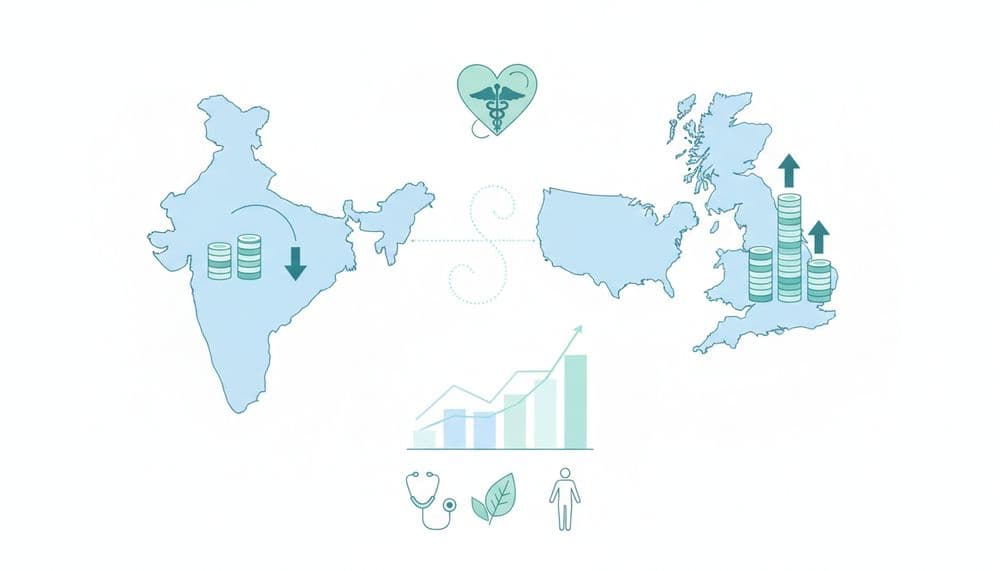
For Non-Resident Indians (NRIs) and international patients exploring healthcare options, India presents a significant value proposition for cancer treatment. The cost of care, from chemotherapy and radiotherapy to complex surgeries, can be substantially lower than in Western countries like the United States and the United Kingdom. This difference is largely due to lower operational and labor costs, not a compromise on the quality of care.
Many private hospitals in India are accredited by international bodies like the Joint Commission International (JCI) and the National Accreditation Board for Hospitals & Healthcare Providers (NABH), ensuring they adhere to global standards. This guide provides a detailed cost comparison and an overview of the treatment process for patients traveling to India for cancer care, based on available data.
Cancer Treatment Costs: At a Glance
Costs are estimates and can vary based on the hospital, city, specific technology, and patient's condition. All figures are based on data from the research notes.
- Chemotherapy Cost in India (per cycle) — $240 - $2,400 (2025)
- Chemotherapy Cost in the USA (per cycle) — $8,000 - $50,000 (2025)
- Radiotherapy Cost in India (full course) — $2,500 - $4,500
- Radiotherapy Cost in the USA (full course) — $10,000 - $60,000 (2026)
- Mastectomy Cost in India (private) — $2,650 - $4,130 (2026)
- Mastectomy Cost in the USA (out-of-pocket) — $15,000 - $55,000 (2026)
- Robotic Prostatectomy Cost in India — $6,000 - $10,000 (2026)
- Robotic Prostatectomy Cost in the UK (private) — £20,000 - £30,000 ($25,000 - $37,500) (2025)
Rates shown are as per the Central Government Health Scheme (CGHS) rate schedule, Ministry of Health & Family Welfare (2026) and are subject to periodic revision. Always verify the latest approved rates on the official source.
Detailed Cost Comparison of Cancer Treatments: India, USA, and UK
Patients considering cancer treatment in India can find potential savings of 60% to 90% compared to the USA and UK. The final cost depends on the type of cancer, the treatment modality, the choice of hospital (private vs. government), and the city.
- Chemotherapy: The cost is calculated per cycle, with a full course typically involving 4-8 cycles. In India, a single cycle at a private hospital can range from approximately $240 to $2,400 (2025), depending on the drugs used. In contrast, a cycle in the US can cost between $8,000 and $50,000 (2025), and in the UK's private sector, it can range from $2,500 to $5,500 (2026). For reference, Indian government rates under the Central Government Health Scheme (CGHS) for chemotherapy administration are set, with drug costs reimbursed separately.
- Radiotherapy: This is often priced as a package for the entire course. In India, a full course of radiotherapy at a private facility may cost between $2,500 and $4,500. The same treatment in the US can range from $10,000 to $60,000 (2026), with advanced options like proton therapy costing over $100,000. In the UK private market, a course could cost between $13,000 and $22,000 (2026). The CGHS package rate for IMRT radiotherapy was set at ₹1,00,878 in 2014, with revisions planned for 2025.
- Oncology Surgery: Surgical costs vary widely. A mastectomy in a private Indian hospital is estimated between $2,650 and $4,130 (2026), while the out-of-pocket cost in the US can be $15,000 to $55,000 (2026). A robotic prostatectomy in India is cited between $6,000 and $10,000 (2026), compared to $30,000 - $50,000 in the US (2026) and £20,000 - £30,000 ($25,000 - $37,500) in the UK private sector (2025). The cost for a colectomy (colon cancer surgery) in a private Indian hospital ranges from $5,500 to $11,500 (2026), whereas the average cost in the US is cited at around $70,000 (2026).
The Role of Government Institutions in Indian Cancer Care
India has several government-funded cancer institutes that provide highly subsidized care, making treatment accessible to a wider population. While they primarily serve Indian citizens, some have provisions for international patients.
Tata Memorial Centre (TMC), Mumbai: As a government-aided institution, TMC offers care at significantly reduced rates. Foreign nationals are treated under a specific tariff category ('F' category) and must pay an advance deposit of ₹2,00,000 upon registration. The tariff for international patients is noted to be 25% higher than for private Indian patients. A visa invitation letter from TMC is required to apply for a medical visa.
National Cancer Institute (NCI), Jhajjar (AIIMS): Part of the All India Institute of Medical Sciences (AIIMS), NCI is one of India's largest public cancer hospitals. It aims to provide affordable, high-quality care. For instance, initial registration costs ₹10, and a hospital stay of over six days costs ₹365. While detailed price lists for international patients are not publicly available, officials have stated that some advanced therapies, like nuclear medicine, would be offered at a fraction of private sector prices. Discussions about differential pricing for foreign nationals have taken place, but AIIMS has a history of treating international patients at highly subsidized rates.
The Staged Treatment Process for International Patients in India
Major Indian hospitals have streamlined the process for international patients, typically managed by a dedicated service team. The journey is generally organized into four key stages.
- Stage 1: Initial Inquiry and Documentation: The process begins when the patient or their family contacts the hospital's international patient department. You will be asked to submit all relevant medical records, such as biopsy reports, imaging scans, and treatment summaries. The hospital's specialist team reviews these to create a preliminary treatment plan.
- Stage 2: Visa and Travel Arrangements: Once the medical team confirms a treatment plan, the hospital issues a visa invitation letter. This document is essential for applying for an Indian Medical Visa. Up to two family members can apply for a Medical Attendant Visa (MEDX) to accompany the patient. Many hospitals offer assistance with travel logistics and finding suitable accommodation.
- Stage 3: Arrival, Registration, and Treatment: Upon arriving in India, the patient registers at the hospital. This may require an advance payment, such as the ₹2,00,000 deposit for foreign nationals at Tata Memorial Centre. After in-person consultations and any final diagnostic tests, a detailed treatment plan and cost estimate are provided. Treatment then commences as planned.
- Stage 4: FRRO Registration: Foreign nationals staying in India for long-term treatment must register with the Foreigners Regional Registration Office (FRRO) within 14 days of arrival. This is a mandatory online process, and hospital staff typically provide guidance and assistance to complete it.
Post-Treatment and Remote Follow-up Care
Continuity of care is a critical component of the treatment journey. Before the patient returns to their home country, the treating oncologist provides a detailed follow-up care plan. This plan outlines the necessary steps for monitoring and ongoing care that can be coordinated with a local physician back home.
To support this, many leading Indian hospitals have robust telemedicine services. These platforms allow patients to have remote follow-up consultations with their Indian oncologist. This ensures that the treating doctor remains involved in the patient's recovery journey, can review follow-up scans or tests, and can offer guidance to the patient and their local doctors, bridging the geographical distance.
Considerations for UK Patients
For residents of the United Kingdom, cancer treatment is provided free of charge through the National Health Service (NHS). However, factors such as long waiting times for certain procedures or specialist consultations may lead some individuals to consider private healthcare, either within the UK or abroad in countries like India.
It is possible to mix NHS and private care. For those opting for private treatment, the costs in the UK can still be high. For example, a private robotic prostatectomy in London can start from around £22,200 (2025). This makes the lower costs in India a considerable factor for those seeking to expedite their treatment outside the NHS system.
More guides for NRIs and international patients
Related guides from our NRI and international patient hub:
- A Guide to Planning Medical Treatment in India for International Patients
- Hair Transplant Cost in India vs. USA, UK, and Gulf: A Guide for NRIs
- LASIK Eye Surgery Cost: India vs. USA, UK, Australia
- Bone Marrow Transplant Cost in India vs. USA & UK: A Guide for International Patients
- Healthcare in India for NRIs and international patients: all guides
Frequently Asked Questions
How much can I save on cancer treatment in India compared to the US?
The potential savings on cancer treatment in India can be between 60% and 90% compared to costs in the United States. For example, a mastectomy that might cost $15,000-$55,000 in the US could cost $2,650-$4,130 in India.
How do I get a medical visa for cancer treatment in India?
To get an Indian Medical Visa, you first need a visa invitation letter from the Indian hospital where you plan to receive treatment. You then apply for the visa online or at the Indian embassy in your country, submitting the letter along with your passport and other required forms. The hospital's international patient department can guide you through this process.
Can my family member travel with me to India for my treatment?
Yes. India allows up to two attendants to travel with a patient on a Medical Attendant Visa (MEDX). They can apply for this visa at the same time the patient applies for their Medical Visa, using the same invitation letter from the hospital.
What is FRRO registration and is it necessary?
FRRO stands for Foreigners Regional Registration Office. It is a mandatory requirement for foreign nationals, including medical patients, who are staying in India for an extended period. You must register online within 14 days of your arrival. Hospitals typically have dedicated staff to assist you with this process.
How long will I need to stay in India for cancer treatment?
The duration of your stay depends entirely on your specific treatment plan. Surgery may require a stay of several weeks for the procedure and recovery. Chemotherapy is given in cycles, which might be spaced weeks apart, and a full course can take several months. Radiotherapy is typically administered daily over several weeks. Your oncologist will provide a detailed timeline after your initial evaluation.
Can I have follow-up consultations after returning to my home country?
Yes, most major Indian hospitals offer telemedicine services for remote follow-up consultations. This allows you to connect with your Indian oncologist from your home country to discuss your progress, review reports, and coordinate care with your local doctors.
Are the quality standards and drugs in Indian hospitals reliable?
Many large private hospitals in India are accredited by international bodies like the Joint Commission International (JCI) and India's National Accreditation Board for Hospitals & Healthcare Providers (NABH). These accreditations signify that the hospital adheres to global standards for patient safety and quality of care. However, you should always verify a hospital's credentials and discuss the specific medications and treatment protocols with your care team.
Related
- Healthcare in India for NRIs and international patients: the complete hub
- Treatment costs in India: a complete guide
- Government hospital OPD appointment guides for every Indian state
- Government health schemes in India: a guide
Medical Disclaimer
The information provided in this article is for general informational and educational purposes only. It is not intended as a substitute for professional medical advice, diagnosis, or treatment. Always seek the advice of your physician or other qualified healthcare provider with any questions you may have regarding a medical condition. Never disregard professional medical advice or delay in seeking it because of something you have read in this article.
Top doctors on Zospital
Verified specialists you can book in minutes.
- Book appointment

Dr. Naina Gupta
Oncologist
Varanasi
Verified•4 - Book appointment

Dr. Vishwanath Pratap Singh
General Surgeon
Varanasi
Verified•4.9 - Book appointment
Dr N. S . Paliwal
Rehabilitation Specialist
Lucknow
Verified - Book appointment

Dr. Roli Purwar
Gynecologist
Gorakhpur
Verified - Book appointment

Dr. Abhinav Srivastava
Spine Surgeon
Lucknow
Verified•4.9 - Book appointment

Dr. Shoeb Arif Khan
Orthopedic Surgeon
Lucknow
Verified•4.9
Have More Questions?
Find quick answers to common questions about our services, appointments, and patient care.
The potential savings on cancer treatment in India can be between 60% and 90% compared to costs in the United States. For example, a mastectomy that might cost $15,000-$55,000 in the US could cost $2,650-$4,130 in India.
To get an Indian Medical Visa, you first need a visa invitation letter from the Indian hospital where you plan to receive treatment. You then apply for the visa online or at the Indian embassy in your country, submitting the letter along with your passport and other required forms. The hospital's international patient department can guide you through this process.
Yes. India allows up to two attendants to travel with a patient on a Medical Attendant Visa (MEDX). They can apply for this visa at the same time the patient applies for their Medical Visa, using the same invitation letter from the hospital.
FRRO stands for Foreigners Regional Registration Office. It is a mandatory requirement for foreign nationals, including medical patients, who are staying in India for an extended period. You must register online within 14 days of your arrival. Hospitals typically have dedicated staff to assist you with this process.
The duration of your stay depends entirely on your specific treatment plan. Surgery may require a stay of several weeks for the procedure and recovery. Chemotherapy is given in cycles, which might be spaced weeks apart, and a full course can take several months. Radiotherapy is typically administered daily over several weeks. Your oncologist will provide a detailed timeline after your initial evaluation.
Yes, most major Indian hospitals offer telemedicine services for remote follow-up consultations. This allows you to connect with your Indian oncologist from your home country to discuss your progress, review reports, and coordinate care with your local doctors.
Many large private hospitals in India are accredited by international bodies like the Joint Commission International (JCI) and India's National Accreditation Board for Hospitals & Healthcare Providers (NABH). These accreditations signify that the hospital adheres to global standards for patient safety and quality of care. However, you should always verify a hospital's credentials and discuss the specific medications and treatment protocols with your care team.
Related Articles

Cancer Ka Shak? Kab Aur Kise Dikhayein — Varanasi Guide
Cancer ke shuruaati lakshan kya hain, oncologist ko kab dikhayein, aur ilaj-kharch me sarkari madad (Ayushman Bharat) — aasan bhasha me.

Capital Hospital, Bhubaneswar: OPD Appointment and Costs
Guide to booking OPD appointments, registration timings, and costs at Capital Hospital, Bhubaneswar. Learn about free services under BSKY and PM-JAY schemes.

Cardiac Health Screening NRI India
## A Comprehensive Guide to Cardiac Health Screening for NRIs in India For Non-Resident Indians (NRIs), returning to India for healthcare, particularly for something as crucial as cardiac screening,
Written by Dr. Nikhil Singh
Last reviewed: 14 August 2026
Medical Disclaimer
The content provided on Zospital is for general informational and educational purposes only. It is not intended as a substitute for professional medical advice, diagnosis, or treatment. Always seek the advice of your physician or other qualified healthcare provider with any questions you may have regarding a medical condition. Never disregard professional medical advice or delay in seeking it because of something you have read on this website. If you think you may have a medical emergency, call your doctor or emergency services immediately.
Are you a doctor or run a clinic or hospital?
Patients across India are searching Zospital right now. Get a free profile with reviews, timings and direct WhatsApp bookings.