Can Stress Cause Physical Symptoms in the Body?
Medically reviewed by Dr. Nikhil Singh, Anaesthesia, MBBS, MD
Last reviewed: 24 Aug 2026 · How we review health content
Introduction
Most people think of stress as an emotional or mental experience. However, stress can also affect the body in many ways.
When stress becomes frequent or long-lasting, it may trigger physical symptoms that can interfere with daily life. Many people experience these symptoms without realizing that stress may be contributing to them.
Understanding the connection between stress and physical health can help people recognize symptoms early and take steps to manage them effectively.
How Does Stress Affect the Body?
When a person feels stressed, the body activates its natural "fight-or-flight" response.
During this process, stress hormones such as:
- Adrenaline
- Cortisol
are released into the bloodstream.
These hormones prepare the body to respond to challenges but may also cause physical changes when stress persists for long periods.
Common Physical Symptoms of Stress
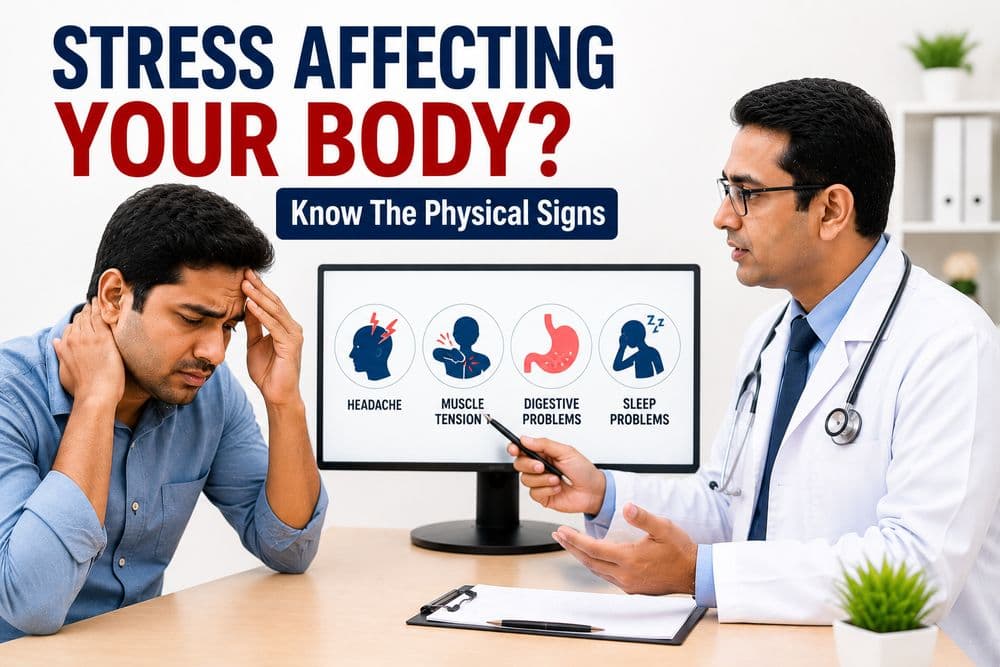
1. Headaches
Stress is one of the most common triggers for headaches.
People may experience:
- Tension headaches
- Pressure around the forehead
- Neck-related headaches
2. Muscle Tension
Stress often causes muscles to tighten.
Common areas include:
- Neck
- Shoulders
- Back
Persistent muscle tension may lead to discomfort and stiffness.
3. Fatigue
Even after adequate sleep, people experiencing chronic stress may feel:
- Low energy
- Weakness
- Reduced motivation
4. Digestive Problems
Stress can affect digestion and may contribute to:
- Stomach discomfort
- Acidity
- Bloating
- Nausea
- Changes in bowel habits
5. Rapid Heartbeat
Stress hormones may temporarily increase:
- Heart rate
- Blood pressure
Some people may notice palpitations during stressful situations.
6. Sleep Problems
Stress can interfere with normal sleep patterns.
Symptoms may include:
- Difficulty falling asleep
- Frequent waking
- Poor sleep quality
7. Excess Sweating
Stress may activate sweat glands and cause:
- Sweaty palms
- Forehead sweating
- Increased perspiration
8. Difficulty Concentrating
Many people experience:
- Brain fog
- Reduced focus
- Difficulty remembering information
during periods of high stress.
Can Long-Term Stress Affect Health?
Chronic stress may contribute to:
- Reduced immunity
- Poor sleep quality
- Persistent fatigue
- Increased risk of lifestyle-related health problems
Managing stress is important for overall well-being.
When Should You Seek Medical Advice?
Consult a healthcare professional if:
- Physical symptoms occur frequently
- Symptoms interfere with daily life
- Chest pain develops
- Sleep problems persist
- Anxiety becomes overwhelming
A proper evaluation can help identify the cause and rule out other medical conditions.
How Can You Manage Stress?
Stay Physically Active
Regular exercise may help reduce stress levels.
Maintain Healthy Sleep Habits
Consistent sleep supports both mental and physical health.
Practice Relaxation Techniques
Examples include:
- Deep breathing
- Meditation
- Mindfulness exercises
Stay Connected
Talking with family, friends, or healthcare professionals may help manage stress effectively.
Conclusion
Stress can affect much more than emotional well-being. It may cause headaches, muscle tension, digestive problems, fatigue, sleep disturbances, and other physical symptoms throughout the body.
Recognizing these signs early and adopting healthy stress-management habits can improve both mental and physical health.
Related reading
Top Anesthesiologist doctors in Gorakhpur on Zospital
Explore professional profiles and available appointment options.
- Book appointment

Dr Karanvir Singh Sidhu
Anesthesiologist
Lucknow
Verified•4.8 - Book appointment
Aveline Pascual Jerome, MD
Anesthesiologist
Ajmer
5 - Book appointment
Dr. Vivek Kumar Sharma - Laser & Advanced Laparoscopy Surgeon In Ajmer
Anesthesiologist
Ajmer
4.7 - Book appointment
Dr.Jay M. Panchal
Anesthesiologist
Ahmedabad
5 - Book appointment

Amit T. Darnule, MD
Anesthesiologist
Agra
4.9 - Book appointment
Dr Rajat Arora
Anesthesiologist
Agra
Have More Questions?
Find quick answers to common questions about our services, appointments, and patient care.
Yes. Stress can affect multiple body systems and lead to physical symptoms.
Yes. Stress is a common trigger for tension headaches.
Stress may contribute to acidity, bloating, and stomach discomfort.
Yes. Stress hormones can temporarily increase heart rate and blood pressure.
Chronic stress often leads to tiredness and low energy.

“Your Health, Our Priority. Your Voice, Our Guide”
Dr. Nikhil Singh
Anaesthesia, MBBS, MD
Private hospitals in Gorakhpur on Zospital
Prefer a private option? These hospitals in Gorakhpur list their doctors and take bookings.
- Shankar Eye and Maternity Clinic- Best eye hospital | Best eye surgeon | Eye and Maternity clinic in Gorakhpur
- Trimurti Hospital - Dr. Sanjeev kumar Singh
- Shakuntala Hospital
Related Articles

Cancer Chemotherapy Costs in India for Patients & NRIs
Understand cancer chemotherapy costs in India for Indian patients and NRIs. This guide offers a detailed overview of expenses for effective financial planning.

Cancer Immunotherapy Costs in India: Types and Effectiveness
This guide provides an overview of cancer immunotherapy costs, effectiveness, and access in India, including details on Immune Checkpoint Inhibitors and CAR-T

Cancer Screening in India for Non-Resident Indians
This guide offers a roadmap for Non-Resident Indians seeking cancer screening in India. It details options for breast, colon, lung, and skin cancer screenings.

Written by Dr. Nikhil Singh
Anaesthesia, MBBS, MD
Last reviewed: 24 August 2026
Medical Disclaimer
The content provided on Zospital is for general informational and educational purposes only. It is not intended as a substitute for professional medical advice, diagnosis, or treatment. Always seek the advice of your physician or other qualified healthcare provider with any questions you may have regarding a medical condition. Never disregard professional medical advice or delay in seeking it because of something you have read on this website. If you think you may have a medical emergency, call your doctor or emergency services immediately.
Are you a doctor or run a clinic or hospital?
Patients across India are searching Zospital right now. Get a free profile with reviews, timings and direct WhatsApp bookings.