How to Improve Blood Circulation Naturally in Legs
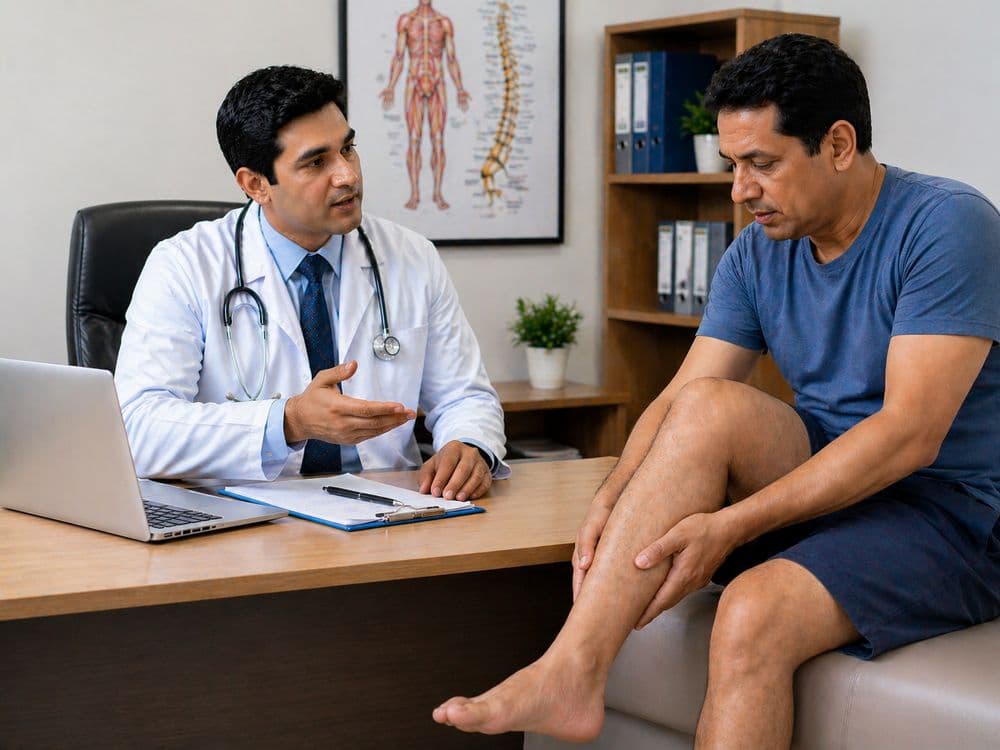
Medically reviewed by Dr. Abhinav Srivastava, Orthopaedic Surgeon, MBBS, MS
Last reviewed: 9 Aug 2026 · How we review health content
How to Improve Blood Circulation Naturally in Legs
Healthy blood circulation is important for keeping your legs active, comfortable, and healthy. Poor circulation can sometimes cause heaviness, tingling, cramps, swelling, or fatigue in the legs. The good news is that certain lifestyle habits may help improve circulation naturally.
Why Good Blood Circulation Matters
Proper circulation helps:
- Deliver oxygen and nutrients to tissues
- Support muscle and nerve function
- Reduce leg fatigue and heaviness
- Support healthy vein function
- Lower discomfort caused by prolonged sitting or standing
Natural Ways to Improve Blood Circulation in Legs
1. Walk Regularly
Walking helps activate calf muscles, often called the “second heart,” which support blood flow in the legs.
Tip: Aim for 20–30 minutes of walking daily.
2. Do Leg Exercises
Simple exercises may support circulation, such as:
- Ankle rotations
- Heel raises
- Calf stretches
- Leg lifts
Even short movement breaks can help.
3. Avoid Sitting Too Long
Long sitting can slow blood flow.
Try to:
- Stand every 30–45 minutes
- Stretch during work breaks
- Avoid crossing legs for long periods
4. Keep Legs Elevated
Elevating your legs may help support venous return and reduce heaviness.
Try raising legs on a pillow for 15–20 minutes.
5. Stay Hydrated
Proper hydration supports healthy blood flow and overall circulation.
6. Maintain a Healthy Weight
Excess weight may increase pressure on veins and circulation.
Balanced nutrition and activity can help.
7. Eat Circulation-Friendly Foods
Include foods that support vascular health:
- Leafy greens
- Fruits
- Nuts and seeds
- Whole grains
- Omega-3 rich foods
8. Consider Compression Support (If Advised)
In some cases, compression stockings may support circulation. Speak with a doctor before use.
9. Avoid Smoking
Smoking can negatively affect blood vessels and circulation.
⚠️ When to See a Doctor
Seek medical advice if poor circulation symptoms are persistent, including:
- Ongoing leg swelling
- Pain while walking
- Numbness or tingling
- Skin color changes
- Leg heaviness getting worse
👉 If symptoms continue, consult a specialist through Zospital for proper evaluation.
Can Poor Circulation Be Linked to Medical Conditions?
Sometimes circulation issues may be associated with:
- Varicose veins
- Peripheral artery disease
- Diabetes
- Vein-related problems
Early evaluation can be helpful.
✅ Conclusion
Improving blood circulation in the legs often starts with simple daily habits like walking, movement, hydration, and healthy lifestyle choices. If symptoms persist or worsen, professional guidance is important.
Related reading
Top Spine Surgeon doctors in Lucknow on Zospital
Verified specialists you can book in minutes.
- Book appointment
Pegasus Spine & Joint Institute - Dallas
Spine Surgeon
Alappuzha
4.8 - Book appointment
Tarpon Interventional Pain & Spine Care
Spine Surgeon
Alappuzha
4.8 - Book appointment
Dr Bama Spine Care
Spine Surgeon
Alappuzha
4.9 - Book appointment
Dr. Nigil Sadanandan Spine surgeon
Spine Surgeon
Alappuzha
5 - Book appointment

Pain and Spine Physicians | Chronic Pain | Frisco
Spine Surgeon
Aizawl
4.4 - Book appointment
Rajesh Arakal, MD
Spine Surgeon
Aizawl
4.9
Have More Questions?
Find quick answers to common questions about our services, appointments, and patient care.
Walking, exercise, hydration, and leg elevation may help support circulation naturally.
Yes, regular walking can help promote healthy blood flow in the legs.
Leafy greens, fruits, nuts, and omega-3 rich foods may support circulation.
It can sometimes contribute to tingling, heaviness, or discomfort.
If symptoms are persistent, worsening, or painful, medical evaluation is important.

Private hospitals in Lucknow on Zospital
Prefer a private option? These hospitals in Lucknow list their doctors and take bookings.
- Paarth Eye Hospital & Retina Centre
- Urmila Devi Memorial Hospital- Child Specialist Hospital in Lucknow | Pediatrician hospital
- SPARSH CHILDREN'S HOSPITAL & VACCINATION CENTER | Child Hospital in Raebareli Road Lucknow | Dr. Akhilesh Pandey |
Related Articles
HPV Vaccine & Cervical Cancer: A Practical Guide
Let's clear the air about the HPV vaccine. This guide tackles common myths and explains how this simple shot can be a powerful tool against cervical cancer.
Hypothyroidism: Symptoms, Causes and Treatment
A plain-language guide to hypothyroidism (underactive thyroid), its symptoms and treatment.

Hysterectomy Cost in India: A Typical Price Guide
A practical guide to typical hysterectomy costs in private hospitals in India by surgical technique.

Written by Dr. Abhinav Srivastava
Orthopaedic Surgeon, MBBS, MS
Last reviewed: 9 August 2026
Medical Disclaimer
The content provided on Zospital is for general informational and educational purposes only. It is not intended as a substitute for professional medical advice, diagnosis, or treatment. Always seek the advice of your physician or other qualified healthcare provider with any questions you may have regarding a medical condition. Never disregard professional medical advice or delay in seeking it because of something you have read on this website. If you think you may have a medical emergency, call your doctor or emergency services immediately.
Are you a doctor or run a clinic or hospital?
Patients across India are searching Zospital right now. Get a free profile with reviews, timings and direct WhatsApp bookings.