Healthcare Navigation: Complete Guide for Indians
Medically reviewed by Dr. Nikhil Singh, Anaesthesia, MBBS, MD
Last reviewed: 24 Aug 2026
A Comprehensive Guide to Navigating the Indian Healthcare System: For Residents and NRIs
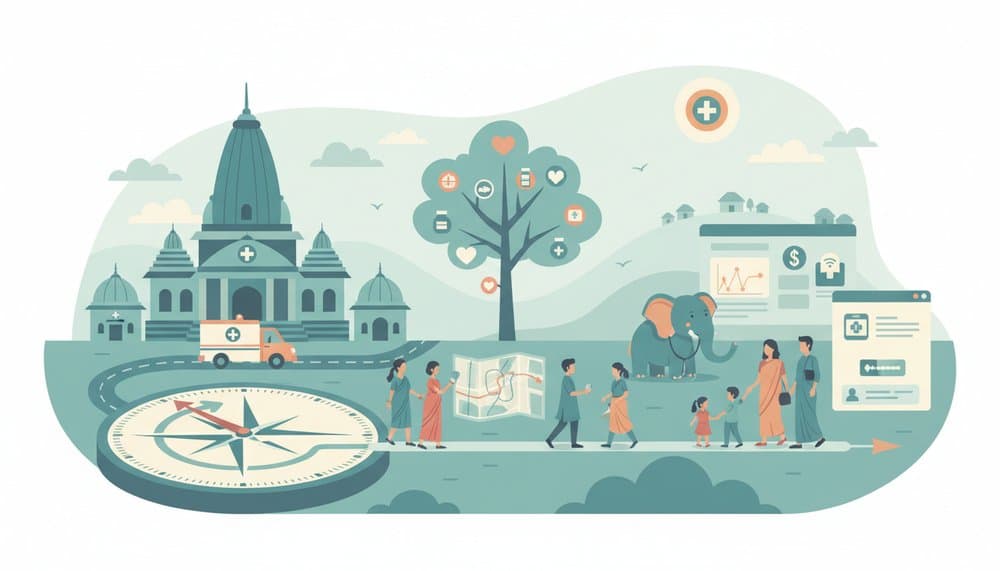
Navigating India's complex healthcare landscape can be a daunting experience, whether you are a resident seeking routine care or a Non-Resident Indian (NRI) managing health concerns for yourself or your family from abroad. The system is a vibrant, often chaotic, mix of world-class private facilities and overburdened public institutions, traditional medicine, and cutting-edge telemedicine. This guide provides a detailed roadmap to help you make informed decisions, access the right care at the right time, and manage costs effectively.
1. The Pillars of Indian Healthcare: Government, Private, and Digital
India's healthcare delivery rests on three main pillars: government-funded public healthcare, a vast and varied private sector, and a rapidly growing digital health ecosystem.
Government Healthcare: The Foundation
The public healthcare system is the backbone of health services for a majority of Indians, offering services that are either free or highly subsidised. It is structured in tiers, from Primary Health Centres (PHCs) in rural areas to large, multi-speciality government hospitals and premier institutions like the All India Institute of Medical Sciences (AIIMS) in major cities.
Key Government Schemes:
- Ayushman Bharat Pradhan Mantri Jan Arogya Yojana (PM-JAY): The world's largest government-funded health assurance scheme, PM-JAY provides a health cover of ₹5 lakh per family per year for secondary and tertiary care hospitalisation. It targets the bottom 40% of the population based on the Socio-Economic Caste Census (SECC) data. Beneficiaries can receive cashless treatment at empanelled public and private hospitals across the country. Eligibility is pre-determined, so there is no formal application process; you can check your eligibility on the official PM-JAY portal.
- Central Government Health Scheme (CGHS): This is a comprehensive healthcare facility for Central Government employees, pensioners, and their dependents. It provides services like OPD treatment, specialist consultations, and hospitalisation at CGHS-run wellness centres and empanelled hospitals against a monthly contribution.
How to Access Government Hospitals:
- Locate a Hospital: Use state health department websites or the National Health Mission portal to find a nearby government hospital.
- Registration: Visit the hospital's Out-Patient Department (OPD) registration counter, usually early in the morning, to get a registration slip or token. You will need a valid ID like an Aadhaar card. Many central hospitals like AIIMS use the Online Registration System (ORS) at ors.gov.in for booking appointments, which can save time.
- Consultation: Wait for your token number to be called for a consultation with a doctor. The initial consultation is typically with a general physician who may refer you to a specialist.
- Diagnostics and Pharmacy: Tests and medicines are usually provided at highly subsidised rates or for free, though you may face long queues.
Private Healthcare: The Engine of Modern Care
The private sector, which accounts for over 60% of hospitals in India, is concentrated in urban areas and is known for its advanced technology, specialised services, and shorter waiting times. It ranges from small, single-doctor clinics to large, corporate multi-speciality hospital chains like Apollo, Fortis, Manipal, and Narayana Health.
How to Access Private Clinics and Hospitals:
- Find a Doctor/Hospital: Use online platforms like , Tata 1mg, or Apollo 24/7 to find specialists based on location, experience, and patient reviews. These platforms provide details on consultation fees and allow for online appointment booking.
- Book an Appointment:
- Online: The most convenient method. Use aggregator apps (like ) or hospital-specific apps (like Apollo 24/7, Fortis) to book a confirmed time slot.
- By Phone: Call the hospital or clinic's reception directly.
- Walk-in: Possible for general consultations, but booking is recommended for specialists.
- Consultation and Treatment: Private consultations are typically longer and more personalised. If hospitalisation is required, the hospital will provide a cost estimate. Most private hospitals have dedicated insurance desks to facilitate cashless claims.
Telemedicine: Healthcare at Your Fingertips
Telemedicine has emerged as a vital component of healthcare, especially for follow-ups and non-emergency consultations. The government's eSanjeevani platform offers free patient-to-doctor consultations, bridging the urban-rural divide.
Popular Private Telemedicine Platforms:
- Tata 1mg,, Apollo 24/7, and MFine are leading platforms connecting users with doctors across various specialities via video, voice, or chat.
- Process: Download the app, create a profile, select a specialist, pay the consultation fee (typically ₹300 - ₹1500), and connect with the doctor at your scheduled time. You receive a digital prescription after the consultation.
2. How to Book an Appointment: A Practical Walkthrough
Booking a medical appointment in India varies significantly between the public and private sectors.
Scenario 1: Booking a Specialist OPD Appointment at a Government Hospital (e.g., AIIMS)
- Method: Use the Online Registration System (ORS) portal: ors.gov.in.
- Steps:
- Verify Yourself: You'll need an active Indian mobile number for OTP verification. NRIs booking for family will need to coordinate this.
- Select Hospital & Department: Choose the hospital (e.g., AIIMS, New Delhi) and the specific department (e.g., Cardiology, Neurology).
- Choose Date: The portal shows available dates. Popular departments get booked weeks or even months in advance.
- Patient Details: Fill in the patient's details. Using their Aadhaar number is recommended.
- Confirmation: You will receive an SMS with the appointment details. On the appointment day, the patient still needs to visit the hospital's registration counter to get their OPD card and token number for the queue.
Scenario 2: Booking a Private Specialist Appointment (e.g., Cardiologist)
- Method: Use an app like or the hospital's own app (e.g., Max Healthcare, Fortis).
- Steps:
- Search: Search for "Cardiologist" in your city. Filter by location, experience, and consultation fee.
- Select Doctor & Slot: Review doctor profiles and select a convenient time slot from their real-time calendar.
- Book & Pay: Confirm the booking by paying the consultation fee online.
- Confirmation: You'll receive an instant confirmation via SMS and on the app, often with a QR code for quick check-in at the hospital, bypassing the main registration queue.
3. Understanding Hospital Types
Hospitals in India can be broadly classified by ownership, which directly impacts cost, accessibility, and the level of care.
- Government Hospitals: Funded and managed by the government. They provide affordable or free care but are often overcrowded with long waiting times and basic infrastructure. They are the primary providers in rural areas.
- Private For-Profit Hospitals: Owned by individuals or corporations, these are common in urban areas and offer high-quality care with advanced technology and better amenities, but at a significantly higher cost.
- Trust-Run/Charitable Hospitals: These are non-profit hospitals run by trusts. They often provide subsidised care and can be a middle ground between the high costs of private hospitals and the resource constraints of public ones.
- Teaching Hospitals: Affiliated with medical colleges (e.g., AIIMS, PGIMER), these can be public or private. They offer treatment by senior professors and resident doctors and are often at the forefront of medical research, but can have long waiting lists for non-emergency procedures.
Comparison of Public vs. Private Healthcare
Feature — Government/Public Hospitals — Private Hospitals & Clinics
Cost — Free or highly subsidised. Consultation fees ₹10-₹50. Procedures are significantly cheaper. — High. Consultation fees ₹500-₹2500+. Costs for procedures can be 5-10 times higher.
Waiting Time — Very long. Hours for OPD consultations; months for non-urgent surgeries. — Short. Appointments are usually on time. Minimal waiting for diagnostics and procedures.
Accessibility — Wide network, present in rural and remote areas. — Primarily located in urban and semi-urban areas.
Infrastructure — Often basic and overburdened. Resource shortages can be an issue. — State-of-the-art technology, modern facilities, and better amenities.
Specialised Care — Available in major tertiary hospitals but may be difficult to access. — Readily available, with dedicated departments for complex treatments like oncology and transplants.
Patient Experience — Impersonal due to high patient load. Overcrowding is common. — Personalised care, focus on patient comfort and service.
Estimated Costs for Common Procedures (Private Sector):
- Angioplasty: ₹2,00,000 - ₹3,00,000
- Knee Replacement: ₹3,00,000 - ₹5,00,000
- Kidney Transplant: ₹10,00,000 - ₹15,00,000
- Gallbladder Removal (Laparoscopic): ₹1,50,000 - ₹2,65,000
Note: Costs are indicative and can vary based on the city, hospital, and patient's condition.
4. Navigating a Medical Emergency
India's emergency response system is fragmented, with different numbers and providers depending on the state and city.
Key Emergency Numbers:
- 108: This is the most widely used toll-free number for medical, police, and fire emergencies, operated through a public-private partnership in many states.
Top Anesthesiologist doctors in Lucknow on Zospital
Verified specialists you can book in minutes.
- Book appointment

Dr. Sanni Deyol Gautam
Anesthesiologist
Lucknow
4.8 - Book appointment

Dr Karanvir Singh Sidhu
Anesthesiologist
Lucknow
4.8 - Book appointment

Dr Harpreet Kaur
Anesthesiologist
Lucknow
4.8 - Book appointment

Dr. Akshat Trivedi
Anesthesiologist
Lucknow
4.5 - Book appointment
Aveline Pascual Jerome, MD
Anesthesiologist
Ajmer
5 - Book appointment
Dr. Vivek Kumar Sharma - Laser & Advanced Laparoscopy Surgeon In Ajmer
Anesthesiologist
Ajmer
4.7

“Your Health, Our Priority. Your Voice, Our Guide”
Dr. Nikhil Singh
Anaesthesia, MBBS, MD
Private hospitals in Lucknow on Zospital
Prefer a private option? These hospitals in Lucknow list their doctors and take bookings.
- Paarth Eye Hospital & Retina Centre
- Urmila Devi Memorial Hospital- Child Specialist Hospital in Lucknow | Pediatrician hospital
- SPARSH CHILDREN'S HOSPITAL & VACCINATION CENTER | Child Hospital in Raebareli Road Lucknow | Dr. Akhilesh Pandey |
Related Articles

Hearing Aid Costs in India for Patients and Expats
Understand hearing aid costs in India for Indians and NRIs. This guide explains prices, types, brands, and the device acquisition process.
Heart Attack Under 40? Understanding the Warning Signs
Heart attacks are increasingly affecting younger Indians. Learn to recognize the subtle and direct symptoms in young adults to know when to seek immediate medical help.
Heart Bypass (CABG) Cost: CGHS vs Private (North India)
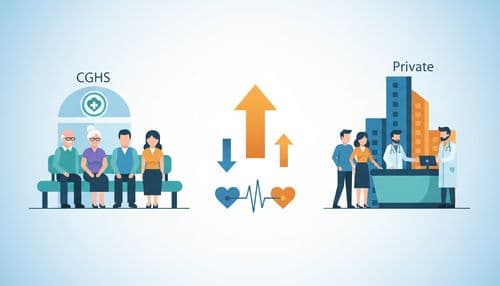
A cost comparison of coronary artery bypass (CABG) across CGHS and private hospitals in North India.

Written by Dr. Nikhil Singh
Anaesthesia, MBBS, MD
Last reviewed: 24 August 2026
Medical Disclaimer
The content provided on Zospital is for general informational and educational purposes only. It is not intended as a substitute for professional medical advice, diagnosis, or treatment. Always seek the advice of your physician or other qualified healthcare provider with any questions you may have regarding a medical condition. Never disregard professional medical advice or delay in seeking it because of something you have read on this website. If you think you may have a medical emergency, call your doctor or emergency services immediately.
Are you a doctor or run a clinic or hospital?
Patients across India are searching Zospital right now. Get a free profile with reviews, timings and direct WhatsApp bookings.