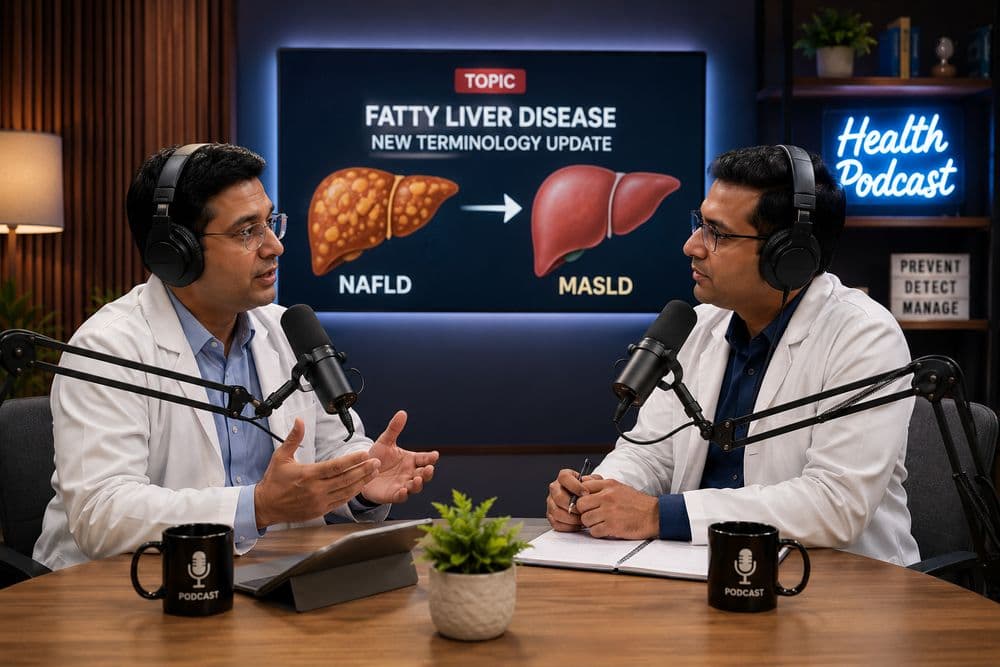
Fatty Liver Is Now Called MASLD – What Changed?
Medically reviewed by Dr. Vishwanath Pratap Singh, Laproscopic and Minimally invasive Surgeon
Last reviewed: 9 Aug 2026
Introduction
The medical terminology for fatty liver disease has officially changed. What was previously known as NAFLD (Non-Alcoholic Fatty Liver Disease) is now being called MASLD (Metabolic Dysfunction-Associated Steatotic Liver Disease).
This update was introduced by international liver experts and major liver organizations to make the disease name more medically accurate and less confusing for patients. The new terminology focuses more on the actual metabolic causes behind fatty liver disease rather than simply describing what the disease is “not.”
The name change has become an important topic in hepatology and liver health awareness worldwide.
What Was NAFLD?
NAFLD referred to fat accumulation in the liver in people who consumed little or no alcohol. It became one of the most common liver diseases globally due to increasing obesity, diabetes, and sedentary lifestyles.
However, many experts believed the term had several problems:
- It focused on alcohol exclusion rather than the actual disease process
- It did not explain the metabolic causes clearly
- Some patients found the term confusing or stigmatizing
Because of these concerns, global liver societies worked together to introduce a new and more accurate terminology.
What Does MASLD Mean?
MASLD = Metabolic Dysfunction-Associated Steatotic Liver Disease
The new term highlights the strong connection between fatty liver disease and metabolic health problems.
Breakdown of the Term:
- Metabolic Dysfunction → Problems related to metabolism such as obesity, diabetes, high BP, or cholesterol
- Steatotic → Fat accumulation in the liver
- Liver Disease → Condition affecting liver function
Why Was NAFLD Renamed to MASLD?
1. To Make the Name More Accurate
Experts wanted the disease name to reflect the actual causes linked to metabolic dysfunction.
2. To Reduce Stigma and Confusion
The old term “non-alcoholic” focused unnecessarily on alcohol. Many patients misunderstood the disease because of this terminology.
3. To Improve Patient Awareness
The new name helps patients understand that fatty liver is closely linked to:
- Obesity
- Diabetes
- Insulin resistance
- High cholesterol
- Sedentary lifestyle
4. To Create Better Global Medical Classification
International liver societies and experts wanted a standardized terminology for improved diagnosis, research, and treatment strategies.
Is MASLD a New Disease?
No.MASLD is not a completely new disease. It is mainly a new medical terminology replacing NAFLD.
The condition itself remains largely similar, but the updated name better explains the metabolic factors responsible for liver fat accumulation.
What Is MASH?
Along with the NAFLD → MASLD change, another important terminology update was introduced:
NASH is now called MASH
Old Term:
- NASH = Non-Alcoholic Steatohepatitis
New Term:
- MASH = Metabolic Dysfunction-Associated Steatohepatitis
MASH refers to a more severe form of MASLD where liver inflammation and damage are present.
Common Causes and Risk Factors of MASLD
1. Obesity
Excess body fat increases fat storage inside the liver.
2. Type 2 Diabetes
High blood sugar and insulin resistance are strongly linked with MASLD.
3. High Cholesterol and Triglycerides
Abnormal lipid levels contribute to fatty liver progression.
4. Sedentary Lifestyle
Lack of physical activity slows metabolism and increases liver fat accumulation.
5. Poor Diet
Frequent consumption of:
- Junk food
- Sugary beverages
- Processed foods
- Excess carbohydrates
can increase liver fat.
Symptoms of MASLD
Many people may not experience symptoms in early stages. The disease is often detected during routine blood tests or ultrasound scans.
Possible symptoms include:
- Fatigue
- Weakness
- Mild pain in upper abdomen
- Feeling of heaviness
- Unexplained weight gain
- Elevated liver enzymes
In advanced stages, complications can become serious.
Can MASLD Become Dangerous?
Yes.If ignored, MASLD may progress to:
- Liver inflammation
- Fibrosis (scarring)
- Cirrhosis
- Liver failure
- Increased cardiovascular risk
Early diagnosis and lifestyle correction are extremely important.
How Is MASLD Diagnosed?
Doctors may recommend:
- Liver Function Tests (LFT)
- Ultrasound
- FibroScan
- MRI in selected cases
- Blood sugar and lipid profile tests
Newer guidelines also emphasize metabolic risk assessment.
Can MASLD Be Reversed?
In many cases, especially early-stage disease, MASLD can improve significantly with lifestyle changes.
Helpful Steps:
- Weight reduction
- Regular exercise
- Healthy balanced diet
- Diabetes control
- Avoiding smoking and alcohol
- Proper sleep and stress management
Even a small reduction in body weight may help reduce liver fat.
How Common Is MASLD?
MASLD has become one of the most common chronic liver diseases globally due to rising obesity and metabolic disorders.
According to medical literature, it affects a significant percentage of the world population and continues to increase rapidly.
When to See a Doctor
Consult a doctor if you have:
- Persistent fatigue
- Obesity or diabetes
- Abnormal liver reports
- Digestive discomfort
- Family history of liver disease
Early medical guidance can help prevent complications.
Conclusion
The change from NAFLD to MASLD represents an important shift in liver disease awareness and medical terminology. The new name better reflects the metabolic causes behind fatty liver disease and helps improve understanding among both doctors and patients.
Although the name has changed, the importance of early diagnosis, healthy lifestyle, and proper liver care remains the same.Source of Data
The updated MASLD nomenclature was introduced through international liver society consensus and recent hepatology research publications.
Official Sources:PMC Research Article – No More NAFLD: The Term Is Now MASLD
AASLD Official MASLD Nomenclature Update
Related reading
Written by
Top General Surgeon doctors in Varanasi on Zospital
Verified specialists you can book in minutes.
- Book appointment

Dr. Vishal Kumar Chorasiya
General Surgery
Greater Noida
5 - Book appointment

Dr. Shivam Bajpai
General Surgeon
Lucknow
4.9 - Book appointment

Dr Mohd Yunus Saleem
General Surgeon
Lucknow
4.8 - Book appointment

Dr. Ankur Bansal
General Surgeon
Agra
4.7 - Book appointment

Dr. O.P. Singh
General Surgeon
Jaunpur
4.9 - Book appointment

Dr. Naina Gupta
Oncologist
Varanasi
Verified•4
Have More Questions?
Find quick answers to common questions about our services, appointments, and patient care.
The term NAFLD mainly described the disease as “non-alcoholic,” which did not explain the actual causes behind the condition. Medical experts introduced the term MASLD to better highlight the role of metabolic problems such as obesity, diabetes, insulin resistance, and high cholesterol in fatty liver disease.
MASLD stands for Metabolic Dysfunction-Associated Steatotic Liver Disease. It refers to a condition in which excess fat builds up in the liver due to metabolic health issues rather than alcohol consumption alone.
MASLD is essentially the updated medical term for what was previously called NAFLD. The disease itself is largely similar, but the new terminology provides a more accurate understanding of the condition and its causes.
Many people with MASLD may not notice symptoms in early stages. However, some individuals can experience fatigue, weakness, heaviness in the upper abdomen, unexplained weight gain, digestive discomfort, or abnormal liver test reports.
Yes. If not managed properly, MASLD may progress to more serious liver conditions such as liver inflammation (MASH), fibrosis, cirrhosis, and in severe cases, liver failure. It may also increase the risk of heart disease and metabolic complications.
People with obesity, diabetes, high blood pressure, high cholesterol, sedentary lifestyle, poor dietary habits, or metabolic syndrome are at a higher risk of developing MASLD.
In many early-stage cases, MASLD can improve significantly through healthy lifestyle changes such as weight loss, regular exercise, balanced diet, blood sugar control, and avoiding unhealthy habits like smoking and excessive alcohol intake.

““Minimally Invasive Surgery, Maximum Patient Comfort.””
Dr. Vishwanath Pratap Singh
Laproscopic and Minimally invasive Surgeon
Related Articles

Haryana's Gift to Elders: New ₹5 Lakh Health Scheme Explained
The Haryana government has launched a new cashless health scheme for all senior citizens above 70, offering a ₹5 lakh medical cover. This initiative, part of the Ayushman Bharat program, provides financial security for our elders' healthcare needs.

HealthTech in India: A Revolution in Your Pocket
Indian HealthTech startups are bridging critical gaps in the healthcare system, using technology to bring quality medical services to your fingertips.

How to Protect Yourself From Heatwave Conditions in Uttar Pradesh?
Heatwaves in Uttar Pradesh can significantly impact health, increasing the risk of dehydration, heat exhaustion, and heat stroke. Learn practical tips to stay safe during extreme summer temperatures.

Written by Dr. Vishwanath Pratap Singh
Laproscopic and Minimally invasive Surgeon
Last reviewed: 9 August 2026
Medical Disclaimer
The content provided on Zospital is for general informational and educational purposes only. It is not intended as a substitute for professional medical advice, diagnosis, or treatment. Always seek the advice of your physician or other qualified healthcare provider with any questions you may have regarding a medical condition. Never disregard professional medical advice or delay in seeking it because of something you have read on this website. If you think you may have a medical emergency, call your doctor or emergency services immediately.
Are you a doctor or run a clinic or hospital?
Patients across India are searching Zospital right now. Get a free profile with reviews, timings and direct WhatsApp bookings.