Epilepsy Treatment Cost
Medically reviewed by Dr.Nikhil Singh, Anaesthesia, MBBS, MD
Last reviewed: 16 Aug 2026
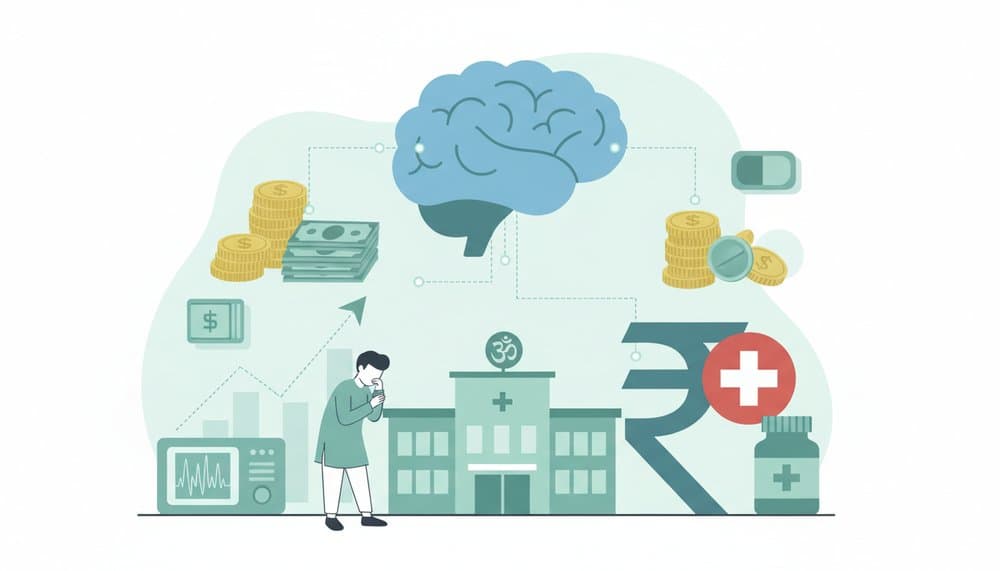
A Comprehensive Guide to the Costs of Epilepsy and Seizure Management in India
For the millions of individuals in India and the non-resident Indian (NRI) community living with epilepsy, navigating the path to effective seizure management can be a complex journey, deeply intertwined with financial considerations. This guide provides a detailed overview of the costs associated with epilepsy treatment in India, from medications and advanced surgical interventions to monitoring devices and rehabilitative therapies. It aims to empower patients and their families with verified, practical information to make informed decisions about their healthcare.
The Financial Landscape of Epilepsy Care
The cost of managing epilepsy in India is not a single figure but a spectrum, influenced by the type and severity of the condition, the chosen treatment modality, geographical location, and the healthcare facility. Expenses can be broadly categorized into diagnostics, long-term medication, surgical procedures, monitoring devices, and supportive therapies.
I. The Foundation of Treatment: Anti-Epileptic Drugs (AEDs)
For the majority of patients, Anti-Epileptic Drugs (AEDs) are the first line of treatment. The cost of medication is a significant, recurring expense. India's pharmaceutical market offers a wide range of both older, established AEDs and newer generation drugs. There is a substantial price variation among different brands of the same drug, which can impact long-term adherence.
Estimated Monthly Cost of Common Anti-Epileptic Drugs
Medication (Dosage) — Estimated Price per Strip (10 Tablets) — Estimated Monthly Cost (Typical Dosage)
Carbamazepine (200mg) — ₹10 - ₹90 — ₹60 - ₹540
Sodium Valproate (200mg) — ₹15 - ₹121 — ₹90 - ₹726
Levetiracetam (500mg) — ₹50 - ₹155 — ₹300 - ₹930
Lamotrigine (100mg) — ₹120 - ₹245 — ₹240 - ₹1,470
Phenytoin (100mg) — Varies, often around ₹80 for a bottle — Varies
Clobazam (10mg) — ₹43 - ₹107 — Varies with usage
Note: These prices are indicative and can vary significantly based on the brand, pharmacy, and location. The monthly cost is an estimation based on a common dosage of two tablets per day but will vary based on the prescribed regimen.
The choice between older and newer AEDs is a clinical decision, but cost can be a major factor for patients. While newer drugs may have different side-effect profiles, older drugs like Phenobarbital and Phenytoin are often more cost-effective.
II. When Medication Isn't Enough: The Surgical Pathway
For the 30% of patients with drug-resistant epilepsy (DRE), where seizures persist despite trials of two or more appropriate medications, surgery may offer the best chance for seizure freedom. The evaluation and surgical process is a multi-stage journey with significant associated costs.
Pre-Surgical Evaluation
A thorough pre-surgical evaluation is critical to identify the precise location of the seizure focus in the brain and to ensure that surgery can be performed safely. This is an intensive and costly phase.
Estimated Costs of Pre-Surgical Diagnostics
Test — Purpose — Estimated Cost (INR)
Neurologist Consultation — Initial assessment and ongoing management. — ₹800 - ₹2,000 per visit
Video EEG (VEEG) — To record brain activity during a seizure. — ₹30,000 per day (may require 1-7 days)
MRI Brain (Epilepsy Protocol) — High-resolution imaging to find structural abnormalities. — ₹5,000 - ₹12,000
PET Scan / PET-MRI Fusion — To identify metabolic changes in the brain. — ₹15,000
SPECT Scan — To map blood flow changes during a seizure. — ₹9,200 - ₹11,500
Neuropsychological Assessment — To evaluate cognitive functions like memory and language. — ₹6,000 - ₹20,000+
The total cost for a pre-surgical evaluation can range from ₹1.05 Lakh to ₹1.5 Lakh for a straightforward case. For more complex cases requiring invasive monitoring like Stereo-EEG (where electrodes are placed deep within the brain), costs can be substantially higher.
Surgical Interventions: Costs and Types
The cost of epilepsy surgery in India is significantly lower than in Western countries, making it a viable option for many, including international patients.
Cost of Epilepsy Surgical Procedures in India
Surgical Procedure — Description — Estimated Cost (INR)
Resective Surgery (e.g., Temporal Lobectomy, Lesionectomy) — Removal of the brain tissue causing seizures. This is the most common type of epilepsy surgery. — ₹1.5 Lakh - ₹6 Lakh
Vagus Nerve Stimulation (VNS) — Implantation of a device that sends electrical impulses to the brain via the vagus nerve to reduce seizure frequency. — ₹2.5 Lakh - ₹5 Lakh
Deep Brain Stimulation (DBS) — Implantation of electrodes in specific brain areas to regulate abnormal electrical activity. — ₹7 Lakh - ₹20 Lakh
Corpus Callosotomy — Severing the nerve fibers connecting the two halves of the brain to prevent the spread of seizures. — Part of the resective surgery cost range.
Note: These costs are approximate and can vary based on the hospital's reputation, the surgeon's experience, the city, and the specific technology used. Tier-I cities like Mumbai and Delhi tend to have higher costs.
III. Monitoring and Safety: Devices for Seizure Management
Beyond clinical treatments, various devices can help in monitoring seizures and ensuring patient safety, particularly during sleep.
1. Electroencephalogram (EEG): A standard diagnostic tool to measure electrical activity in the brain.
- Routine EEG: ₹1,500 - ₹2,300
- Prolonged/Sleep-Deprived EEG: ₹2,400 - ₹3,000
2. Wearable Seizure Detection Devices: These devices, often worn as watches or armbands, can detect movements associated with tonic-clonic seizures and alert caregivers.
- Global Brands (e.g., EpiMonitor, formerly Embrace2): The availability of these devices in India can be limited. The Embrace2 is no longer sold, and its successor, EpiMonitor, is primarily available in the US, UK, and EU. When available, the cost could be around $199 (approx. ₹16,500) plus a monthly subscription fee. It's crucial to verify if these devices are officially approved by the Central Drugs Standard Control Organisation (CDSCO) for medical use in India.
- EpiWatch: This FDA-cleared app for the Apple Watch is currently available only in the United States and requires a prescription.
- Indian-Registered Devices (e.g., DazzleSafe Helmet): For protection against fall-related head injuries during seizures, an Indian company has developed a CDSCO Class A registered soft protective helmet. This provides a practical, accessible safety solution for patients at risk of falls.
IV. Non-Invasive and Supportive Therapies
1. Dietary Therapies (Ketogenic Diet): A high-fat, low-carbohydrate diet can be highly effective for some children with drug-resistant epilepsy.
- Dietician Consultation: Initial consultations and follow-ups are crucial for implementing the diet safely. Costs can range from ₹500 to ₹5,000 per month depending on the package and expert.
- Specialized Foods: Keto-friendly flours, snacks, and supplements are available online in India, with costs varying. For example, 1kg of keto-friendly flour can cost around ₹600.
- Monitoring: Regular blood tests (e.g., blood ketone levels, lipid profile) are necessary. A blood ketone test can cost between ₹500 and ₹1,500.
2. Rehabilitation and Support: Recovery, especially after surgery, often requires a multidisciplinary approach.
- Physiotherapy: To regain strength and motor skills. Costs per session can range from ₹800 to ₹3,000.
- Speech Therapy: To address any language difficulties post-surgery. Session costs typically fall between ₹500 and ₹2,500.
- Neuropsychological Support: For cognitive and emotional recovery. A full assessment can cost between ₹500 and ₹4,500, potentially requiring multiple sessions.
A Framework for Decision-Making
Choosing the right treatment path involves a careful evaluation of medical needs, potential outcomes, and financial capacity.
When to Consider Surgery? A surgical evaluation is generally recommended when a person has drug-resistant epilepsy, meaning seizures are not controlled after adequate trials of at least two different anti-seizure medications. Early referral for surgical evaluation is associated with better outcomes.
Decision Framework: Key Questions to Ask
- Medical Necessity:
- Have I failed trials of two or more appropriate AEDs?
- Do my seizures originate from a single, identifiable area of the brain?
- What are the success rates for seizure freedom with this particular surgery for my condition? (Success rates for temporal lobe surgery can be 60-80%).
- Financial Capacity:
- What is the total estimated cost, including evaluation, surgery, and post-operative care?
- What is covered by my health insurance policy?
- Are there government schemes (like Ayushman Bharat) or hospital-specific financial aid programs I am eligible for?
- Quality of Life:
- What are the potential risks and side effects of the surgery? (e.g., memory or vision problems after temporal lobectomy).
- What is the expected recovery timeline?
- How will this treatment impact my ability to work, study, and live independently?
Navigating the Healthcare System: Hospital Selection
Choosing the right hospital is paramount for successful outcomes. Look for a comprehensive epilepsy care center rather than a general neurosurgery department.
Criteria for Selecting an Epilepsy Treatment Center:
- Accreditation: Look for hospitals accredited by the National Accreditation Board for Hospitals & Healthcare Provide
Written by
Top Anesthesiologist doctors in Lucknow on Zospital
Verified specialists you can book in minutes.
- Book appointment

Dr. Sanni Deyol Gautam
Anesthesiologist
Lucknow
4.8 - Book appointment

Dr Karanvir Singh Sidhu
Anesthesiologist
Lucknow
4.8 - Book appointment

Dr Harpreet Kaur
Anesthesiologist
Lucknow
4.8 - Book appointment
Dr. Akshat Trivedi
Anesthesiologist
Lucknow
4.5 - Book appointment
Dr. Praful Srivastava
Anesthesiologist
4.8 - Book appointment

Dr. Mohd. Ruheel Khan
Anesthesiologist
Faizabad

“Your Health, Our Priority. Your Voice, Our Guide”
Dr.Nikhil Singh
Anaesthesia, MBBS, MD
Private hospitals in Lucknow on Zospital
Prefer a private option? These hospitals in Lucknow list their doctors and take bookings.
See all hospitals in LucknowRelated Articles

Era Hospital Lucknow: Appointment Kaise Le — OPD, Timing aur Ilaj ki Puri Jankari
Era's Lucknow Medical College & Hospital me OPD parcha banwane, appointment lene aur ilaj ki puri jankari — aasan Hinglish me, English summary ke saath.

ESIC Eligibility and Registration: Who Is Covered and How
A guide to ESIC eligibility, the wage ceiling, registration and the e-Pehchan card.

ESIC Medical College and Hospital Faridabad: OPD Appointment Guide
A factual guide for patients seeking outpatient care at ESIC Medical College and Hospital Faridabad, covering the appointment process, OPD timings, cost structure, government scheme coverage, and key departments.
Written by Dr.Nikhil Singh
Anaesthesia, MBBS, MD
Last reviewed: 16 August 2026
Medical Disclaimer
The content provided on Zospital is for general informational and educational purposes only. It is not intended as a substitute for professional medical advice, diagnosis, or treatment. Always seek the advice of your physician or other qualified healthcare provider with any questions you may have regarding a medical condition. Never disregard professional medical advice or delay in seeking it because of something you have read on this website. If you think you may have a medical emergency, call your doctor or emergency services immediately.
Are you a doctor or run a clinic or hospital?
Patients across India are searching Zospital right now. Get a free profile with reviews, timings and direct WhatsApp bookings.