ECHS for Veteran Pensioners Abroad: A Guide for NRIs and OCIs
Medically reviewed by Dr. Nikhil Singh
Last reviewed: 14 Aug 2026
For Indian ex-servicemen (ESM) living abroad as Non-Resident Indians (NRIs) or Overseas Citizens of India (OCI), understanding the Ex-Servicemen Contributory Health Scheme (ECHS) is crucial. Many veteran pensioners split their time between countries or have family and dependents who remain in India. This guide outlines the specific rules, coverage, and limitations of ECHS for those residing overseas.
The scheme makes clear provisions for NRI/OCI members, particularly regarding the application process and care for dependents in India. However, it's important to be aware of what is not covered, especially concerning medical treatment received outside of India.
ECHS Rules for NRI/OCI Veterans at a Glance
Coverage in India is provided through the network of ECHS polyclinics, service hospitals, and empanelled private hospitals. Treatment in Nepal is also covered, but no other foreign country.
- Medical Treatment Abroad — Not Covered
- Medical Treatment in India — Covered
- Care for Dependents in India — Covered
- Medicines for Overseas Stay — Up to 6 months' supply can be collected from India
- Aadhaar for Application — Not required for NRI/OCI applicants
- Smart Card Validity — Lifetime
Rates shown are as per the ECHS & Government of India Circulars (2024) and are subject to periodic revision. Always verify the latest approved rates on the official source.
ECHS Membership and Application for NRIs and OCIs
Eligibility for ECHS is based on two core criteria: being an ex-serviceman and receiving a pension (service, disability, or family) from the Government of India. Official circulars confirm that ex-servicemen who reside abroad, including those who have become Overseas Citizens of India (OCI), are permitted to be members of the scheme.
To facilitate this, ECHS has created special provisions for applying for the 64 KB ECHS smart card from abroad.
- Aadhaar Exemption: When applying for the card online, you can select an "NRI/OCI" category. This exempts you from the mandatory Aadhaar number requirement.
- Identity Proof: A valid passport serves as the primary identity document for NRI and OCI applicants.
- Email Verification: An email address is a mandatory field for verification. Instead of sending a One-Time Password (OTP) to a mobile number, the system sends it to the registered email.
- Contribution Payment: The required one-time contribution to join the scheme must be paid online in Indian Rupees (INR).
Medical Coverage: What's Included and What's Not
A critical point for NRI members is understanding the geographical limits of ECHS coverage. The scheme provides comprehensive medical care through its network of polyclinics, service hospitals, and empanelled private facilities located within India and Nepal only.
This means that any medical treatment, whether for a planned procedure or an emergency, that is obtained in any other foreign country (such as the US, UK, Australia, or Gulf countries) is not covered by ECHS. The scheme does not provide reimbursement for healthcare expenses incurred outside of India and Nepal.
The only provision made for members while they are physically abroad is for the supply of medicines. Members can be issued prescribed medicines from their parent polyclinic in India for a duration of up to six months. To use this facility, the member must provide documentary proof of their travel to a foreign country, such as copies of their passport, visa, and tickets. If the parent polyclinic does not have the required medicines, they may issue a Non-Availability (NA) certificate, which allows the medicines to be purchased from an outside chemist for reimbursement.
ECHS Benefits for Dependents in India
A significant benefit for NRI/OCI members is that their eligible dependents residing in India can continue to access all ECHS facilities without interruption. The primary member's location abroad does not affect the dependents' coverage, provided they meet the standard ECHS eligibility criteria.
- Spouse: A legally wedded spouse is a fully eligible dependent.
- Parents: Dependent parents who normally reside with the ex-serviceman and have a combined income of less than ₹9,000 per month (excluding Dearness Allowance) are eligible.
- Son: A son is eligible until he turns 25 or starts earning, whichever comes first.
- Daughter: A daughter is eligible until she gets married or starts earning, whichever comes first.
- Disabled Dependents: Children with permanent physical or mental disabilities may be eligible for life, subject to income rules.
Annual Validation and Smart Card Management from Abroad
The 64 KB ECHS smart card is valid for the lifetime of the primary member. However, dependents over the age of 18 (except the spouse) must have their membership validated annually. This involves providing proof of income to the polyclinic to confirm they still meet the dependency criteria. The specific procedure for how this validation is managed when the primary member is overseas is not detailed in public documents, but it is the dependent's responsibility to complete this process in India.
A potential issue for long-term NRIs is a policy discussed by ECHS to deactivate smart cards that are not used for biometric verification at a polyclinic for a two-year period. This poses a challenge for members who do not travel to India frequently. While the official implementation status is not fully clear, if a card is deactivated, re-activation requires approval from an ECHS Regional Centre. There is no special, simplified process for members living abroad; they would likely need to visit a polyclinic in India to initiate the re-activation.
Contacting ECHS for Card-Related Issues
Once you have applied for the card online as an NRI/OCI, an OTP will be sent to your registered email for the collection of the card from your designated Station HQ in India. If you or your family encounter any issues with the smart card, you can reach out to the ECHS helpdesk.
For card-related queries, you can send an email to echs-card[at]echs[dot]gov[dot]in or call the toll-free number 1800 114 115.
More guides for NRIs and international patients
Related guides from our NRI and international patient hub:
- Pravasi Bharatiya Bima Yojana (PBBY): A Guide for Indian Workers Abroad
- Can NRIs & OCI Cardholders Use Ayushman Bharat (PM-JAY)? A Guide for Families
- CGHS for NRI Pensioners Living Abroad: A Complete Guide
- OCI Card Holder Treatment at Indian Government Hospitals: A Guide
- Healthcare in India for NRIs and international patients: all guides
Frequently Asked Questions
Can I use my ECHS card for a medical emergency in the USA, UK, or Australia?
No. ECHS does not cover any medical treatment, including emergencies, received in any country other than India and Nepal. You will be responsible for all costs incurred abroad.
My parents live in India. Can they use my ECHS benefits if I am an OCI living abroad?
Yes. If your parents are registered as your dependents on your ECHS card and meet the income criteria (less than ₹9,000/month combined), they can continue to avail all ECHS facilities in India even while you are living abroad.
How do my parents prove their income for ECHS dependency if I am not in India?
Dependents over 18 (excluding your spouse) must validate their eligibility annually by providing income proof at their polyclinic. While the exact process for doing this when the primary member is overseas is not specified, it is the dependent's responsibility to complete this requirement in India.
I am an NRI veteran. Do I need an Aadhaar card to apply for ECHS?
No. The online application for the 64 KB smart card has a specific 'NRI/OCI' category that you can select. This exempts you from the mandatory Aadhaar requirement. You can use your passport as your primary ID.
What happens if I don't visit India for three years? Will my ECHS card be cancelled?
ECHS has discussed a policy to deactivate smart cards if they are not used for biometric verification at a polyclinic for two consecutive years. This is a risk for members who live abroad for long periods. To reactivate a card, you would likely need to visit a polyclinic in India upon your return.
How can I get my prescribed medicines from ECHS while living overseas?
You cannot get medicines delivered abroad. However, ECHS allows for a one-time issue of up to six months' worth of prescribed medicines from your parent polyclinic in India. You must provide proof of your travel abroad (passport, visa, tickets). Someone can collect these on your behalf.
Is the one-time ECHS contribution amount different for NRIs?
The research notes do not indicate a different contribution amount for NRIs or OCIs. The payment must be made online in Indian Rupees (INR) as per the standard procedure for all applicants.
Related
- Healthcare in India for NRIs and international patients: the complete hub
- Government health schemes in India: a guide
- Treatment costs in India: a complete guide
- How to apply for a CGHS card
Medical Disclaimer
The information provided in this article is for general informational and educational purposes only. It is not intended as a substitute for professional medical advice, diagnosis, or treatment. Always seek the advice of your physician or other qualified healthcare provider with any questions you may have regarding a medical condition. Never disregard professional medical advice or delay in seeking it because of something you have read in this article.
Top doctors on Zospital
Verified specialists you can book in minutes.
- Book appointment

Dr. Naina Gupta
Oncologist
Varanasi
Verified•4 - Book appointment

Dr. Vishwanath Pratap Singh
General Surgeon
Varanasi
Verified•4.9 - Book appointment
Dr N. S . Paliwal
Rehabilitation Specialist
Lucknow
Verified - Book appointment
Dr. Roli Purwar
Gynecologist
Gorakhpur
Verified - Book appointment

Dr. Abhinav Srivastava
Spine Surgeon
Lucknow
Verified•4.9 - Book appointment

Dr. Shoeb Arif Khan
Orthopedic Surgeon
Lucknow
Verified•4.9
Have More Questions?
Find quick answers to common questions about our services, appointments, and patient care.
No. ECHS does not cover any medical treatment, including emergencies, received in any country other than India and Nepal. You will be responsible for all costs incurred abroad.
Yes. If your parents are registered as your dependents on your ECHS card and meet the income criteria (less than ₹9,000/month combined), they can continue to avail all ECHS facilities in India even while you are living abroad.
Dependents over 18 (excluding your spouse) must validate their eligibility annually by providing income proof at their polyclinic. While the exact process for doing this when the primary member is overseas is not specified, it is the dependent's responsibility to complete this requirement in India.
No. The online application for the 64 KB smart card has a specific 'NRI/OCI' category that you can select. This exempts you from the mandatory Aadhaar requirement. You can use your passport as your primary ID.
ECHS has discussed a policy to deactivate smart cards if they are not used for biometric verification at a polyclinic for two consecutive years. This is a risk for members who live abroad for long periods. To reactivate a card, you would likely need to visit a polyclinic in India upon your return.
You cannot get medicines delivered abroad. However, ECHS allows for a one-time issue of up to six months' worth of prescribed medicines from your parent polyclinic in India. You must provide proof of your travel abroad (passport, visa, tickets). Someone can collect these on your behalf.
The research notes do not indicate a different contribution amount for NRIs or OCIs. The payment must be made online in Indian Rupees (INR) as per the standard procedure for all applicants.
Related Articles
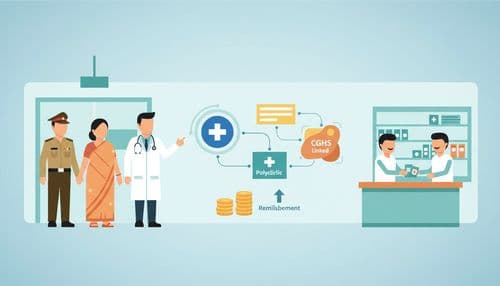
ECHS Rates Explained: How Ex-Servicemen Health Scheme Reimbursement Works
A clear explanation of how ECHS rates and reimbursement work for ex-servicemen, including CGHS-linked rates and the polyclinic referral system.
Ectopic Pregnancy: Early Signs You Shouldn't Ignore
A positive pregnancy test is usually a time of joy, but what if you experience confusing symptoms like pain or bleeding? Learn the early signs of an ectopic pregnancy that need urgent attention.
Egg Freezing in India: Who Should Consider It and When
Are you thinking about your future family but the timing isn't right? An experienced doctor explains egg freezing in India, a way to preserve your fertility for later.
Written by Dr. Nikhil Singh
Last reviewed: 14 August 2026
Medical Disclaimer
The content provided on Zospital is for general informational and educational purposes only. It is not intended as a substitute for professional medical advice, diagnosis, or treatment. Always seek the advice of your physician or other qualified healthcare provider with any questions you may have regarding a medical condition. Never disregard professional medical advice or delay in seeking it because of something you have read on this website. If you think you may have a medical emergency, call your doctor or emergency services immediately.
Are you a doctor or run a clinic or hospital?
Patients across India are searching Zospital right now. Get a free profile with reviews, timings and direct WhatsApp bookings.