CGHS Rates for Cornea and Sclera Surgery

What to check next
CGHS Eye Surgery Rate List: Glaucoma, Retina (Vitrectomy), Squint and Pterygium
Other eye surgery rates
CGHS Rates for IOL, Retina & Complex Eye Surgery (2025)
Cataract, IOL and retina procedure rates
CGHS Eye Test Rate List: OCT, Perimetry, A-Scan and Corneal Topography
Diagnostic eye tests before surgery
Medically reviewed by Dr. Nikhil Singh
Last reviewed: 14 Aug 2026
The cornea and sclera are vital components of the eye's structure. The cornea is the transparent front part that covers the iris and pupil, responsible for focusing light. The sclera is the tough, white outer layer that protects the eyeball. Various diseases, injuries, or congenital conditions can affect these tissues, necessitating surgical intervention to restore vision or preserve the eye's integrity.
Procedures on the cornea and sclera can range from relatively minor interventions, such as removing a foreign body, to complex reconstructive surgeries like corneal grafting (keratoplasty). Conditions like keratoconus, where the cornea thins and bulges, may require treatments like Corneal Collagen Cross-linking (C3R/KXL) to prevent progression. Injuries from trauma may require intricate wound repair, while severe damage might call for scleral or corneal grafts.
For Central Government Health Scheme (CGHS) beneficiaries, understanding the coverage for these specialized ophthalmic procedures is crucial. This page provides a detailed guide to the approved rates for a wide array of cornea and sclera surgeries at CGHS-empanelled hospitals. The rates are categorized by procedure and the accreditation status of the hospital (NABH or non-NABH), allowing beneficiaries to understand the financial aspects before undergoing treatment.
CGHS Cornea & Sclera Surgery Rates (effective 13 October 2025)
Ophthalmology codes carry no separate super-speciality rate.
- Conjunctival Peritomy per eye, Non-NABH — Rs 1,275
- Conjunctival Peritomy per eye, NABH — Rs 1,500
- Conjunctival wound repair or exploration following blunt trauma per eye, Non-NABH — Rs 7,225
- Conjunctival wound repair or exploration following blunt trauma per eye, NABH — Rs 8,500
- Removal of corneal foreign body, Non-NABH — Rs 340
- Removal of corneal foreign body, NABH — Rs 400
- Cauterization of ulcer/subconjunctival injection in one eye, Non-NABH — Rs 425
- Cauterization of ulcer/subconjunctival injection in one eye, NABH — Rs 500
- Cauterization of ulcer/subconjunctival injection in both eyes, Non-NABH — Rs 680
- Cauterization of ulcer/subconjunctival injection in both eyes, NABH — Rs 800
- Corneal grafting—Penetrating keratoplasty per eye, Non-NABH — Rs 17,000
- Corneal grafting—Penetrating keratoplasty per eye, NABH — Rs 20,000
- Bandage contact lenses for corneal perforation/PED per eye, Non-NABH — Rs 1,700
- Bandage contact lenses for corneal perforation/PED per eye, NABH — Rs 2,000
- Scleral grafting or conjunctival flap for corneal perforation per eye, Non-NABH — Rs 7,225
- Scleral grafting or conjunctival flap for corneal perforation per eye, NABH — Rs 8,500
- Keratoconus correction with therapeutic contact lenses - Both Eyes, Non-NABH — Rs 7,225
- Keratoconus correction with therapeutic contact lenses - Both Eyes, NABH — Rs 8,500
- Ultraviolet (UV) radiation for cross-linking for keratoconus /C3R/KXL - Both Eyes, Non-NABH — Rs 17,000
- Ultraviolet (UV) radiation for cross-linking for keratoconus /C3R/KXL - Both Eyes, NABH — Rs 20,000
- EDTA for band shaped keratopathy - Both Eyes, Non-NABH — Rs 2,550
- EDTA for band shaped keratopathy - Both Eyes, NABH — Rs 3,000
- Arcuate keratotomy for astigmatism /Limbal Relaxing Incision - Both Eyes, Non-NABH — Rs 5,780
- Arcuate keratotomy for astigmatism /Limbal Relaxing Incision - Both Eyes, NABH — Rs 6,800
- Re-suturing (Primary suturing) of corneal wound per eye, Non-NABH — Rs 4,250
- Re-suturing (Primary suturing) of corneal wound per eye, NABH — Rs 5,000
- Penetrating keratoplasty with glaucoma surgery per eye, Non-NABH — Rs 29,750
- Penetrating keratoplasty with glaucoma surgery per eye, NABH — Rs 35,000
- Penetrating keratoplasty with vitrectomy per eye, Non-NABH — Rs 29,750
- Penetrating keratoplasty with vitrectomy per eye, NABH — Rs 35,000
- Penetrating keratoplasty with IOL implantation per eye, Non-NABH — Rs 29,750
- Penetrating keratoplasty with IOL implantation per eye, NABH — Rs 35,000
- DALK- Deep anterior lamellar keratoplasty per eye, Non-NABH — Rs 36,550
- DALK- Deep anterior lamellar keratoplasty per eye, NABH — Rs 43,000
- Keratoprosthesis stage I and II per eye, Non-NABH — Rs 36,550
- Keratoprosthesis stage I and II per eye, NABH — Rs 43,000
- DSAEK Descemet’s stripping automated endothelial keratoplasty/DMEK- Descemet membrane endothelial keratoplasty per eye, Non-NABH — Rs 36,550
- DSAEK Descemet’s stripping automated endothelial keratoplasty/DMEK- Descemet membrane endothelial keratoplasty per eye, NABH — Rs 43,000
- ALTK- Automated lamellar therapeutic keratoplasty per eye, Non-NABH — Rs 36,550
- ALTK- Automated lamellar therapeutic keratoplasty per eye, NABH — Rs 43,000
- PTK- Phototherapeutic keratectomy /PRK for keratoconus per eye, Non-NABH — Rs 11,390
- PTK- Phototherapeutic keratectomy /PRK for keratoconus per eye, NABH — Rs 13,400
- Intralase application for keratoconus /CAIRS Corneal allogenic intrastromal ring segments per eye excluding the cost of the rings, Non-NABH — Rs 17,000
- Intralase application for keratoconus /CAIRS Corneal allogenic intrastromal ring segments per eye excluding the cost of the rings, NABH — Rs 20,000
- Excision Biopsy of lid, conjunctiva, cornea per eye, Non-NABH — Rs 7,820
- Excision Biopsy of lid, conjunctiva, cornea per eye, NABH — Rs 9,200
- Scleral graft for scleral melting or perforation per eye, Non-NABH — Rs 11,390
- Scleral graft for scleral melting or perforation per eye, NABH — Rs 13,400
- Amniotic membrane grafting /symblepharon release with AMG per eye, Non-NABH — Rs 11,390
- Amniotic membrane grafting /symblepharon release with AMG per eye, NABH — Rs 13,400
- Scleral Fixation Tissue glue /fibrin glue per eye, Non-NABH — Rs 7,140
- Scleral Fixation Tissue glue /fibrin glue per eye, NABH — Rs 8,400
- Simple limbal stem cell transplant SLET per eye, Non-NABH — Rs 17,000
- Simple limbal stem cell transplant SLET per eye, NABH — Rs 20,000
Rates shown are as per the CGHS approved package rates (Office Memorandum F.No.5-16/CGHS(HQ)/HEC/2024(PartI) dated 03.10.2025, effective 2025-10-13) (2025 (effective 13.10.2025)) and are subject to periodic revision. Always verify the latest approved rates on the official source.
Who This Covers
This rate guide is intended for all CGHS beneficiaries who have been advised by a specialist to undergo surgery involving the cornea or sclera. The listed procedures cover a broad spectrum of ophthalmic conditions, from common issues to complex surgical needs.
The treatments detailed in the rate table include:
- Major reconstructive surgeries like Penetrating Keratoplasty (full-thickness corneal graft), Deep Anterior Lamellar Keratoplasty (DALK), and Descemet’s Stripping Automated Endothelial Keratoplasty (DSAEK).
- Treatments for keratoconus, such as Ultraviolet (UV) radiation for cross-linking (C3R/KXL) and Intralase application for Corneal Allogenic Intrastromal Ring Segments (CAIRS).
- Repair procedures for injury or disease, including corneal wound re-suturing, scleral grafting for perforation, and amniotic membrane grafting.
- Therapeutic procedures like the removal of a corneal foreign body, cauterization of ulcers, and EDTA chelation for band-shaped keratopathy.
- Combined procedures, such as keratoplasty performed along with glaucoma surgery or IOL implantation.
What CGHS Covers vs. What You Pay Separately
The CGHS package rates are designed to be comprehensive, covering the main components of a hospital stay for surgery. This typically includes the cost of the operation, surgeon and anaesthetist fees, OT charges, room rent as per the beneficiary's ward entitlement, and standard drugs and consumables used during the procedure and hospital stay.
However, beneficiaries should be aware that certain high-cost items, implants, or specialized materials are often not included in the package rate and must be paid for separately. In cornea and sclera surgeries, these out-of-pocket expenses might include:
- The cost of the donor corneal tissue itself, especially if procured from a non-government eye bank.
- The cost of corneal allogenic intrastromal ring segments (CAIRS), as the CGHS rate explicitly covers only the surgical application.
- Specialized therapeutic or bandage contact lenses used for conditions like corneal perforation.
- Specific biological adhesives such as fibrin glue used for scleral fixation.
- The cost of processed amniotic membrane preparations used in grafting procedures.
It is important to have a detailed discussion with the hospital's billing department before admission to get a clear estimate of any non-covered costs.
How to Use This at a CGHS-Empanelled Hospital
To avail of these benefits for cornea or sclera surgery at a CGHS-empanelled facility, beneficiaries should follow a structured process:
1. Obtain a Referral: First, you must get a formal referral for the specific procedure from a government hospital specialist or a medical officer at a CGHS Wellness Centre.
2. Choose a Hospital: Select a CGHS-empanelled hospital that performs the required ophthalmic surgery. You can find a list of such hospitals on the CGHS portal or through your Wellness Centre.
3. Consult and Verify: Present your CGHS card and the referral letter at the hospital. Following a consultation with the ophthalmologist, the exact surgical plan will be finalized.
4. Confirm the Procedure Code: Before the procedure, confirm the specific procedure name and its corresponding CGHS code with the hospital's billing desk. This ensures that the treatment you receive matches the approved rate list, avoiding any billing discrepancies.
5. Understand the Rate: Note that the applicable rate (NABH or non-NABH) is determined by the hospital's accreditation status, not by patient choice. NABH-accredited hospitals are permitted to charge a higher, pre-approved rate for their services.
Frequently Asked Questions
What is keratoplasty?
Keratoplasty, also known as a corneal graft, is a surgery to replace a part of a diseased or scarred cornea with healthy donor corneal tissue. The CGHS list includes several types, such as Penetrating Keratoplasty (a full-thickness graft) and lamellar keratoplasties like DALK or DSAEK (partial-thickness grafts).
What is C3R / KXL for keratoconus?
Corneal Collagen Cross-linking (C3R or KXL) is a therapeutic procedure to treat progressive keratoconus. It involves applying riboflavin (Vitamin B2) eye drops to the cornea and then activating it with UV-A light. This process strengthens the cornea by creating new bonds between collagen fibers, helping to halt the bulging of the cornea.
Does the CGHS rate for CAIRS include the cost of the corneal rings?
No. The approved CGHS rate for 'Intralase application for keratoconus / CAIRS' explicitly excludes the cost of the corneal allogenic intrastromal ring segments themselves. Beneficiaries will need to pay for the implant rings separately.
Is a scleral graft different from a corneal graft?
Yes. A corneal graft (keratoplasty) replaces the transparent tissue at the front of the eye to improve vision. A scleral graft uses donor tissue or other materials to repair or reinforce the sclera (the white part of the eye), typically to treat thinning, melting, or perforation.
What is an amniotic membrane graft?
An amniotic membrane graft is a surgical procedure where a piece of amniotic membrane (the innermost layer of the placenta) is placed on the surface of the eye. It acts as a biological bandage to promote healing, reduce inflammation, and prevent scarring in various corneal and conjunctival diseases.
Do I need prior permission from CGHS for these surgeries?
Yes, as these are planned surgical procedures, you must obtain a referral from a CGHS Wellness Centre or a government specialist. The empanelled hospital will then seek credit approval from CGHS before performing the cashless procedure.
What is the difference between NABH and non-NABH rates?
NABH stands for the National Accreditation Board for Hospitals & Healthcare Providers. Hospitals that meet these quality standards are NABH-accredited and are permitted by CGHS to charge a slightly higher rate for procedures. The rate applied to your bill depends on the hospital's accreditation status at the time of treatment.
Related
- How to apply for a CGHS card
- CGHS rate list for common procedures
- CGHS vs Ayushman Bharat: what's the difference
Medical Disclaimer
The information provided in this article is for general informational and educational purposes only. It is not intended as a substitute for professional medical advice, diagnosis, or treatment. Always seek the advice of your physician or other qualified healthcare provider with any questions you may have regarding a medical condition. Never disregard professional medical advice or delay in seeking it because of something you have read in this article.
Top doctors on Zospital
Verified specialists you can book in minutes.
- Book appointment

Dr. Naina Gupta
Oncologist
Varanasi
Verified•4 - Book appointment

Dr. Vishwanath Pratap Singh
General Surgeon
Varanasi
Verified•4.9 - Book appointment
Dr N. S . Paliwal
Rehabilitation Specialist
Lucknow
Verified - Book appointment

Dr. Roli Purwar
Gynecologist
Gorakhpur
Verified - Book appointment

Dr. Abhinav Srivastava
Spine Surgeon
Lucknow
Verified•4.9 - Book appointment

Dr. Shoeb Arif Khan
Orthopedic Surgeon
Lucknow
Verified•4.9
Have More Questions?
Find quick answers to common questions about our services, appointments, and patient care.
Keratoplasty, also known as a corneal graft, is a surgery to replace a part of a diseased or scarred cornea with healthy donor corneal tissue. The CGHS list includes several types, such as Penetrating Keratoplasty (a full-thickness graft) and lamellar keratoplasties like DALK or DSAEK (partial-thickness grafts).
Corneal Collagen Cross-linking (C3R or KXL) is a therapeutic procedure to treat progressive keratoconus. It involves applying riboflavin (Vitamin B2) eye drops to the cornea and then activating it with UV-A light. This process strengthens the cornea by creating new bonds between collagen fibers, helping to halt the bulging of the cornea.
No. The approved CGHS rate for 'Intralase application for keratoconus / CAIRS' explicitly excludes the cost of the corneal allogenic intrastromal ring segments themselves. Beneficiaries will need to pay for the implant rings separately.
Yes. A corneal graft (keratoplasty) replaces the transparent tissue at the front of the eye to improve vision. A scleral graft uses donor tissue or other materials to repair or reinforce the sclera (the white part of the eye), typically to treat thinning, melting, or perforation.
An amniotic membrane graft is a surgical procedure where a piece of amniotic membrane (the innermost layer of the placenta) is placed on the surface of the eye. It acts as a biological bandage to promote healing, reduce inflammation, and prevent scarring in various corneal and conjunctival diseases.
Yes, as these are planned surgical procedures, you must obtain a referral from a CGHS Wellness Centre or a government specialist. The empanelled hospital will then seek credit approval from CGHS before performing the cashless procedure.
NABH stands for the National Accreditation Board for Hospitals & Healthcare Providers. Hospitals that meet these quality standards are NABH-accredited and are permitted by CGHS to charge a slightly higher rate for procedures. The rate applied to your bill depends on the hospital's accreditation status at the time of treatment.
Related Articles

CGHS Rates for Cranial & Vascular Neurosurgery
This page lists the Central Government Health Scheme (CGHS) approved rates for a range of cranial and vascular neurosurgery procedures. The rates are categorized for NABH-accredited and non-NABH accredited hospitals. Procedures covered include Twist Drill Craniostomy, Subdural Tapping, Ventricular Tapping, Brain Abscess Tapping, Placement of Intracranial pressure (ICP) Monitor, Skull Traction Application, Vascular Malformations surgery, Meningoencephalocele excision and repair, CSF Rhinorrhoea Repair, Stereotaxic Procedures, Endoscopic aqueductoplasty, Facial nerve reconstruction, Endoscopic CSF rhinorrhoea repair, Extracranial-Intracranial Bypass Procedures (EC-IC), Image Guided Craniotomy, Endoscopic cranial surgery, and Lesioning procedures for Parkinson’s disease and Dystonia. Rates vary by procedure and hospital accreditation; refer to the detailed table for specific amounts.
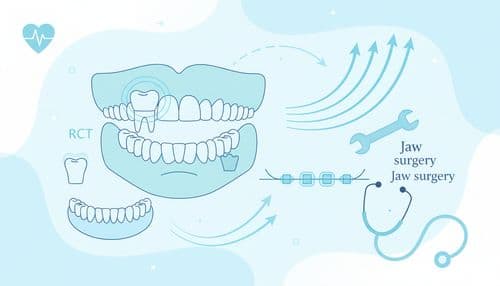
CGHS Dental Rate List: RCT, Crown, Denture, Braces and Jaw Surgery
CGHS approved rates across dentistry — cleaning and fillings, root canal treatment, crowns and dentures, orthodontics, extractions and oral and maxillofacial surgery.

CGHS Dental Treatment Rates: What Is Covered and Are Implants Included?
CGHS dental procedure rates (extraction, RCT, fillings, scaling) and an honest explanation of dental implant coverage under the scheme.
Written by Dr. Nikhil Singh
Last reviewed: 14 August 2026
Medical Disclaimer
The content provided on Zospital is for general informational and educational purposes only. It is not intended as a substitute for professional medical advice, diagnosis, or treatment. Always seek the advice of your physician or other qualified healthcare provider with any questions you may have regarding a medical condition. Never disregard professional medical advice or delay in seeking it because of something you have read on this website. If you think you may have a medical emergency, call your doctor or emergency services immediately.
Are you a doctor or run a clinic or hospital?
Patients across India are searching Zospital right now. Get a free profile with reviews, timings and direct WhatsApp bookings.