Bone Health Osteoporosis Screening NRI
Medically reviewed by Dr.Nikhil Singh, Anaesthesia, MBBS, MD
Last reviewed: 16 Aug 2026
A Comprehensive Guide for NRIs: Managing Bone Health and Osteoporosis in India
For Non-Resident Indians (NRIs), managing healthcare in India, whether for oneself or for family, requires careful planning and reliable information. This is particularly true for chronic conditions like osteoporosis, a silent disease that progressively weakens bones, making them susceptible to fractures. This guide provides a detailed overview of osteoporosis screening, prevention, and treatment in India, with a special focus on the needs of NRIs, including cost comparisons, access to care from abroad, and recommendations for women over 50.
Understanding Osteoporosis in the Indian Context
Osteoporosis is a significant public health issue in India, with studies indicating a high prevalence, particularly among postmenopausal women. Indian women are not only at a high risk but may also experience fractures at a younger age compared to their Western counterparts. Factors contributing to this include lower calcium and vitamin D levels in the diet, genetic predisposition, and a lack of awareness about bone health. Early screening and proactive management are therefore crucial.
The Gold Standard: DEXA Scans for Bone Density Measurement
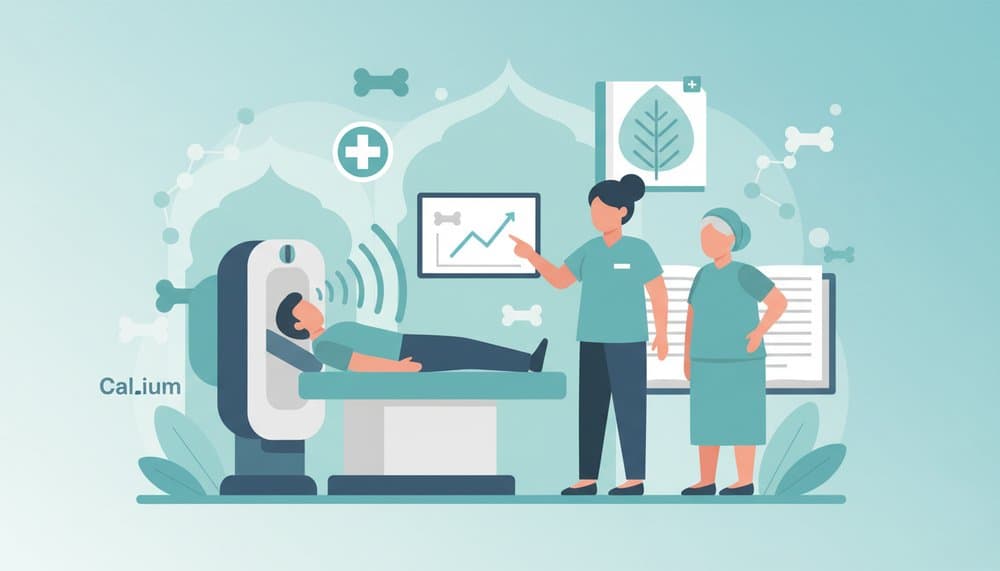
The most reliable method for diagnosing osteoporosis and assessing fracture risk is the Dual-Energy X-ray Absorptiometry (DEXA) scan. This non-invasive, painless procedure uses low-dose X-rays to measure bone mineral density (BMD), typically at the hip and spine. The scan is quick, usually taking 10-20 minutes, and involves minimal radiation exposure.
DEXA Scan Frequency Recommendations for Women Over 50
For women aged 50 and above, especially postmenopausal women, regular bone density screening is highly recommended. The Indian Society for Bone and Mineral Research (ISBMR) suggests that screening for osteoporosis should begin at an earlier age in Indians compared to Western populations due to the earlier onset of osteoporotic fractures.
Here are general guidelines for DEXA scan frequency:
- Initial Screening: All women aged 65 and older, and men aged 70 and older, should undergo a baseline DEXA scan. For postmenopausal women under 65, a scan is recommended if they have risk factors such as a family history of osteoporosis, low body weight, or a history of fractures.
- Follow-up Scans: The frequency of subsequent scans depends on the initial results and risk factors.
- Normal Bone Density: If your initial scan shows normal bone density and you have no significant risk factors, your doctor may recommend a repeat scan in 5-10 years.
- Osteopenia (Low Bone Mass): For those with osteopenia, a follow-up scan is typically recommended every 2-5 years to monitor for progression to osteoporosis.
- Osteoporosis: If you are diagnosed with osteoporosis, a DEXA scan is usually recommended every 1-2 years to monitor the effectiveness of treatment.
It is important to consult with a healthcare professional who can provide a personalized recommendation based on your individual health profile.
Cost of DEXA Scans in India: A Comparative Overview
One of the significant advantages of seeking healthcare in India is the cost-effectiveness. The cost of a DEXA scan in India is considerably lower than in countries like the United States. Prices can vary based on the city, the type of healthcare facility (private hospital vs. diagnostic lab), and whether a single site or the whole body is scanned.
Here is an indicative cost table for DEXA scans in major Indian cities:
City — Indicative Cost Range (INR)
Tier 1 Cities (e.g., Delhi, Mumbai, Bangalore, Chennai, Hyderabad) — ₹2,500 - ₹4,500
Tier 2 Cities (e.g., Jaipur, Lucknow, Chandigarh, Pune) — ₹1,800 - ₹3,000
Note: These are indicative costs and can vary. It is always advisable to confirm the price with the specific hospital or diagnostic center.
A Step-by-Step Guide for NRIs to Access Osteoporosis Screening in India
For NRIs, arranging healthcare from abroad can seem daunting. However, with the rise of medical tourism and digital health services in India, the process has become much more streamlined.
Step 1: Initial Consultation (Telemedicine)
Before traveling to India, it is highly recommended to have an initial teleconsultation with an orthopedic specialist or an endocrinologist in India. Many major hospitals now offer telemedicine services, allowing you to discuss your health concerns, share your medical history, and get preliminary advice from the comfort of your home.
How to book a teleconsultation from abroad:
- Hospital Websites: Most major hospital chains like Apollo, Fortis, Max Healthcare, and Manipal Hospitals have dedicated sections on their websites for booking online consultations.
- Healthcare Aggregator Platforms: Websites like Zospital and Bookimed can help you find and book appointments with specialists across various hospitals in India.
- Direct Contact: You can also directly email or call the international patient services department of the hospital of your choice.
Step 2: Scheduling the DEXA Scan and In-Person Appointments
Based on your teleconsultation, the doctor will likely recommend a DEXA scan. You can schedule this in advance through the hospital's international patient services or directly with a reputable diagnostic lab.
How to book a DEXA scan from abroad:
- Hospital Coordination: If you are consulting with a doctor at a hospital, their team can help you schedule the scan at their facility.
- Diagnostic Lab Websites: Many accredited diagnostic labs like Aarthi Scans and Mahajan Imaging have online booking portals.
- Third-Party Healthcare Facilitators: Several companies specialize in assisting NRIs with their healthcare needs in India, offering services from appointment booking to medical record management.
Step 3: Travel and In-Person Consultation
Once your appointments are scheduled, you can plan your travel to India. Upon arrival, you will have your DEXA scan and a follow-up in-person consultation with your doctor to discuss the results and formulate a treatment plan if necessary.
Prevention and Treatment of Osteoporosis in India
Managing osteoporosis involves a multi-faceted approach that includes lifestyle modifications, nutritional supplements, and, in some cases, medication.
Lifestyle and Dietary Prevention
A bone-healthy lifestyle is the first line of defense against osteoporosis. Key recommendations include:
- Adequate Calcium Intake: The recommended daily intake of calcium for postmenopausal women is 1,000-1,200 mg. This can be achieved through a diet rich in dairy products, leafy green vegetables, and fortified foods.
- Sufficient Vitamin D: Vitamin D is essential for calcium absorption. While sunlight is a natural source, supplementation is often necessary, especially for individuals with limited sun exposure. A simple blood test can determine your vitamin D levels.
- Regular Exercise: Weight-bearing and muscle-strengthening exercises, such as walking, jogging, and weight training, can help improve bone density and reduce the risk of falls.
Medical Treatment Options
If you are diagnosed with osteoporosis, your doctor may prescribe medication to help slow down bone loss and reduce your fracture risk. Common treatment options available in India include:
- Bisphosphonates: These are the most commonly prescribed medications for osteoporosis and are available in oral (weekly or monthly) and intravenous (yearly) forms.
- Denosumab: This is an injectable medication given every six months.
- Teriparatide: This is an anabolic agent that helps to build new bone and is typically reserved for individuals with severe osteoporosis.
- Hormone Replacement Therapy (HRT): This may be an option for some postmenopausal women, but it comes with its own set of risks and benefits that need to be discussed with a doctor.
Cost of Osteoporosis Medications in India
The cost of osteoporosis medications in India is generally much lower than in Western countries. The price can vary depending on the brand and the type of medication.
Here is an indicative price range for some common osteoporosis medications:
Medication Type — Indicative Monthly Cost (INR)
Oral Bisphosphonates (e.g., Alendronate) — ₹200 - ₹500
Injectable Bisphosphonates (e.g., Zoledronic Acid) — Varies significantly based on brand and hospital
Denosumab Injection (per 6 months) — ₹8,000 - ₹16,000
Teriparatide Injection — Can be significantly higher, often over ₹15,000 per month
Note: These are indicative costs and can vary. It is essential to get a prescription and purchase medications from a reputable pharmacy.
Recommended Hospitals and Clinics for Osteoporosis Care in India
Several multi-specialty hospitals and specialized clinics across India offer excellent care for osteoporosis. When choosing a facility, look for those with NABH (National Accreditation Board for Hospitals & Healthcare Providers) or JCI (Joint Commission International) accreditation, which are indicators of high-quality standards.
Here are some of the top-rated hospitals for orthopedic and endocrine care in major Indian cities:
Delhi NCR:
- Max Healthcare: Known for its experienced specialists and advanced technology for osteoporosis treatment.
- Fortis Healthcare: Offers comprehensive orthopedic care and has a strong international patient program.
- Medanta - The Medicity: A multi-specialty hospital with a dedicated team for bone and joint disorders.
- Indraprastha Apollo Hospitals: A well-established name in Indian healthcare with a robust infrastructure for international patients.
Mumbai:
- Fortis Hospital, Mulund: A JCI-accredited hospital known for its orthopedic department.
*
Written by
Top Anesthesiologist doctors in Lucknow on Zospital
Verified specialists you can book in minutes.
- Book appointment

Dr. Sanni Deyol Gautam
Anesthesiologist
Lucknow
4.8 - Book appointment

Dr Karanvir Singh Sidhu
Anesthesiologist
Lucknow
4.8 - Book appointment

Dr Harpreet Kaur
Anesthesiologist
Lucknow
4.8 - Book appointment

Dr. Akshat Trivedi
Anesthesiologist
Lucknow
4.5 - Book appointment
Dr. Praful Srivastava
Anesthesiologist
4.8 - Book appointment

Dr. Mohd. Ruheel Khan
Anesthesiologist
Faizabad

“Your Health, Our Priority. Your Voice, Our Guide”
Dr.Nikhil Singh
Anaesthesia, MBBS, MD
Private hospitals in Lucknow on Zospital
Prefer a private option? These hospitals in Lucknow list their doctors and take bookings.
See all hospitals in LucknowRelated Articles
Bone Marrow Biopsy Costs
## A Comprehensive Guide to Bone Marrow Biopsy and Transplant in India: Costs, Choices, and the Path to Recovery For individuals and families grappling with a leukemia diagnosis, the journey ahead ca
Bone Marrow Transplant Cost in India vs. USA & UK: A Guide for International Patients
A comprehensive guide for NRIs and international patients comparing the cost of Bone Marrow Transplant (BMT) in India against the USA and UK. This article covers procedure costs, donor matching, and the logistical planning required for treatment in India.

How to Book Indian Government Hospital Appointments for Family from Abroad: An NRI Guide
A complete guide for Non-Resident Indians (NRIs) living abroad to navigate the process of booking an Out-Patient Department (OPD) appointment at an Indian government hospital for a parent or relative in India, using the official ORS portal.
Written by Dr.Nikhil Singh
Anaesthesia, MBBS, MD
Last reviewed: 16 August 2026
Medical Disclaimer
The content provided on Zospital is for general informational and educational purposes only. It is not intended as a substitute for professional medical advice, diagnosis, or treatment. Always seek the advice of your physician or other qualified healthcare provider with any questions you may have regarding a medical condition. Never disregard professional medical advice or delay in seeking it because of something you have read on this website. If you think you may have a medical emergency, call your doctor or emergency services immediately.
Are you a doctor or run a clinic or hospital?
Patients across India are searching Zospital right now. Get a free profile with reviews, timings and direct WhatsApp bookings.