Lasik Eye Surgery Cost Comparison
Medically reviewed by Dr.Nikhil Singh, Anaesthesia, MBBS, MD
Last reviewed: 16 Aug 2026
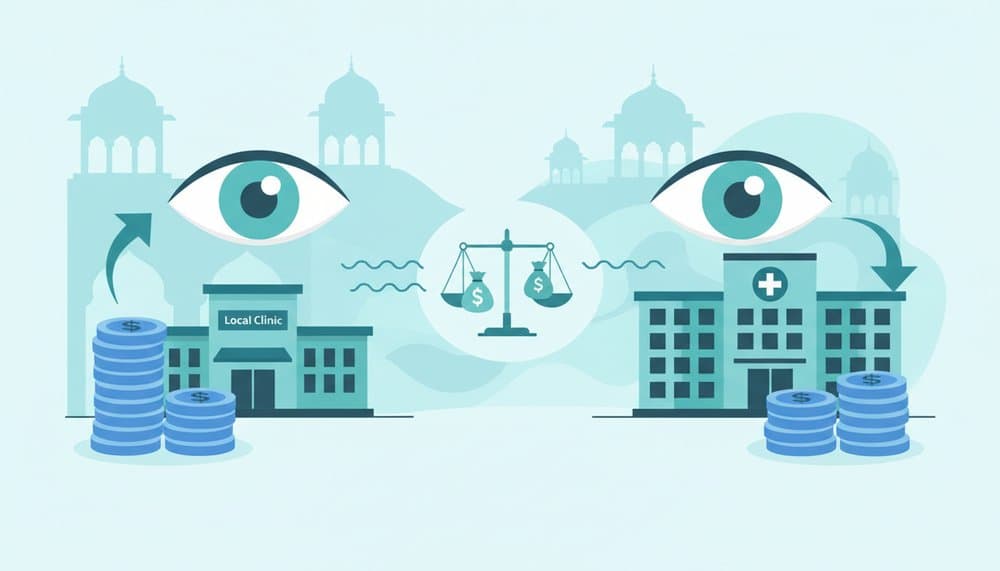
A Comprehensive Guide to LASIK Eye Surgery: Comparing Costs and Care in the USA, Canada, and India
For the millions of individuals in India and the global Indian diaspora seeking freedom from glasses and contact lenses, LASIK (Laser-Assisted In Situ Keratomileusis) surgery presents a life-changing opportunity. The decision to undergo this procedure, however, involves more than just the desire for clear vision. It is a significant financial and medical choice, with options spanning from local state-of-the-art facilities to renowned international clinics.
This guide provides a detailed comparison of LASIK surgery across three popular destinations: the United States of America (USA), Canada, and India. We will delve into a comprehensive analysis of costs, technological advancements, safety protocols, and success rates to empower you with the knowledge needed to make an informed decision that aligns with your health and financial well-being.
The Financial Lens: A Comparative Look at LASIK Costs
The cost of LASIK surgery is a primary consideration for many. Prices can vary dramatically between countries due to differences in operational costs, currency exchange rates, and local economic conditions. It's important to note that the advertised price is often just a starting point, and the final cost can be influenced by several factors including the specific technology used, the surgeon's experience, and the inclusiveness of the surgical package.
Here is a comparative breakdown of the estimated costs per eye for LASIK surgery in the USA, Canada, and India as of 2026:
Country — Standard LASIK (Per Eye) — Advanced/Custom LASIK (Per Eye) — Notes
USA — USD $1,500 - $2,500 — USD $2,200 - $4,000+ — Prices can be 20-40% higher in major metropolitan areas. Costs may or may not include pre-op tests, follow-up visits, and enhancement procedures.
Canada — CAD $1,500 - $2,500 — CAD $2,250 - $3,500+ — Costs are generally lower than in the US. Prices in urban centers like Toronto may be higher.
India — INR ₹25,000 - ₹40,000 — INR ₹45,000 - ₹1,60,000+ — Costs can be significantly lower, often 1/4th to 1/6th the price of Western countries. Metro city prices may be 15-30% higher than in Tier-2/3 cities.
Important Note: These figures are estimates and can vary. Always seek a detailed, itemized quote from your chosen clinic.
Decoding the Technology: What Are You Paying For?
The evolution of LASIK technology has led to safer, more precise, and customized treatments. Understanding the different types of procedures is key to deciphering cost variations and choosing the best option for your eyes.
- Conventional LASIK: This is the original form of LASIK, where a handheld blade called a microkeratome is used to create the corneal flap. The laser then reshapes the cornea based on your prescription. It is the most affordable option.
- Bladeless (All-Laser) LASIK: In this procedure, a femtosecond laser is used to create the corneal flap with greater precision and a lower risk of complications compared to the microkeratome. This technology is often the standard of care in many clinics.
- Wavefront-Guided LASIK: This custom approach creates a detailed 3D map of your eye's unique imperfections, known as higher-order aberrations. This allows for a more personalized laser treatment that can result in sharper vision and better night vision.
- Topography-Guided LASIK (e.g., Contoura Vision): This is one of the latest advancements, using detailed corneal mapping to smooth out irregularities on the surface of the cornea. It can provide superior visual outcomes, especially for patients with astigmatism.
- SMILE (Small Incision Lenticule Extraction): A minimally invasive, flapless procedure where a laser creates a small disc of tissue within the cornea, which is then removed through a small incision. This technique may offer a faster recovery and a reduced risk of dry eyes.
In general, the more advanced and customized the technology, the higher the cost. While conventional LASIK is effective, many surgeons now recommend bladeless and custom procedures for their enhanced safety and potential for better visual outcomes.
Safety and Success: A Global Perspective
LASIK is considered one of the safest and most successful elective surgical procedures worldwide, with patient satisfaction rates consistently above 95%. However, regulatory standards and surgeon qualifications can differ by country.
- USA: The Food and Drug Administration (FDA) regulates LASIK devices and procedures. Surgeons are certified by the American Board of Ophthalmology, and residency programs are accredited by the Accreditation Council for Graduate Medical Education (ACGME). The US is known for its high standards of healthcare and advanced medical technology.
- Canada: Health Canada regulates medical devices, including LASIK lasers. Ophthalmologists are certified by the Royal College of Physicians and Surgeons of Canada (FRCSC). Canada's healthcare system is highly regarded for its stringent regulations and patient safety.
- India: The medical device regulations are overseen by the Central Drugs Standard Control Organization (CDSCO). The All India Ophthalmological Society (AIOS) is the largest professional organization for ophthalmologists. India has become a global hub for medical tourism, with many hospitals having internationally trained doctors and state-of-the-art technology. Many top-tier Indian hospitals are accredited by the National Accreditation Board for Hospitals & Healthcare Providers (NABH), and some also have international accreditations like the Joint Commission International (JCI).
While excellent outcomes are achievable in all three countries, it is crucial for patients, especially those considering treatment in India, to choose accredited centers with experienced surgeons to ensure the highest standards of care.
Choosing Your Clinic: A Framework for Decision-Making
Selecting the right hospital or clinic is paramount to a successful LASIK journey. Here are key criteria to consider:
1. Surgeon's Credentials and Experience:
- Is the surgeon board-certified?
- How many LASIK procedures have they performed?
- Do they have specialized training in refractive surgery?
2. Technology and Equipment:
- What type of laser technology does the clinic use (e.g., femtosecond, excimer)?
- Do they offer advanced diagnostic tools like wavefront and topography mapping?
- Is the equipment well-maintained and up-to-date?
3. Accreditation and Licensing:
- Is the facility accredited by a recognized body (e.g., JCI, NABH, AAAHC)?
- Are the surgeons and staff licensed and in good standing?
4. Pre-Operative Assessment:
- Does the clinic conduct a comprehensive eye examination to determine your candidacy?
- Do they take the time to explain the procedure, risks, and benefits?
5. Post-Operative Care and Follow-Up:
- What is included in the post-operative care plan?
- How many follow-up visits are included in the cost?
- What is the policy for enhancement or touch-up procedures if needed?
6. Transparency in Cost:
- Does the clinic provide a detailed, all-inclusive quote?
- Are there any hidden charges for medications, follow-up visits, or enhancements?
The Path to Recovery: What to Expect
The recovery from LASIK is typically rapid, with most patients noticing a significant improvement in their vision within the first 24 to 48 hours. Here is a general timeline:
- Day of Surgery: Your eyes may feel gritty, itchy, or watery. It is recommended to rest with your eyes closed for a few hours. You will be given protective eye shields to wear, especially while sleeping.
- Day 1-3: You will have a follow-up appointment with your surgeon. Vision will be much clearer, but you may experience some light sensitivity and halos around lights. Most people can return to work and normal daily activities within this period.
- Week 1: Continue to use prescribed eye drops to prevent infection and inflammation. Avoid rubbing your eyes, swimming, and wearing eye makeup.
- Weeks 2-4: Your vision will continue to stabilize. Light exercise can usually be resumed, but contact sports should be avoided.
- 1-6 Months: Your eyes will continue to heal, and any residual dryness should improve. The final visual outcome is typically achieved within 3 to 6 months.
It is crucial to follow all post-operative instructions provided by your surgeon to ensure a smooth and successful recovery.
Making the Right Choice for You: A Decision Framework
Choosing between having LASIK in your country of residence or traveling abroad is a personal decision. Here's a framework to guide your thought process:
Factor — Considerations for Staying Local (USA/Canada) — Considerations for Traveling to India
Cost — Higher initial cost, but may be partially offset by insurance or tax-advantaged accounts (FSA/HSA). No travel or accommodation expenses. — Significantly lower cost for the procedure. Additional costs for flights, accommodation, and time off work need to be factored in.
Convenience — Easy access to pre-operative consultations and post-operative follow-up care. No language or cultural barriers. — Requires more planning for travel and accommodation. May need to stay for a week or more for pre-op and post-op checks.
Continuity of Care — Long-term follow-up and potential for future enhancements are straightforward with your original surgeon. — Follow-up care can be complicated once you return home. Local ophthalmologists may be hesitant to manage a patient treated elsewhere.
| Safety & Quality | Highly regulated environment with consistent standards. | Excellent quality is available, but requires careful research to find accredited
Written by
Top Anesthesiologist doctors in Lucknow on Zospital
Verified specialists you can book in minutes.
- Book appointment

Dr. Sanni Deyol Gautam
Anesthesiologist
Lucknow
4.8 - Book appointment

Dr Karanvir Singh Sidhu
Anesthesiologist
Lucknow
4.8 - Book appointment

Dr Harpreet Kaur
Anesthesiologist
Lucknow
4.8 - Book appointment
Dr. Akshat Trivedi
Anesthesiologist
Lucknow
4.5 - Book appointment
Dr. Praful Srivastava
Anesthesiologist
4.8 - Book appointment
Dr. Mohd. Ruheel Khan
Anesthesiologist
Faizabad

“Your Health, Our Priority. Your Voice, Our Guide”
Dr.Nikhil Singh
Anaesthesia, MBBS, MD
Private hospitals in Lucknow on Zospital
Prefer a private option? These hospitals in Lucknow list their doctors and take bookings.
See all hospitals in LucknowRelated Articles
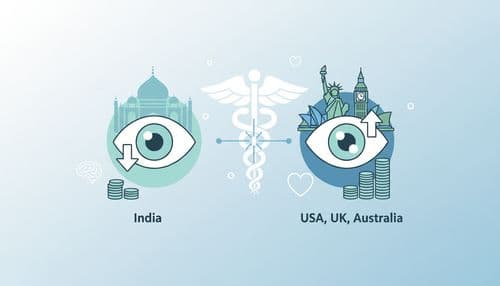
LASIK Eye Surgery Cost: India vs. USA, UK, Australia
A comparative guide on the costs of LASIK and other laser vision correction procedures in India versus the USA, UK, and Australia, written for NRIs and international patients.

LASIK Eye Surgery Cost in India: A Typical Price Guide
A practical guide to typical LASIK / laser eye surgery costs in India by technique.
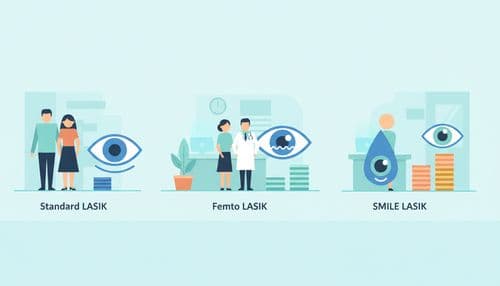
LASIK Cost Comparison: Standard vs Femto vs SMILE
A cost comparison of LASIK techniques in India: standard, Femto (bladeless) and SMILE.
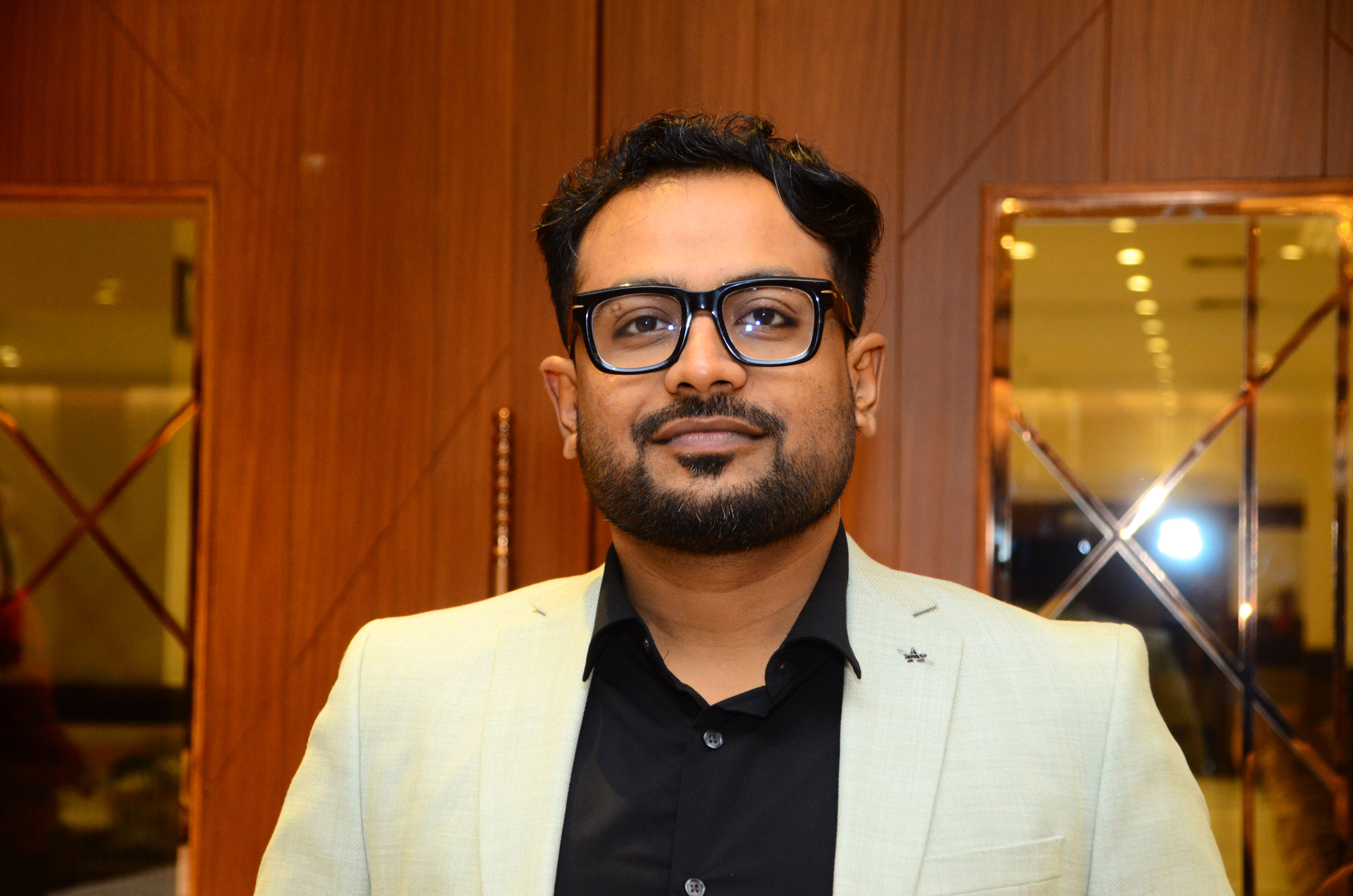
Written by Dr.Nikhil Singh
Anaesthesia, MBBS, MD
Last reviewed: 16 August 2026
Medical Disclaimer
The content provided on Zospital is for general informational and educational purposes only. It is not intended as a substitute for professional medical advice, diagnosis, or treatment. Always seek the advice of your physician or other qualified healthcare provider with any questions you may have regarding a medical condition. Never disregard professional medical advice or delay in seeking it because of something you have read on this website. If you think you may have a medical emergency, call your doctor or emergency services immediately.
Are you a doctor or run a clinic or hospital?
Patients across India are searching Zospital right now. Get a free profile with reviews, timings and direct WhatsApp bookings.