HPV Vaccine & Cervical Cancer: A Practical Guide
More in Gynecologist Guides
Medically reviewed by Dr Aparna Khandelia, Obs & Gynae Surgeon, MBBS, MS
Last reviewed: 9 Aug 2026 · How we review health content
Let's talk about the HPV vaccine. You've probably heard whispers about it. Maybe a relative in your joint family said it's 'not for good girls' or that it causes infertility. These are just stories, and they're dangerous.
The truth is much simpler. The Human Papillomavirus (HPV) is incredibly common. Almost everyone gets it at some point. For most, it's harmless. But for some women, certain types of HPV can lead to cervical cancer later in life.
And the vaccine? It's a way to train your body to fight off these high-risk HPV types before they can cause trouble. It's not about character or lifestyle. It’s about science and preventing a serious disease.
So, What Exactly IS This HPV Virus?
Think of Human Papillomavirus, or HPV, as a huge family of common viruses. There are over 100 types. Most of them are harmless and your body's immune system clears the infection on its own without you ever knowing you had it.
A few specific types, however, are considered 'high-risk'. If these high-risk types stick around in the body for a long time, they can cause changes in the cells of the cervix (the lower part of the uterus, or bachchedani ka munh). Over many years, these changes can turn into cancer. That's the link.
Myth-Busting: Let's Clear Up the Confusion
You’ve been told a lot of things about this vaccine. Let's see what the research actually shows.
- Myth: It causes infertility or affects your periods. Fact: Decades of data from millions of girls and women worldwide show no link between the HPV vaccine and fertility problems. Your periods won't be affected either.
- Myth: It's only for people who are sexually active. Fact: This is completely wrong. The vaccine works most effectively when given before any exposure to the virus. That’s why it's recommended for young girls and boys, long before they become sexually active.
- Myth: It has severe side effects. Fact: The most common side effects are mild and temporary, like pain at the injection site, a low-grade fever, or a headache — similar to any other vaccine your child gets.
- Myth: If I get the vaccine, I don't need Pap tests. Fact: The vaccine protects against the most common cancer-causing HPV types, but not all of them. Regular screening with Pap tests is still an essential part of your health routine.
Who Should Get the Vaccine and When Is the Right Time?
This is the most common question we hear. The ideal age for the HPV vaccine is between 9 and 14 years. At this age, the immune response is very strong, and usually only two doses are needed.
What if you're older? Don't worry. The vaccine is approved for women up to age 45. If you're between 15 and 45, you'll likely need three doses. It can still offer significant protection, even if you're already married or have been sexually active. Talk to your doctor to figure out if it's right for you — and yes, this includes you.
Experiencing this? Dr Aparna Khandelia (MBBS, MS (Obstetrics & Gynaecology)) treats IVF treatment, normal and cesarean deliveries, high-risk pregnancy management, prenatal and postnatal care, family planning counseling, irregular periods and PCOS treatment, pregnancy ultrasounds at ERA's Lucknow Medical College & Hospital and B Hope Hospital in Lucknow. Book an appointment.
Why This Is So Important for Us in India
Cervical cancer is a major health issue for Indian women. We see too many cases that could have been prevented. Often, women come to us only after noticing symptoms like abnormal bleeding or discharge, when the disease is already advanced.
A 38-year-old school teacher from Lucknow came to a clinic with persistent back pain and unusual bleeding. She'd been ignoring it, thinking it was just stress or 'gas trouble'. Her diagnosis was advanced cervical cancer. She had never had a Pap smear and hadn't heard about the HPV vaccine when her daughter was young. This scenario is unfortunately very common.
In our busy lives, juggling work, family, and maybe even caring for elders in a joint family, routine health checks can fall by the wayside. This vaccine is a proactive step you can take for yourself or for your children.
What to Expect When You Get the Shot
Getting the vaccine is straightforward. It's an injection, usually in the upper arm muscle. It might sting a bit, just like any other shot.
Afterwards, your arm might feel sore for a day or two. Some people feel a little tired or have a mild headache. Just take it easy, maybe have some warm dal-roti and rest. These feelings are signs that your immune system is learning to fight the virus. Serious reactions are extremely rare.
You'll be told when to come back for your next dose. Make sure you complete the full schedule — whether it's two or three shots — to get the full protective benefit. It’s always a good idea to consult a qualified healthcare provider to discuss your specific situation and any concerns.
Frequently Asked Questions
Is the HPV vaccine safe for my daughter?
Yes. Global health organizations have studied the HPV vaccine for over 15 years. It has an excellent safety record. The risk of a serious side effect is incredibly low, far lower than the risk of developing a disease caused by HPV.
I am 30 and married. Is it too late for me to get the HPV vaccine?
It's not necessarily too late. While the vaccine is most effective before sexual activity begins, it can still protect you from HPV types you haven't been exposed to. Discuss the potential benefits with your gynaecologist to see if it's a good option for you.
Does the vaccine protect against all types of cancer?
No. The HPV vaccine is specifically designed to prevent infections from high-risk HPV types that cause most cervical cancers. It also offers protection against some other, less common cancers like anal, throat, and genital cancers linked to HPV. It does not protect against cancers not caused by HPV, like breast or lung cancer.
Are boys and men also recommended to take the HPV vaccine?
Yes. Vaccinating boys helps protect them from HPV-related cancers (like throat and anal cancer) and genital warts. It also helps reduce the overall spread of HPV in the community, which indirectly protects girls and women too. It's about community immunity.
Medical Disclaimer
The information provided in this article is for general informational and educational purposes only. It is not intended as a substitute for professional medical advice, diagnosis, or treatment. Always seek the advice of your physician or other qualified healthcare provider with any questions you may have regarding a medical condition. Never disregard professional medical advice or delay in seeking it because of something you have read in this article.
Related reading
Top Gynecologist doctors in Lucknow on Zospital
Verified specialists you can book in minutes.
- Book appointment

Dr. Richa Gangwar
Gynecologist
Lucknow
Verified•4.9 - Book appointment

Dr. Roli Purwar
Gynecologist
Gorakhpur
Verified - Book appointment

Dr Pooja Bansal
Gynecologist
Navi Mumbai
4.9 - Book appointment
Dr. Vidya Shetty
Gynecologist
Thane
5 - Book appointment

Dr. Shruti Ugran
Gynecologist
Navi Mumbai
4.9 - Book appointment

Dr. Shruti Chandak
Gynecologist
Thane
Have More Questions?
Find quick answers to common questions about our services, appointments, and patient care.
Yes. Global health organizations have studied the HPV vaccine for over 15 years. It has an excellent safety record. The risk of a serious side effect is incredibly low, far lower than the risk of developing a disease caused by HPV.
It's not necessarily too late. While the vaccine is most effective before sexual activity begins, it can still protect you from HPV types you haven't been exposed to. Discuss the potential benefits with your gynaecologist to see if it's a good option for you.
No. The HPV vaccine is specifically designed to prevent infections from high-risk HPV types that cause most cervical cancers. It also offers protection against some other, less common cancers like anal, throat, and genital cancers linked to HPV. It does not protect against cancers not caused by HPV, like breast or lung cancer.
Yes. Vaccinating boys helps protect them from HPV-related cancers (like throat and anal cancer) and genital warts. It also helps reduce the overall spread of HPV in the community, which indirectly protects girls and women too. It's about community immunity.

“Your Partner in Health, From Adolescence to Motherhood & Beyond.”
Dr Aparna Khandelia
Obs & Gynae Surgeon, MBBS, MS
Private hospitals in Lucknow on Zospital
Prefer a private option? These hospitals in Lucknow list their doctors and take bookings.
- Paarth Eye Hospital & Retina Centre
- Urmila Devi Memorial Hospital- Child Specialist Hospital in Lucknow | Pediatrician hospital
- SPARSH CHILDREN'S HOSPITAL & VACCINATION CENTER | Child Hospital in Raebareli Road Lucknow | Dr. Akhilesh Pandey |
Related Articles
Hypothyroidism: Symptoms, Causes and Treatment
A plain-language guide to hypothyroidism (underactive thyroid), its symptoms and treatment.

Hysterectomy Cost in India: A Typical Price Guide
A practical guide to typical hysterectomy costs in private hospitals in India by surgical technique.
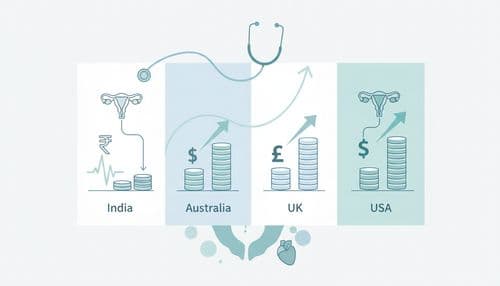
Hysterectomy Cost in India vs. the USA, UK, and Australia
A detailed cost comparison of abdominal, laparoscopic, and robotic hysterectomy in India versus the USA, UK, and Australia for NRIs and international patients.

Written by Dr Aparna Khandelia
Obs & Gynae Surgeon, MBBS, MS
Last reviewed: 9 August 2026
Medical Disclaimer
The content provided on Zospital is for general informational and educational purposes only. It is not intended as a substitute for professional medical advice, diagnosis, or treatment. Always seek the advice of your physician or other qualified healthcare provider with any questions you may have regarding a medical condition. Never disregard professional medical advice or delay in seeking it because of something you have read on this website. If you think you may have a medical emergency, call your doctor or emergency services immediately.
Are you a doctor or run a clinic or hospital?
Patients across India are searching Zospital right now. Get a free profile with reviews, timings and direct WhatsApp bookings.