Glaucoma and Retina Eye Treatment Costs in India
Medically reviewed by Dr. Nikhil Singh, Anaesthesia, MBBS, MD
Last reviewed: 24 Aug 2026
A Comprehensive Guide to Treatment Costs for Glaucoma and Retinal Conditions in India
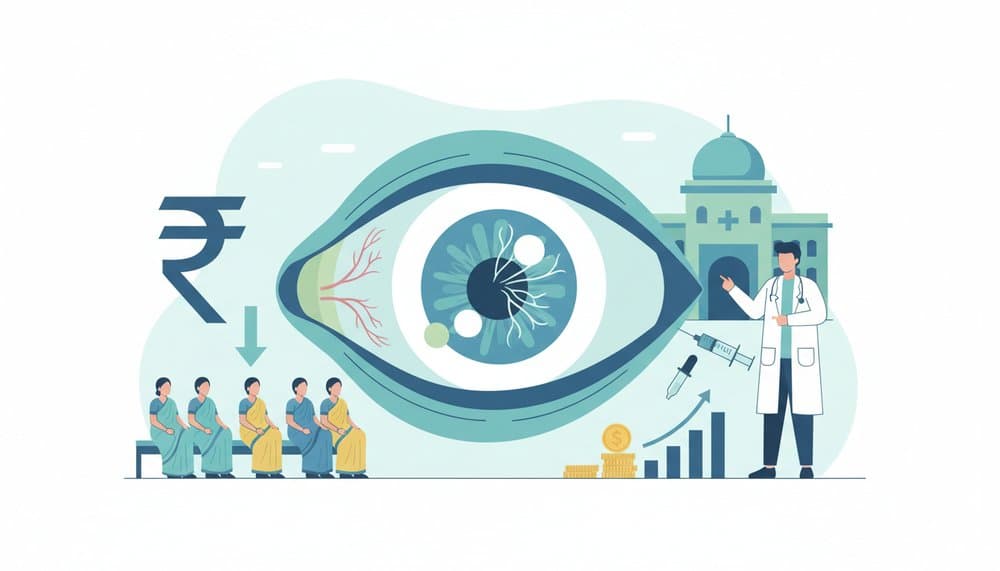
Navigating a diagnosis of a chronic eye condition like glaucoma or an acute issue such as a retinal detachment involves making critical decisions about your health and finances. For Indian patients and Non-Resident Indian (NRI) expats, understanding the landscape of treatment costs, options, and quality of care available in India is paramount. This guide provides verified, practical information to help you make informed choices, without making direct medical claims, in compliance with National Medical Commission (NMC) guidelines.
Understanding the Financial Impact of Eye Treatments
The cost of eye care in India is influenced by several factors. Being aware of these can help you plan your expenses more effectively:
- City and Hospital Tier: Metropolitan and Tier-1 cities like Mumbai, Delhi, and Bangalore generally have higher costs due to greater overheads compared to Tier-2 cities like Pune, Ahmedabad, or Hyderabad.
- Type of Healthcare Facility: Specialised private eye hospitals and corporate hospital chains tend to be more expensive than government hospitals or smaller clinics, often due to advanced technology and amenities.
- Surgeon’s Experience: The fees for a highly experienced, sub-specialist surgeon will typically be higher than for a general ophthalmologist.
- Technology and Implants: The use of advanced laser systems, high-end surgical equipment (like the Constellation Vitrectomy System), or specialised implants (such as glaucoma drainage devices) significantly impacts the overall cost.
- Stage of the Disease: Early detection and treatment are often less expensive. Advanced-stage diseases may require more complex and costly interventions.
Part 1: Managing Glaucoma
Glaucoma is a chronic condition that damages the optic nerve, often due to high intraocular pressure (IOP). It requires lifelong management to prevent irreversible vision loss.
Diagnostic Tests for Glaucoma
A thorough diagnosis is the first step. Costs for a comprehensive glaucoma evaluation can range from ₹4,000 to ₹9,500, depending on the specific tests required.
Diagnostic Test — Purpose — Average Cost (INR)
Tonometry — Measures intraocular pressure (IOP). — ₹300 – ₹700
Pachymetry — Measures corneal thickness to accurately interpret IOP. — ₹500 – ₹1,000
Gonioscopy — Examines the eye's drainage angle to determine the type of glaucoma. — ₹300 – ₹1,500
Visual Field Test (Perimetry) — Checks for peripheral vision loss, a key sign of glaucoma damage. — ₹1,000 – ₹2,000
OCT (Optical Coherence Tomography) — Provides detailed imaging of the optic nerve to assess damage. — ₹1,500 – ₹4,000
Glaucoma Treatment Options and Costs
Treatment aims to lower eye pressure and is a lifelong commitment. It can involve medication, laser therapy, or surgery.
1. Medications (Eye Drops) This is the most common first-line treatment. The annual cost can vary dramatically based on the type of drug. Beta-blockers are the most economical, while prostaglandin analogues are more expensive.
- Monthly Cost: ₹100 to over ₹1,800, depending on the drug and brand.
- Annual Cost: Can range from approximately ₹2,000 to over ₹20,000.
2. Laser Treatment Laser procedures are often recommended when medications are insufficient or cause side effects. These are quick, outpatient procedures.
- Selective Laser Trabeculoplasty (SLT): For open-angle glaucoma. Costs range from ₹15,000 to ₹35,000.
- Laser Peripheral Iridotomy (LPI): For angle-closure glaucoma. Costs are similar, around ₹20,000 to ₹30,000.
3. Surgical Interventions Surgery is reserved for cases where medication and laser therapy fail to control IOP.
Glaucoma Surgery Type — Description — Average Cost (INR)
Trabeculectomy — Creates a new drainage channel for the eye fluid. Considered the "gold standard" surgical option. — ₹30,000 – ₹50,000
Glaucoma Drainage Devices — Implants a small tube (shunt or valve) to help drain fluid. Used in more complex cases. — ₹40,000 – ₹80,000
MIGS (Minimally Invasive Glaucoma Surgery) — Uses microscopic devices to enhance fluid drainage. Involves a quicker recovery but is more expensive. — ₹60,000 – ₹1,50,000
Recovery Timeline: Trabeculectomy
Recovery from a trabeculectomy takes approximately four to six weeks.
- First Week: Vision will be blurry, and the eye may feel scratchy or uncomfortable. An eye shield is worn at night. Strenuous activity and bending are prohibited.
- First Month: Frequent follow-up visits are crucial for monitoring eye pressure and making adjustments, which may include removing stitches.
- 1-2 Months: Vision gradually stabilises. Most patients can return to work and normal routines within 2-4 weeks, but full healing takes longer.
Part 2: Managing Retinal Conditions
This category includes several serious conditions affecting the light-sensitive tissue at the back of the eye. Key conditions include Diabetic Retinopathy, Age-Related Macular Degeneration (AMD), and Retinal Detachment.
Diagnostic Tests for Retinal Conditions
Accurate diagnosis relies on advanced imaging to view the retina in detail.
Diagnostic Test — Purpose — Average Cost (INR)
Fundus Photography — Takes detailed pictures of the retina to spot abnormalities. — ₹1,000 – ₹2,000
OCT (Optical Coherence Tomography) — Provides cross-sectional images of the retina to detect swelling or fluid. — ₹1,500 – ₹3,500
Fundus Fluorescein Angiography (FFA) — A dye is injected to map blood flow and identify leaky vessels in the retina. — ₹1,500 – ₹5,000
Retinal Treatment Options and Costs
Treatment depends on the specific condition and its severity.
1. Intravitreal (Anti-VEGF) Injections These are the primary treatment for wet AMD, diabetic macular edema, and retinal vein occlusion. The injections block a protein that causes abnormal, leaky blood vessels. A full course may require multiple injections.
Anti-VEGF Injection — Key Features — Average Cost Per Injection (INR)
Avastin (Bevacizumab) — Most affordable and widely used option in India (off-label). Shown to be clinically effective for many conditions. — ₹5,000 – ₹25,000
Lucentis (Ranibizumab) — FDA-approved for eye conditions. Biosimilar versions have increased affordability. — ₹25,000 – ₹45,000
Eylea (Aflibercept) — FDA-approved; may require fewer injections over time compared to others for some patients. — ₹25,000 – ₹45,000
Beovu (Brolucizumab) — A newer FDA-approved drug for AMD. — ₹27,000 – ₹35,000
2. Laser Photocoagulation This laser treatment is used to seal leaking blood vessels in conditions like diabetic retinopathy or to repair retinal tears. The cost per session typically ranges from ₹3,000 to ₹10,000. For more extensive laser therapy, the cost can be between ₹15,000 and ₹50,000.
3. Vitrectomy and Retinal Detachment Surgery Vitrectomy is a major surgery to remove the vitreous gel inside the eye. It is used to treat advanced diabetic retinopathy, macular holes, and retinal detachments.
Retinal Surgery Type — Description — Average Cost (INR)
Pneumatic Retinopexy — Injects a gas bubble to push a detached retina back into place. For less complex detachments. — ₹40,000 – ₹48,000
Scleral Buckling — Places a silicone band around the eye to support the retina. — ₹45,000 – ₹56,000
Vitrectomy — Removes the vitreous gel to allow the surgeon to repair the retina. Often combined with other procedures. — ₹60,000 – ₹1,50,000
Note: The cost of vitrectomy can increase if silicone oil is used as a tamponade, as it may require a second surgery for removal.
Recovery Timeline: Vitrectomy
Full recovery from a vitrectomy can take four to eight weeks, with vision continuing to improve for several months.
- Immediate Post-Op: Vision is very blurry. If a gas bubble is used, specific head positioning (e.g., face-down) is required to hold the retina in place. Air travel is strictly forbidden until the gas bubble is gone.
- First 2 Weeks: The eye will be red, sore, and light-sensitive. The gas bubble will be visible in your field of vision and will gradually shrink.
- 2-6 Weeks: Vision starts to clear as the bubble dissolves. Most activity restrictions are lifted. You may be able to return to work in 2-4 weeks, depending on your job.
- 3-6 Months: Vision stabilises, reaching its final outcome.
Part 3: Making an Informed Decision
Choosing the right treatment path involves more than just comparing costs. It requires selecting the right hospital, understanding your insurance, and working with your doctor to create a personalised plan.
Hospital Selection Framework: A Checklist
When choosing an eye hospital in India, look beyond marketing and focus on tangible quality markers.
- Accreditation: Is the hospital accredited by the National Accreditation Board for Hospitals & Healthcare Providers (NABH)? NABH accreditation ensures adherence to strict standards for patient safety, infection control, ethical billing, and clinical protocols.
- Sub-specialist Expertise: Does the hospital have a dedicated glaucoma specialist or a vitreoretinal surgeon? For complex conditions, a sub-specialist is crucial. Ask about the surgeon's experience and annual volume for your specific procedure.
- Advanced Technology: Does the facility have modern diagnostic and surgical equipment? Key technologies include high-resolution OCT, FFA, and advanced vitrectomy systems.
- Comprehensive Care: Does the hospital offer all services under one roof
Written by
Top Anesthesiologist doctors in Lucknow on Zospital
Verified specialists you can book in minutes.
- Book appointment

Dr. Sanni Deyol Gautam
Anesthesiologist
Lucknow
4.8 - Book appointment

Dr Karanvir Singh Sidhu
Anesthesiologist
Lucknow
4.8 - Book appointment

Dr Harpreet Kaur
Anesthesiologist
Lucknow
4.8 - Book appointment

Dr. Akshat Trivedi
Anesthesiologist
Lucknow
4.5 - Book appointment
Aveline Pascual Jerome, MD
Anesthesiologist
Ajmer
5 - Book appointment
Dr. Vivek Kumar Sharma - Laser & Advanced Laparoscopy Surgeon In Ajmer
Anesthesiologist
Ajmer
4.7

“Your Health, Our Priority. Your Voice, Our Guide”
Dr. Nikhil Singh
Anaesthesia, MBBS, MD
Private hospitals in Lucknow on Zospital
Prefer a private option? These hospitals in Lucknow list their doctors and take bookings.
- Paarth Eye Hospital & Retina Centre
- Urmila Devi Memorial Hospital- Child Specialist Hospital in Lucknow | Pediatrician hospital
- SPARSH CHILDREN'S HOSPITAL & VACCINATION CENTER | Child Hospital in Raebareli Road Lucknow | Dr. Akhilesh Pandey |
Related Articles

OPD Appointment at GMCH Chapra, Bihar: A Patient Guide
A practical guide for patients seeking outpatient care at Government Medical College and Hospital, Chapra (GMCH Chapra), Saran district, Bihar — covering how registration currently works at this newly inaugurated hospital, what is known about costs, applicable government health schemes, and key departments.

Goa Medical College and Hospital: OPD Appointment, Fees, and Schemes
Your guide to booking OPD appointments, OPD fees, and available health schemes at Goa Medical College and Hospital, Bambolim. Learn about online & walk-in processes.
OPD Appointment Guide: Government Doon Medical College Hospital, Dehradun
A practical patient guide to outpatient services at Government Doon Medical College Hospital (Doon Hospital), Dehradun, Uttarakhand — covering appointment channels, registration, costs, government scheme benefits, and departments.
Written by Dr. Nikhil Singh
Anaesthesia, MBBS, MD
Last reviewed: 24 August 2026
Medical Disclaimer
The content provided on Zospital is for general informational and educational purposes only. It is not intended as a substitute for professional medical advice, diagnosis, or treatment. Always seek the advice of your physician or other qualified healthcare provider with any questions you may have regarding a medical condition. Never disregard professional medical advice or delay in seeking it because of something you have read on this website. If you think you may have a medical emergency, call your doctor or emergency services immediately.
Are you a doctor or run a clinic or hospital?
Patients across India are searching Zospital right now. Get a free profile with reviews, timings and direct WhatsApp bookings.