Acne Scar Treatment Cost
Medically reviewed by Dr.Nikhil Singh, Anaesthesia, MBBS, MD
Last reviewed: 16 Aug 2026
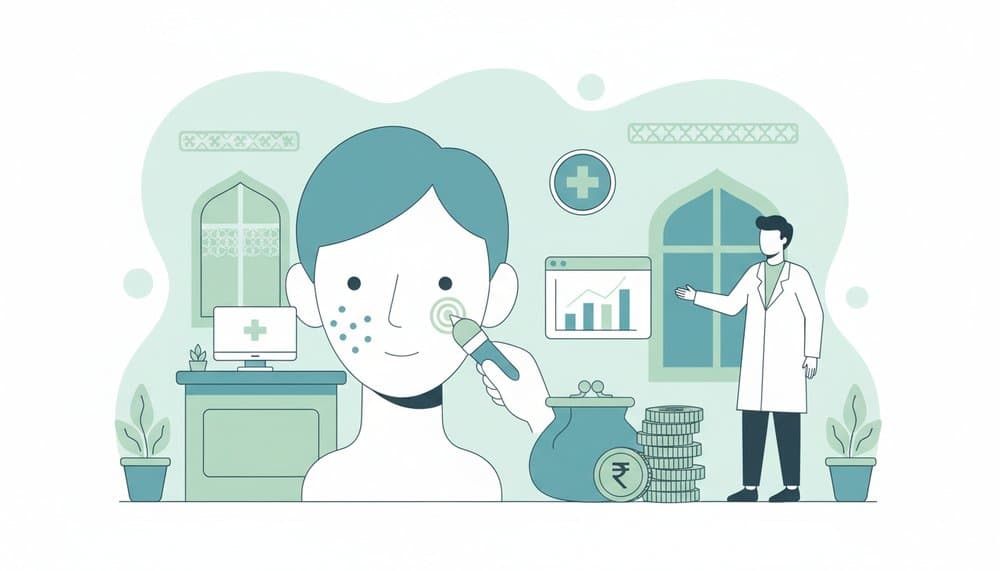
A Comprehensive Guide to Acne Scar Treatment in India: Costs, Methods, and Making the Right Choice
For many, the battle with acne doesn’t end when the breakouts stop. The lingering reminders—acne scars—can be a significant source of concern, impacting self-confidence. Fortunately, advancements in dermatology offer a range of effective treatments to diminish these scars. This guide provides a detailed overview of the available acne scar treatments in India, their costs, expected results, and a framework to help you make an informed decision. This guide is for informational purposes and should not be considered a substitute for professional medical advice.
Understanding Acne Scars: Not All Scars Are the Same
Before exploring treatments, it's crucial to understand the type of acne scars you have, as this will determine the most effective approach. Acne scars are broadly categorized into two main types: atrophic (depressed) and hypertrophic (raised).
- Atrophic Scars: These are the most common type of acne scars and result from a loss of tissue.
- Ice Pick Scars: Small, deep, and narrow, resembling a puncture from an ice pick.
- Boxcar Scars: Wider than ice pick scars, with sharp, defined edges. They can be shallow or deep.
- Rolling Scars: These have a wave-like appearance on the skin, with sloping edges, making the skin texture look uneven.
- Hypertrophic and Keloid Scars: These are raised scars that form due to an overproduction of collagen during the healing process. They are more common on the chest and back.
Acne Scar Treatment Methods: A Detailed Look
Dermatologists in India offer a variety of procedures to treat acne scars. The choice of treatment depends on the scar type, skin type, and the patient's budget.
1. Laser Skin Resurfacing
Laser treatments are a popular and effective option for many types of acne scars. They work by using focused light to either remove the outer layer of the skin (ablative) or to stimulate collagen production in the deeper layers (non-ablative).
- Ablative Lasers (e.g., CO2 Laser, Erbium YAG): These are more aggressive and involve removing thin layers of skin. They are effective for deeper scars but have a longer recovery time.
- Non-Ablative Lasers: These lasers heat the underlying skin tissue to stimulate collagen production without harming the surface. They have minimal downtime but may require more sessions for desired results.
- Fractional Lasers: This technology delivers laser energy in microscopic columns, treating a fraction of the skin at a time. This approach promotes faster healing and is a popular choice for acne scars.
Results: Laser treatments can significantly improve the texture and appearance of acne scars. Results are often visible after the skin has healed and continue to improve over several months as collagen remodeling occurs. Multiple sessions are usually required for optimal results.
Recovery: Recovery time varies depending on the type of laser used. With ablative lasers, you can expect redness, swelling, and peeling for 5 to 10 days. Non-ablative and fractional lasers have a shorter recovery period, often with just a few days of mild redness.
2. Microneedling (Collagen Induction Therapy)
Microneedling is a minimally invasive procedure that uses a device with fine needles to create tiny, controlled punctures in the skin. This process stimulates the body's natural healing response, leading to the production of new collagen and elastin.
- Microneedling with Radiofrequency (MNRF): This advanced form of microneedling combines the benefits of traditional microneedling with radiofrequency energy. The needles deliver RF energy into the deeper layers of the skin, further enhancing collagen stimulation.
Results: Microneedling can be effective for atrophic scars, particularly rolling and boxcar scars. It can improve skin texture and reduce the depth of scars. A series of treatments is typically needed to see significant improvement.
Recovery: The skin may appear red and feel sensitive for a day or two after the procedure, similar to a mild sunburn. Most people can resume their normal activities within a day or two.
3. Chemical Peels
Chemical peels involve the application of a chemical solution to the skin, which causes it to exfoliate and eventually peel off. The new, regenerated skin is usually smoother and less scarred.
- Superficial Peels: Use mild acids like alpha-hydroxy acid (AHA) to gently exfoliate the outermost layer of skin.
- Medium Peels: Use trichloroacetic acid (TCA) or glycolic acid to reach the middle layers of skin. These are more effective for shallow acne scars.
- Deep Peels: Use stronger chemicals like phenol to penetrate the deeper layers of the skin. These are used for more severe scarring but have a longer recovery time.
Results: Chemical peels can improve the appearance of superficial acne scars and hyperpigmentation. The results depend on the depth of the peel.
Recovery: Recovery time ranges from a few days for superficial peels to a few weeks for deep peels. Redness, peeling, and sensitivity are common side effects.
4. Microdermabrasion
Microdermabrasion is a non-invasive procedure that gently exfoliates the top layer of the skin. It uses a handheld device that either sprays fine crystals or has a diamond-tipped wand to remove dead skin cells.
Results: Microdermabrasion is best suited for very mild, superficial acne scars and can help improve skin texture and tone. It is generally not effective for deep or pitted scars. Multiple sessions are required to see noticeable results.
Recovery: There is minimal to no downtime with microdermabrasion. The skin may be slightly pink immediately after the treatment, but this usually subsides within a few hours.
5. Dermal Fillers
Dermal fillers are injectable substances that can be used to plump up atrophic acne scars, making them less noticeable. Hyaluronic acid fillers are commonly used for this purpose.
Results: The results of dermal fillers are immediate, providing a smoother skin surface. However, the effects are temporary, typically lasting from 6 months to 2 years, depending on the type of filler used.
Recovery: There is minimal downtime, though some temporary bruising, swelling, or redness at the injection site may occur.
Cost of Acne Scar Treatment in India: A City-Wise Comparison
The cost of acne scar treatment in India can vary significantly based on several factors, including the city, the reputation of the clinic, the dermatologist's experience, the type of treatment, and the number of sessions required. The following tables provide an estimated cost per session for various treatments in major Indian cities. Please note that these are approximate costs and may vary.
Laser Acne Scar Treatment Cost in India (per session)
City — Average Cost Range (₹)
Delhi — ₹5,000 - ₹20,000
Mumbai — ₹9,000 - ₹25,000
Bangalore — ₹7,000 - ₹20,000
Lucknow — ₹5,000 - ₹10,000
Microneedling Cost in India (per session)
City — Average Cost Range (₹)
Delhi — ₹3,000 - ₹10,000
Mumbai — ₹4,000 - ₹12,000
Bangalore — ₹3,500 - ₹11,000
Smaller Cities — ₹3,000 - ₹6,000
Chemical Peels Cost in India (per session)
City — Average Cost Range (₹)
Delhi — ₹1,500 - ₹5,000
Mumbai — ₹2,000 - ₹6,000
Bangalore — ₹1,800 - ₹5,500
Microdermabrasion Cost in India (per session)
City — Average Cost Range (₹)
Delhi — ₹1,500 - ₹3,500
Mumbai — ₹2,000 - ₹6,000
Bangalore — ₹1,800 - ₹4,000
Dermal Fillers Cost in India (per syringe)
City — Average Cost Range (₹)
Delhi — ₹15,000 - ₹25,000
Mumbai — ₹18,000 - ₹30,000
Bangalore — ₹16,000 - ₹28,000
A Decision-Making Framework: Choosing the Right Treatment for You
With several options available, choosing the right treatment can be overwhelming. Here’s a step-by-step framework to guide your decision:
Step 1: Consult a Qualified Dermatologist
This is the most crucial step. A board-certified dermatologist will accurately diagnose the type of acne scars you have and recommend the most suitable treatment options based on your skin type and medical history.
Step 2: Understand Your Scar Type and Severity
As discussed earlier, different treatments work best for different scar types. For instance, ice pick scars may respond well to TCA CROSS (Chemical Reconstruction of Skin Scars), while rolling scars may benefit from subcision or fillers. Your dermatologist will explain this to you.
Step 3: Consider Your Budget and Time Commitment
Acne scar treatments often require multiple sessions, and the costs can add up. Be realistic about your budget and discuss package deals or payment plans with the clinic. Also, consider the downtime associated with each treatment and how it fits into your personal and professional life.
Step 4: Set Realistic Expectations
It's important to understand that no treatment can completely erase acne scars overnight. The goal is significant improvement, not perfection. Results take time to appear, as many treatments rely on the body's natural collagen production.
Selecting the Right Hospital or Clinic: Key Criteria
Choosing the right facility and doctor is paramount for a safe and effective treatment. Here are some factors to consider:
- Qualifications and Experience of the Dermatologist: Ensure the dermatologist is board-certified (e.g., by the Indian Association of Dermatologists, Venereologists and Leprologists - IADVL) and has experience in treating acne scars.
- Clinic/Hospital Reputation and Reviews: Look for patient testimonials and reviews online to gauge the clinic's reputation and patient satisfaction.
- Technology and Facilities: A good clinic will be
Written by
Top Anesthesiologist doctors in Lucknow on Zospital
Verified specialists you can book in minutes.
- Book appointment

Dr. Sanni Deyol Gautam
Anesthesiologist
Lucknow
4.8 - Book appointment

Dr Karanvir Singh Sidhu
Anesthesiologist
Lucknow
4.8 - Book appointment

Dr Harpreet Kaur
Anesthesiologist
Lucknow
4.8 - Book appointment

Dr. Akshat Trivedi
Anesthesiologist
Lucknow
4.5 - Book appointment
Dr. Praful Srivastava
Anesthesiologist
4.8 - Book appointment

Dr. Mohd. Ruheel Khan
Anesthesiologist
Faizabad

“Your Health, Our Priority. Your Voice, Our Guide”
Dr.Nikhil Singh
Anaesthesia, MBBS, MD
Private hospitals in Lucknow on Zospital
Prefer a private option? These hospitals in Lucknow list their doctors and take bookings.
See all hospitals in LucknowRelated Articles
AGMC & GB Pant Hospital, Agartala: OPD, Rates & Schemes
Information on outpatient (OPD) registration, treatment costs, and accepted government schemes like PM-JAY and CM-JAY at Agartala Government Medical College & G.B. Pant Hospital, Tripura.

Ai Health Symptom Checker NRI
## Navigating Digital Health: A Guide for NRIs to AI Symptom Checkers and Indian Telemedicine **A comprehensive guide for Non-Resident Indians on leveraging AI-powered health tools and connecting wit

AI in Critical Care: How Tech Saves Lives in ICUs
Explore the impact of Artificial Intelligence in critical care settings. Learn how this technology enhances decision-making, predicts patient crises, and improves survival rates in Indian hospitals.
Written by Dr.Nikhil Singh
Anaesthesia, MBBS, MD
Last reviewed: 16 August 2026
Medical Disclaimer
The content provided on Zospital is for general informational and educational purposes only. It is not intended as a substitute for professional medical advice, diagnosis, or treatment. Always seek the advice of your physician or other qualified healthcare provider with any questions you may have regarding a medical condition. Never disregard professional medical advice or delay in seeking it because of something you have read on this website. If you think you may have a medical emergency, call your doctor or emergency services immediately.
Are you a doctor or run a clinic or hospital?
Patients across India are searching Zospital right now. Get a free profile with reviews, timings and direct WhatsApp bookings.